
See details
READ MORE

.jpg)
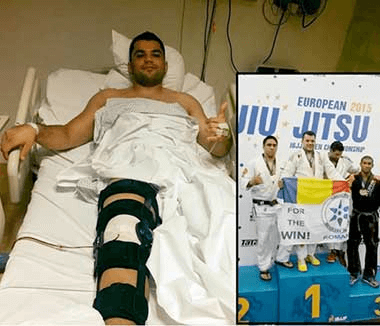
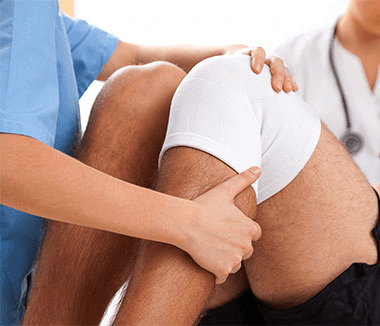
The recovery process after anterior cruciate ligament (ACL) reconstruction is an essential part of achieving a complete recovery. This protocol that we present provides instructions, directions, guidelines, and functional objectives, and together with the professional experience and knowledge of physical therapists, they integrate it into an individualized treatment plan for an optimal return to activity, since each patient's progress is variable and different, because each of them may have different preoperative deficiencies and/or other associated post-traumatic injuries such as those of the meniscus, articular cartilage, or injuries to other ligaments.
This recovery protocol extends over a period of about 6 months and is divided into 7 phases. Each phase of recovery has objectives and suggested exercises for several areas that need to be addressed: range of motion (mobility), flexibility, strength, endurance, proprioception, gait re-education, and cardiovascular fitness. The criterion for progression within each phase is based on achieving the proposed objectives and on the score obtained on the LEFS (Lower Extremity Functional Scale). Special attention in the first part of recovery will be given to activation of the quadriceps muscle, regaining range of motion (flexion and extension of the knee joint), and gait re-education. To achieve a good result, meaning a safe return to the same level of activity as before the injury, the patient must be monitored constantly throughout the 6 months. The emphasis in the recovery process should be placed on months 4-6. In these phases, plyometric training, agility exercises, the biomechanics of certain movements, and functional testing provide data on the level the patient is at with regard to returning to sports activity.
LEFS is a questionnaire used to assess the functional status of a person with a musculoskeletal dysfunction of the lower extremity. It is widely used and very useful both in the clinical setting and in research. The LEFS questionnaire consists of 20 activities that are scored from 0 to 4. The score of the 20 activities is added up and will have values between 0-80, values close to 80 representing the best possible functional status. This questionnaire is a reliable instrument and is valid for assessing the progression of the patient's functionality. A true clinically significant change is considered to have occurred if the score changes by 9 or more points compared to the previous score. In each of the phases of the recovery protocol, the LEFS score ranges are presented. These scores were obtained following a study of 55 patients aged between 18 and 65 years who underwent ACL reconstruction surgery. The results obtained from the LEFS questionnaire should be used to complement the protocol, the functional testing instructions, and for better clinical reasoning.
LEFS Questionnaire
After an anterior cruciate ligament (ACL) injury that requires surgical intervention, recovery must begin before the operation. After the trauma, muscle deficits, strength deficits, proprioception deficits, and gait changes appear. In fact, changes in strength and proprioception occur both in the affected limb and in the healthy one. The primary deficiency that occurs in a knee with an ACL injury is joint instability. This joint instability manifests through episodes of "giving way," which can lead to further deterioration of the joint and long-term degenerative changes in the other joint structures. Many studies have shown that preoperative recovery is effective in increasing strength and stability, which leads to a decrease in the "giving way" episodes experienced and reduces the incidence of an ACL recurrence. The main objectives of the preoperative program include regaining knee joint mobility that must be equal to that of the opposite knee, decreasing inflammation, increasing muscle strength, adequate neuromuscular control, but one of the most important aspects is achieving a positive state of mind. All these factors listed above facilitate postoperative recovery. Another very important aspect is a high functional level and as much strength as possible in the healthy limb, since it will be an essential element from many points of view, including comparative evaluation with the operated knee.
After an ACL reconstruction, it is important to regain and maintain a complete range of motion of the knee, that is, to obtain complete flexion and extension of the joint. It has been found that retraining the quadriceps muscle improves mobility in the early stages of recovery. Achieving complete extension as quickly as possible is not a harmful factor for the graft or for knee stability and can prevent patellofemoral pain and compensatory gait changes. That is why a stretching program is introduced for the best possible flexibility of the lower limbs. Studies show that holding a stretching position for 30 seconds is sufficient to increase mobility in most healthy people, but for people with various injuries and/or with large muscles, longer periods of holding stretching positions and more repetitions may be needed. It has been shown that body mass is directly proportional to muscle stiffness, that is, the larger the muscle, the more stiffness and tension there is. That is why, for the large muscle groups of the lower limbs, it is recommended to increase the number of stretching repetitions (3-5 times) to achieve optimal flexibility.
Gait changes caused by quadriceps dysfunction are typical in the early stages after ACL reconstruction. Typical changes include reduced cadence, step length, changes in range of motion during the phases of gait, and changes in the extensor apparatus through adaptations of hip and/or ankle extension. Early/rapid weight-bearing is supported after ACL reconstruction in an attempt to regain gait kinematics in a timely manner, facilitating the function of the vastus medialis of the quadriceps and decreasing the incidence of anterior knee pain that can occur during recovery. Treadmill walking exercises performed in the middle phases of recovery can help normalize the mobility of all the joints of the lower limbs, especially incline walking or backward walking exercises. Backward walking on the treadmill appears in the specialized literature as an important element in increasing range of motion, increases the functional endurance of the quadriceps, while at the same time reducing patellofemoral stress. It is also beneficial for specific preparation with regard to returning to sports activity, an activity that requires re-education of this type of gait.
Numerous muscle tests performed on the quadriceps after ACL trauma have shown the following aspects:
These aspects show that ACL recovery must include variable training parameters, ranging from a strength and endurance program with light weights and many repetitions, to a program with heavier weights and fewer repetitions, in order to focus on the muscle deficits.
Physical therapists often feel obligated to give patients new exercises at each recovery session. It cannot be emphasized enough that this is not advisable, since patients are not sufficiently prepared from a neuromuscular point of view. It is very important to observe the quality of the exercises being performed, especially closed kinetic chain exercises. Weakness of specific muscle groups often leads to the formation of incorrect movement patterns. These incorrect patterns are then integrated into unconscious motor programs, which perpetuate the initial muscle weakness. More specifically, studies have indicated that the knee extension deficit during walking is compensated by hip and/or ankle extension. If these compensations occur and are not corrected, any joint in the kinetic chain is exposed to injury.
For example: a squat or a lunge must be performed with the trunk perpendicular to the ground (to limit excessive hip flexion), the iliac crests must be at the same level (to limit changes in the pelvis), and the knee must be aligned with the foot, with the tibia perpendicular to the ground (to limit dorsiflexion). It is preferable to perform a half squat rather than a full squat that cannot be performed correctly, that is, with compensations.
Normally, proprioception exercises should be started immediately after the injury (before the operation), since it is known that proprioceptive sensations and neuromuscular control change after trauma to the ACL. By testing the proprioceptive system with the help of specific exercises, other mechanoreceptors of the knee joint are activated and produce compensatory patterns of muscle activation in the neuromuscular system that can help with joint stability.
Postoperatively, proprioceptive exercises should be at the beginning of the recovery process to start neuromuscular integration and must continue since proprioceptive deficiencies have been found even a year after ACL reconstruction. It has been shown that proprioceptive exercises help improve the strength of the quadriceps and hamstring muscles after surgery. In the final phases of recovery, stability exercises with anticipated and unanticipated perturbation are necessary to improve the dynamic stability of the knee. A joint that has good dynamic stability is the result of a functional proprioceptive and neuromuscular system, and the functional outcome has been shown to be strongly correlated with balance in ACL reconstruction.
A gradual return to sport is initiated between months 6-9 only if the patient's knee shows no pain or inflammation during or after performing sport-specific exercises. In this phase, the LEFS questionnaire score must be at least 76 points. The patient must also be able to demonstrate that they have adequate strength and endurance specific to the sport they practice. These recommendations are based on evidence indicating that both the articular cartilage and the subchondral bone are damaged during the trauma and may need additional recovery time in order to minimize the predisposition to future osteoarthritis. Another important aspect regarding the patient's return to sports activity is that a preventive approach should be taken with the healthy limb, since it has been shown in the specialized literature that signs of detraining appear in the quadriceps and hamstrings both in the operated limb and in the healthy one.
Before returning to demanding activities and sports activity after an ACL reconstruction, it is important to discuss with both the physical therapist and the surgeon whether a brace needs to be worn during these activities. The decision will depend on certain factors, including: level of activity, the sport practiced, and the complexity of the initial injury. Some doctors recommend rigid braces, hinged braces, or neoprene braces. Studies have shown that after an ACL reconstruction, a rigid knee brace does not provide superior results compared to a neoprene brace. Other studies have shown that wearing a brace after the recovery period has no impact on clinical outcomes or on preventing a recurrence. However, there is evidence that any type of brace has an impact on improving proprioception.
(LEFS Score: 14-24)
OBJECTIVES:
* to remember! — it is important to quickly achieve mobility, especially extension. This does not harm the graft or knee stability.
(LEFS Score: 32-50)
OBJECTIVES:
(LEFS Score: 45-59)
OBJECTIVES:
(LEFS Score: 55-66)
OBJECTIVES:
(LEFS Score: 55-66)
OBJECTIVES:
(LEFS Score: 61-76)
OBJECTIVES:
(LEFS Score: 61-76)
OBJECTIVES:
cardiovascular fitness, strength, power, agility, neuromuscular control, and stability;
strength exercises for the upper body;
sport-specific training for the upper body;
return to sports activity, specific individual training with minimal risk of recurrence.
Centrokinetic is the place where you will find clear answers and effective solutions for musculoskeletal conditions. Our clinic, dedicated to musculoskeletal disorders, is organized into the following specialized departments:
Stay up to date by following Centrokinetic on Facebook, Instagram, and YouTube.
See details
READ MORESee details
READ MORESee details
READ MORESee here how you can make an appointment and the location of our clinics.








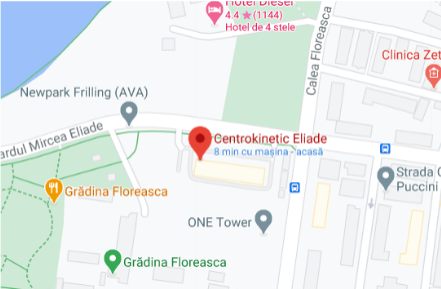
CENTROKINETIC FLOREASCA
Bucharest, 1st District,
Mircea Eliade Street, no. 18,
Eliade Tower, Entrance A, Floor 3
| Navigation | Explore 3D |
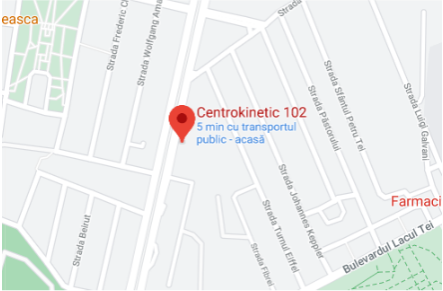
CENTROKINETIC Barbu Vacarescu
Bucharest, 2nd District,
Barbu Vacarescu Street, no. 102,
102 The Address, ground floor.
| Navigation | Explore 3D |
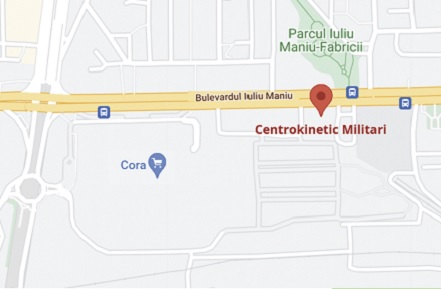
CENTROKINETIC MILITARI
Bucuresti, Sector 6,
Bld. Iuliu Maniu, nr. 15G,
Cladirea PBT, etaj 3.
| Navigation |
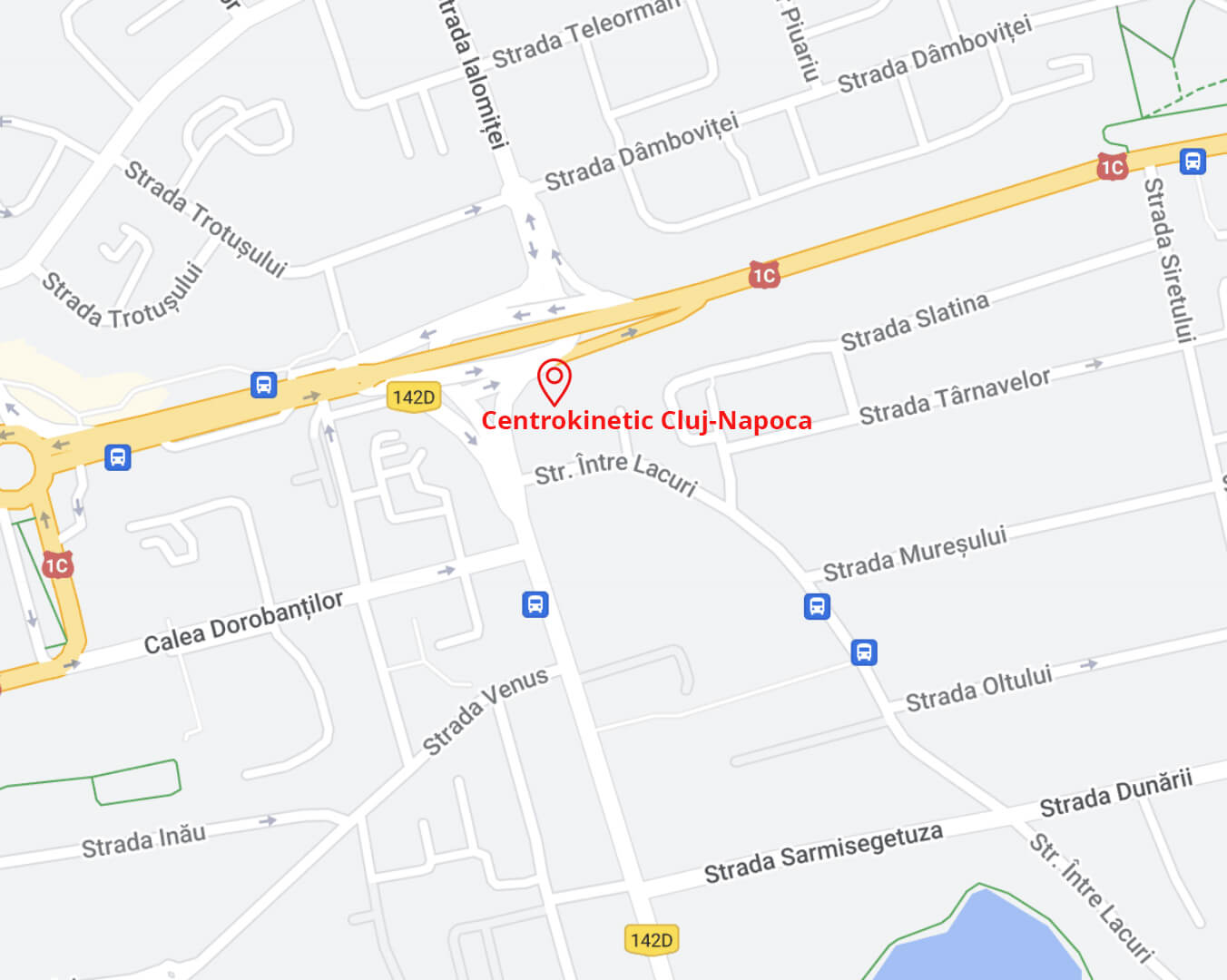
CENTROKINETIC CLUJ-NAPOCA
Cluj-Napoca,
Str. Intre Lacuri, nr.1
Intrarea este in spatele cladirii.
| Navigation |
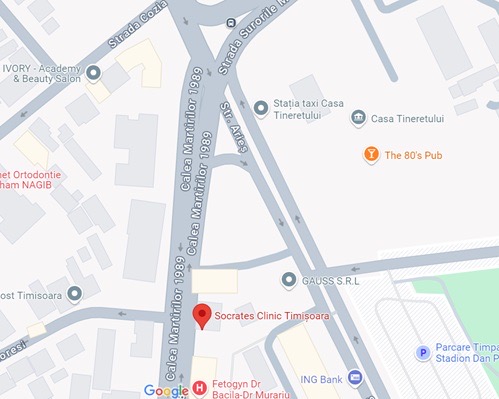
SOCRATES CLINIC TIMISOARA
Timisoara, Calea Martirilor 1989,
nr. 1.
Telefon: 0371 785 374.
| Navigation |
Phone: 0319693
E-mail: programari@centrokinetic.ro
Operating hours:
Monday – Friday: 07:00 – 21:00
Saturday: 09:00 – 14:00
Sunday: closed.
MAKE AN APPOINTMENT