Arthritis


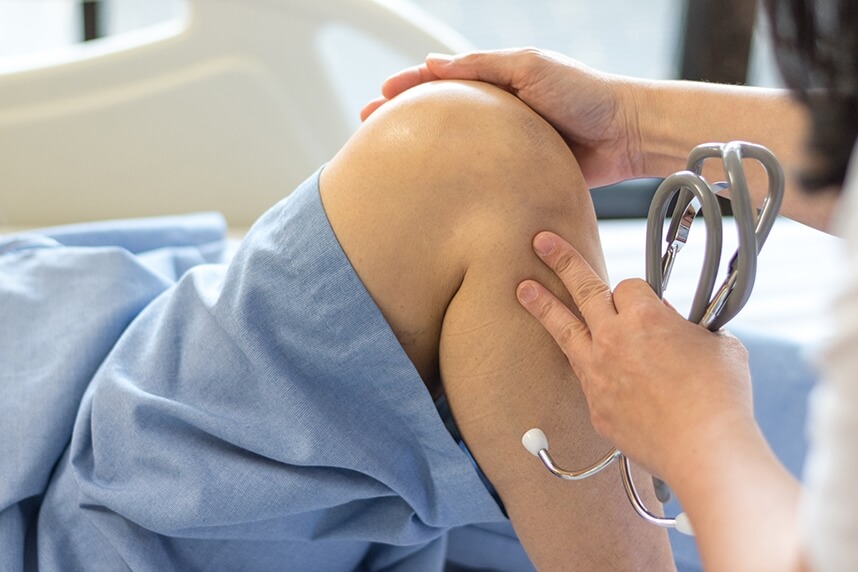
Arthritis is often talked about as if it were a disease in itself, which is not entirely true. Arthritis is, rather, a symptom that can appear in over 100 diseases, each with different causes and treatments. In this article, we will discuss the most common forms of arthritis, their causes, how they manifest, and treatment options.
- What is arthritis?
- Types of arthritis
- Causes and risk factors
- Symptoms of arthritis
- Arthritis - diagnosis
- Arthritis - treatment
- Prevention
What is arthritis?
Arthritis is the inflammation of one or more joints. The main symptoms of arthritis are pain in the joint, which may be swollen. The inflammation can also extend to the skin, with the skin in that area becoming red and hot.
It is important for people wondering what arthritis is to understand that, just like fever, it should be seen as a symptom of another health problem. There are several forms of arthritis, which we will discuss below.
Types of arthritis
As we mentioned, there are numerous types of arthritis, and it is the role of the rheumatologist to distinguish between them in order to establish the most suitable treatment for each. The most common forms of arthritis are:
- osteoarthritis;
- autoimmune inflammatory arthritis;
- infectious arthritis;
- gout;
Osteoarthritis
Osteoarthritis is the most common type of arthritis. It can be located in any joint, but most often affects the hands, spine, hips, and knees.
In turn, osteoarthritis is divided into several forms:
- osteoarthritis of inflammatory origin;
- post-traumatic osteoarthritis;
- occupational osteoarthritis, triggered by repetitive movements most often associated with one's occupation;
- osteoarthritis triggered by lifestyle - for example, the type associated with obesity [3].
Autoimmune inflammatory arthritis
In this form of the disease, the immune system is hyperactive and attacks the body's healthy tissues. There are several forms of autoimmune arthritis:
- rheumatoid arthritis;
- psoriatic arthritis;
- axial spondyloarthritis;
- juvenile arthritis.
Genetic predisposition and gut microbiota appear to have an influence in triggering these forms of arthritis.
In these forms of the disease, early diagnosis and appropriate treatment are essential for preventing long-term joint damage.
Infectious arthritis
Infectious arthritis is triggered by a bacterium, a virus, or a fungus. Most often, the primary infection is located elsewhere, after which it spreads and affects a joint - most often the knee. The symptoms of infectious arthritis set in suddenly and are relatively dramatic: pain, swelling, redness, fever. Treatment with antibiotics or antifungals helps resolve the infection relatively quickly. In the case of arthritis of viral origin, it goes away on its own within 1-2 weeks. Symptomatic treatment relieves pain and reduces discomfort.
Gout
Also known as metabolic arthritis, gout results from the accumulation of large amounts of uric acid in the joints. The way the disease is triggered is not yet fully understood, since there are people who have a high level of serum uric acid and never develop gout, but there are also patients who suffer from gout and who have normal uric acid concentrations. Gout medication has significant side effects, which is why doctors prescribe it with caution and instead prefer dietary changes to keep symptoms under control.
Causes and risk factors
Among the most common causes that trigger arthritis are:
- joint wear due to excessive use;
- age;
- various injuries and accidents;
- obesity;
- autoimmune conditions;
- genetic makeup;
- muscle weakness.
The most important risk factors for arthritis are:
- Obesity: most often associated with osteoarthritis and caused by the fact that excess weight overloads the joints. Losing weight helps reduce risks and relieve symptoms;
- Age and sex: the risk of developing arthritis increases with age. Women also have an increased risk of developing arthritis, except for gout, which is more common in men; ● Genetic predisposition: a family history of autoimmune diseases and certain genes can increase the risk of rheumatoid arthritis;
- Smoking: the risk of arthritis is higher in smokers, especially in forms with an autoimmune etiology.
Symptoms of arthritis
When it comes to arthritis, common symptoms include joint pain, reduced mobility, and swelling of the affected joint. Symptoms are often more intense in the morning, right after waking up, or after periods of rest.
Other symptoms mentioned by patients are:
- limited mobility that may improve with movement;
- clicking or popping when moving the affected joint;
- muscle weakness at the level of that joint;
- instability of the affected joint;
- bone growths on the fingers;
- a feeling of itching in the knee area.
Reactive arthritis is a particular form of arthritis that manifests when there is an infection in the body, without it necessarily being located in the painful joint [9].
Arthritis - diagnosis
Diagnosing arthritis first requires a visit to the family doctor's office. They will perform a clinical examination and may then recommend that you see a specialist. The rheumatologist is the best choice for diagnosing arthritis. The clinical examination is often supplemented by:
- blood tests: anti-cyclic citrullinated peptide, rheumatoid factor, and antinuclear antibodies are the most common;
- aspiration and examination of synovial fluid;
- imaging investigations: X-rays, MRI, or CT for optimal visualization of the bones and joints.
Arthritis - treatment
The main goals of treatment for arthritis are reducing pain and preventing joint damage from worsening. Treatment involves a combination of:
- medication and dietary supplements;
- physiotherapy;
- dietary changes;
- regular physical exercise;
- weight loss, if needed;
- cold and hot compresses.
Medication for arthritis
There are several types of medications that can be used to treat arthritis:
- analgesics – effective for pain management, but do not reduce inflammation;
- nonsteroidal anti-inflammatory drugs – relieve pain and inflammation;
- menthol and capsaicin creams – block the transmission of pain signals;
- steroids – reduce inflammation, but have numerous side effects and are used only for short periods of time;
- immunosuppressants – prescribed for moderate and severe forms with an inflammatory etiology.
Dietary supplements for arthritis
There are numerous potential treatments for arthritis on the market, but studies quantifying their effectiveness are limited or nonexistent. However, there are also supplements with proven effects: avocado and soybean extracts relieve symptoms, while fish oil and turmeric reduce inflammation. Taking dietary supplements must always be approved by your doctor, who is the only one able to say whether they interfere with medication you are already taking.
Surgical remedies
There are surgical procedures designed to replace the affected joint with an artificial one. Most often, these are performed on the knee and hip. If the fingers or wrist are extremely affected, the doctor may recommend an arthrodesis procedure, which eliminates the joint and, implicitly, the cause of the inflammation.
Physiotherapy
Physiotherapy and kinesiotherapy are very useful remedies for arthritis, their main purpose being to strengthen the muscles in the affected area. It is very likely that, during treatment, you will also receive a list of exercises that you need to do at home, to improve muscle tone, strength, flexibility, and balance. Naturally, there are specific exercises for treating arthritis in the feet or arthritis in the hands; the physiotherapist is best placed to design the appropriate work plan for you, based on the diagnosis established by the rheumatologist.
For effective recovery, it is advisable to choose a clinic specialized in this field, where you will find modern, high-performance equipment and dedicated people.
Arthritis and lifestyle
Arthritis is strongly influenced by each individual's lifestyle. Losing weight and maintaining a normal weight can improve symptoms. A diet rich in nutrients is very important for returning to a normal weight. A sufficient intake of antioxidants from fresh fruits and vegetables can help reduce inflammation. Fish, nuts, and seeds are other foods that reduce inflammation [4]. Foods that should be eliminated from the diet as much as possible include: fried foods; processed foods; dairy products; excess meat.
In some people, especially in various cases of rheumatoid arthritis, eliminating gluten from the diet seems to help relieve symptoms and stop the progression of the disease. Physical exercise helps maintain joint flexibility. Swimming is the best option because it does not put pressure on the joints. However, excessive movement is not recommended.
Prevention
Given that arthritis has so many different causes, preventing it is difficult. A balanced and active lifestyle is the most important thing you can do for the health of your entire body. And also, see a doctor whenever necessary! Although a diagnosis of arthritis is relatively difficult, given the complications that can arise, advances in medicine can help you enjoy a good quality of life - if you follow your doctor's recommendations!
Bibliography:
- 1. https://www.arthritis.org/ accessed on 7.07.2022;
- 2. https://www.hopkinsarthritis.org/arthritis-research/ accessed on 7.07.2022;
- 3. https://www.nih.gov/about-nih/what-we-do/nih-turning-discovery-into-health/arthritis accessed on 7.07.2022;
- 4. https://www.cdc.gov/arthritis/index.htm accessed on 7.07.2022;
- 5. https://www.mayoclinic.org/diseases-conditions/arthritis/symptoms-causes/syc-20350772#:~:text=Arthritis%20is%20the%20swelling%20and,are%20osteoarthritis%20and%20rheumatoid%20arthritis. accessed on 7.07.2022;
- 6. https://www.versusarthritis.org/about-arthritis/conditions/arthritis/ accessed on 7.07.2022;
- 7. https://www.cdc.gov/arthritis/basics/types.html accessed on 7.07.2022;
- 8. https://www.healthline.com/health/arthritis#outlook accessed on 7.07.2022;
- 9. nccih.nih.gov/health/tips/things-you-should-know-about-dietary-supplements-for-osteoarthritis accessed on 7.07.2022;
- 10. niams.nih.gov/health-topics/arthritis accessed on 7.07.2022;
- 11. cdc.gov/arthritis/basics/types.html accessed on 7.07.2022;
- 12. https://my.clevelandclinic.org/health/diseases/12061-arthritis accessed on 7.07.2022;
- 13. https://www.healthdirect.gov.au/arthritis accessed on 7.07.2022.
Centrokinetic is the place where you will find clear answers and effective solutions for musculoskeletal conditions. Our clinic, dedicated to musculoskeletal disorders, is organized into the following specialized departments:
- Orthopedics, a department composed of a highly experienced team of orthopedic surgeons specializing in sports traumatology.
- Pediatric Orthopedics, where sports injuries in children (ligament and meniscus injuries), spinal deformities (scoliosis, kyphosis, hyperlordosis), and foot deformities (hallux valgus, hallux rigidus, equinovarus foot, flatfoot, cavus foot) are treated.
- Neurology, featuring a state-of-the-art department where consultations, electroencephalograms (EEG), and electromyography (EMG) examinations are performed.
- Medical Rehabilitation for adults and children, a department specialized in the rehabilitation of professional athletes, spinal disorders, and children with neurological and traumatic conditions. Our extensive experience includes treating more than 5,000 professional athletes.
- Medical Imaging, with the clinic equipped with ultrasound and MRI systems dedicated to musculoskeletal conditions, complemented by an experienced radiologist, Dr. Cosmin Pantu, specialized in musculoskeletal imaging.
- Rheumatology, a comprehensive department dedicated to the diagnosis, treatment, and rehabilitation of patients with non-surgical musculoskeletal disorders.
- Vascular Surgery, a highly specialized department focused on the diagnosis and treatment of vascular diseases affecting arteries, veins, and lymphatic vessels.
- Psychology and Speech Therapy. Neurological and musculoskeletal conditions can have a psychological impact on patients, which is why we believe complete recovery requires addressing both the physical condition and its psychological consequences.
- Neurofeedback. This innovative method helps improve concentration, reduce anxiety, and achieve emotional balance through a simple and interactive process.
Stay up to date by following Centrokinetic on Facebook, Instagram, and YouTube.
MAKE AN APPOINTMENT
FOR AN EXAMINATION
See here how you can make an appointment and the location of our clinics.
MAKE AN APPOINTMENT
BUCHAREST TEAM




















































CLUJ NAPOCA TEAM



























BRASOV TEAM











Asiguratori privati





Parteneriate



CENTROKINETIC FLOREASCA
Bucharest, 1st District,
Mircea Eliade Street, no. 18,
Eliade Tower, Entrance A, Floor 3

| Navigation | Explore 3D |
CENTROKINETIC Barbu Vacarescu
Bucharest, 2nd District,
Barbu Vacarescu Street, no. 102,
102 The Address, ground floor.
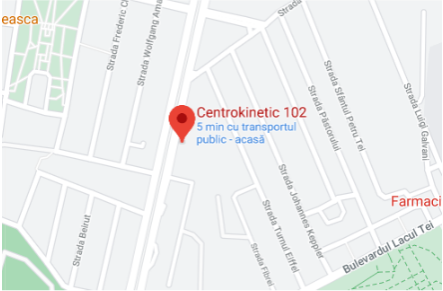
| Navigation | Explore 3D |
CENTROKINETIC MILITARI
Bucuresti, Sector 6,
Bld. Iuliu Maniu, nr. 15G,
Cladirea PBT, etaj 3.

| Navigation |


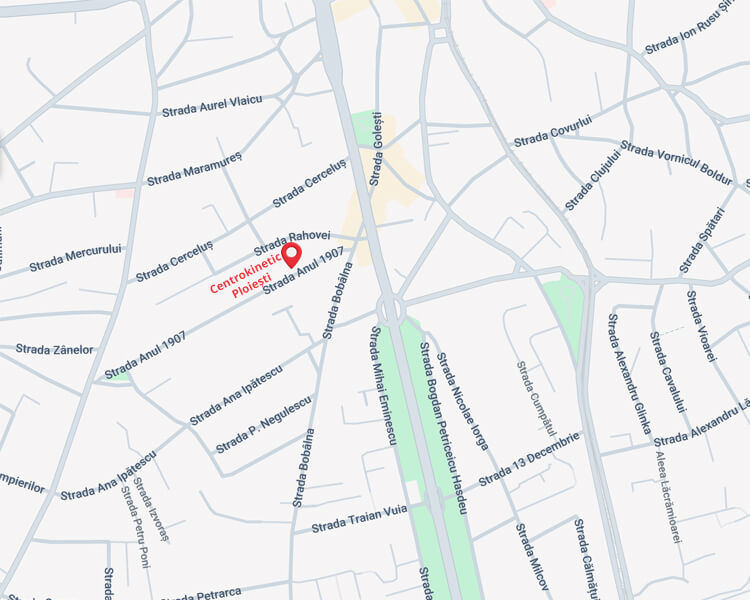
CENTROKINETIC CLUJ-NAPOCA
Cluj-Napoca,
Str. Intre Lacuri, nr.1
Intrarea este in spatele cladirii.

| Navigation |


SOCRATES CLINIC TIMISOARA
Timisoara, Calea Martirilor 1989,
nr. 1.
Telefon: 0371 785 374.

| Navigation |
CONTACT
Phone: 0319693
E-mail: programari@centrokinetic.ro
Operating hours:
Monday – Friday: 07:00 – 21:00
Saturday: 09:00 – 14:00
Sunday: closed.
MAKE AN APPOINTMENT