Dupuytren's Contracture


- What is Dupuytren's disease?
- What are the causes of Dupuytren's contracture?
- What are the symptoms of Dupuytren's disease?
- Risk factors
- Diagnosis
- Treatment of Dupuytren's disease
What is Dupuytren's disease?
Dupuytren's contracture is also called Dupuytren's disease, Morbus Dupuytren, Viking disease, and Celtic hand. Dupuytren's contracture usually develops over the years and affects a layer of tissue that lies under the skin of the palm.
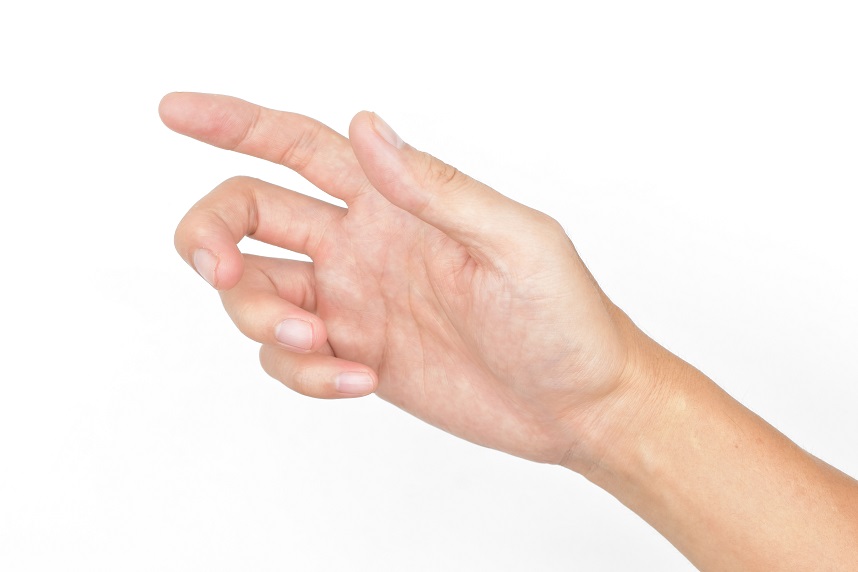
Dupuytren's disease is an abnormal thickening of the skin in the palm of the hand, at the base of the fingers. This thickened area can develop into a hard nodule or a fibrous band. Over time, this can cause one or more fingers to bend, contracting sideways or toward the palm. The affected fingers cannot be fully straightened, which can complicate everyday activities, such as placing hands in pockets, counting money, putting on gloves, or shaking hands.
Dupuytren's contracture mainly affects the two fingers farthest from the thumb (the ring finger and the little finger) and most often occurs in men, in adults over the age of 40. In many cases, the disease affects both hands. In rare cases, the feet can also be affected, and heel pain can also occur. A number of treatments are available to slow the progression of Dupuytren's contracture and to relieve symptoms.
What are the causes of Dupuytren's contracture?
The exact cause of the disease is not known. Dupuytren's contracture is considered a hereditary disease. It may also be linked to:
- alcohol and tobacco consumption,
- diabetes mellitus,
- nutritional deficiencies,
- the administration of anticonvulsant medications.

What are the symptoms of Dupuytren's disease?
Dupuytren's contracture usually progresses slowly, over the years. The condition initially manifests with a thickening of the skin on the palm of the hand. As it progresses, the skin on the palm may appear puckered or may take on an irregular, dimpled appearance. A hard fibrous nodule may form on the palm. This nodule might be tender to the touch, but it is usually not painful.
In later stages of Dupuytren's contracture, fibrous bands form in the palmar fascia (under the skin of the palm) which can extend to the fingers. As these fibrous bands tighten, the fingers may be pulled toward the palm.
The two fingers farthest from the thumb are most commonly affected, with the middle finger also affected in some cases. Only rarely are the thumb and index finger affected. Dupuytren's contracture can occur in both hands, although one hand is usually more severely affected.
The most common symptoms of the disease include:
- the inability to place the hand on a table, palm down,
- smaller or larger nodules in the palm, visible and tender to the touch, at least initially,
- nodules that can thicken and contract or tighten,
- the appearance of fibrous bands under the skin in the palm of the hand,
- irregularities or dimples in the skin compressed by the contracted finger,
- the appearance of a highly inflamed area that can lead to skin peeling if it does not heal properly,
- the fingers are pulled toward the palm,
- the hand does not have normal mobility and shoulder pain may occur.
Caution! The symptoms of Dupuytren's contracture can be similar to other health problems.
Risk factors
A person may be at a higher risk of developing Dupuytren's contracture if they:
- Are an adult. The condition usually occurs in adults over the age of 40.
- Are male. The disease is more common among men.
- Have a Northern European genetic profile. The condition is most common in people whose families come from these regions.
- Have a genetic background that predisposes them to the disease. The condition can be inherited within the family.
- Are undergoing treatment with medications for seizures. The disease is linked to some medications used to treat epileptic seizures.
- Are a smoker and consume excessive alcohol.
- Suffer from diabetes mellitus.
- Suffer from rheumatism of the hands.
- Suffer from epilepsy.
- Have thyroid problems.
Diagnosis
The specialist doctor examines the hand and tests the flexibility and sensation in the thumb and other fingers, as well as the hand's grip strength on objects.
The specialist doctor measures and records the location of the nodules and fibrous bands in the palm. Using a special instrument, they measure how much the fingers are bent or contracted, as well as their mobility. Any potential rheumatological problems are also analyzed.
These measurements will be compared with later measurements to see if the disease is worsening. The measurements can also be used to highlight the results of treatment.
Depending on the severity of the disease, it can be classified into three types, as follows:
- Type 1 - a very aggressive form of the disease, affecting a very small percentage of people. This type of disease, called Dupuytren's diathesis, is often associated with other conditions.
- Type 2 - the most common type of the disease, most often affecting only the palm. It frequently occurs in adults and can be worsened by diseases such as diabetes.
- Type 3 - the mildest form of Dupuytren's contracture, which is not hereditary. The disease is common in people with diabetes and can be caused by medications, such as those given to people with epilepsy.
Treatment of Dupuytren's disease
There is no cure for Dupuytren's disease. The disease is not dangerous, but it can affect the person's quality of life.
Treatment for Dupuytren's contracture can slow the progression of the disease or help relieve symptoms.
The specialist doctor establishes a special care plan based on:
- the person's age,
- general state of health,
- chronic health problems,
- the severity of the disease,
- the ability to tolerate certain medications, treatments, or therapies.
Treatments for Dupuytren's contracture can include:
- Surgery. This is the most common treatment used for advanced cases. It can be performed when the person has limited hand mobility. During Dupuytren's contracture surgery, the surgeon makes an incision in the palm and removes the thickened tissue. This can improve mobility in the fingers. The recovery period is a few months. In some people, the disease can return and they may need surgery again.
- Corticosteroid injection. If a nodule is painful, a corticosteroid injection can help reduce pain and reduce inflammation. The person may need repeated injections.
- Radiotherapy. The procedure works best in the early stage of the disease. It can diminish the nodules and contractions.
- Enzyme therapy. This is a new, less invasive procedure. The doctor injects a medication into the area to numb the hand. Then the enzyme is injected into the nodule in the palm. Over the course of a few hours, the enzyme breaks down and dissolves the hard bands. This allows the fingers to straighten.
- Needle aponeurotomy. This is another new, less invasive procedure. A medication is injected into the area to numb the hand. Instead of an open incision, the tip of a sharp needle is used to cut the thick bands under the skin.
Lifestyle and home remedies
If you have a mild Dupuytren's contracture, you can protect your hands by:
- avoiding direct handling of tools by using insulated handles,
- using padded gloves for lifting heavy weights,
- specific physiotherapy to maintain finger functionality through finger extension exercises.
Caution! This presentation is for informational purposes only.
Conclusion
Dupuytren's disease is a medical condition that can be treated through various invasive or non-invasive methods specific to orthopedics, as well as through medical recovery sessions.
Centrokinetic is the place where you will find clear answers and effective solutions for musculoskeletal conditions. Our clinic, dedicated to musculoskeletal disorders, is organized into the following specialized departments:
- Orthopedics, a department composed of a highly experienced team of orthopedic surgeons specializing in sports traumatology.
- Pediatric Orthopedics, where sports injuries in children (ligament and meniscus injuries), spinal deformities (scoliosis, kyphosis, hyperlordosis), and foot deformities (hallux valgus, hallux rigidus, equinovarus foot, flatfoot, cavus foot) are treated.
- Neurology, featuring a state-of-the-art department where consultations, electroencephalograms (EEG), and electromyography (EMG) examinations are performed.
- Medical Rehabilitation for adults and children, a department specialized in the rehabilitation of professional athletes, spinal disorders, and children with neurological and traumatic conditions. Our extensive experience includes treating more than 5,000 professional athletes.
- Medical Imaging, with the clinic equipped with ultrasound and MRI systems dedicated to musculoskeletal conditions, complemented by an experienced radiologist, Dr. Cosmin Pantu, specialized in musculoskeletal imaging.
- Rheumatology, a comprehensive department dedicated to the diagnosis, treatment, and rehabilitation of patients with non-surgical musculoskeletal disorders.
- Vascular Surgery, a highly specialized department focused on the diagnosis and treatment of vascular diseases affecting arteries, veins, and lymphatic vessels.
- Psychology and Speech Therapy. Neurological and musculoskeletal conditions can have a psychological impact on patients, which is why we believe complete recovery requires addressing both the physical condition and its psychological consequences.
- Neurofeedback. This innovative method helps improve concentration, reduce anxiety, and achieve emotional balance through a simple and interactive process.
Stay up to date by following Centrokinetic on Facebook, Instagram, and YouTube.
MAKE AN APPOINTMENT
FOR AN EXAMINATION
See here how you can make an appointment and the location of our clinics.
MAKE AN APPOINTMENT
BUCHAREST TEAM
























CLUJ NAPOCA TEAM













BRASOV TEAM









Asiguratori privati





Parteneriate


CENTROKINETIC FLOREASCA
Bucharest, 1st District,
Mircea Eliade Street, no. 18,
Eliade Tower, Entrance A, Floor 3
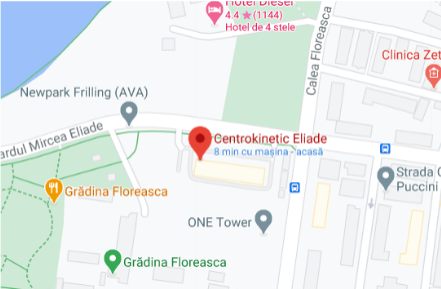
| Navigation | Explore 3D |
CENTROKINETIC Barbu Vacarescu
Bucharest, 2nd District,
Barbu Vacarescu Street, no. 102,
102 The Address, ground floor.
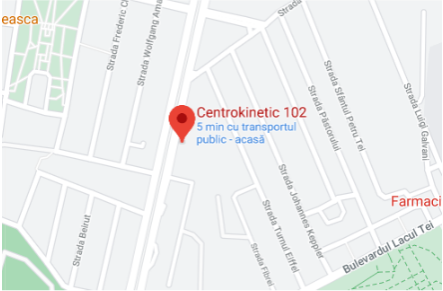
| Navigation | Explore 3D |
CENTROKINETIC MILITARI
Bucuresti, Sector 6,
Bld. Iuliu Maniu, nr. 15G,
Cladirea PBT, etaj 3.
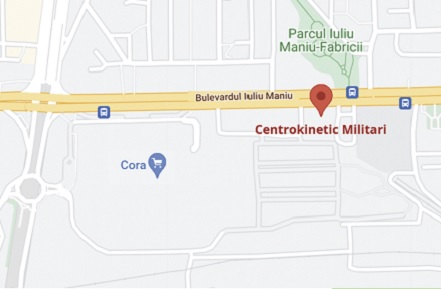
| Navigation |
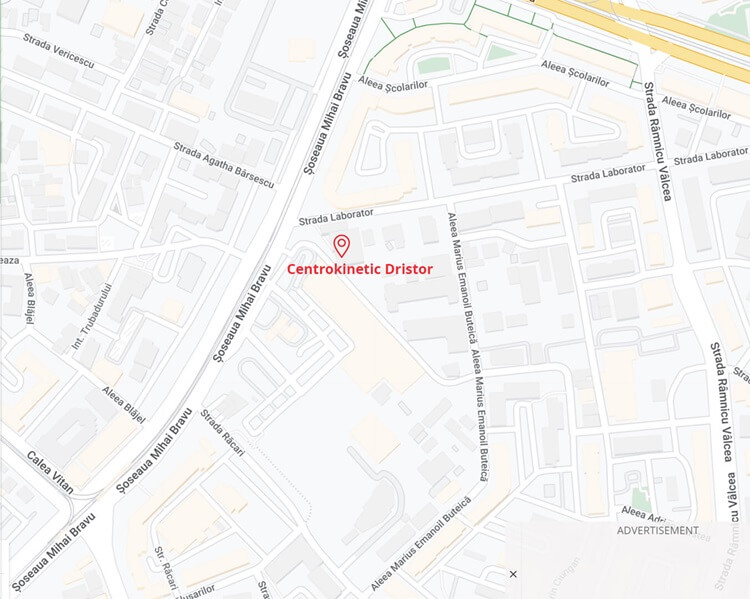
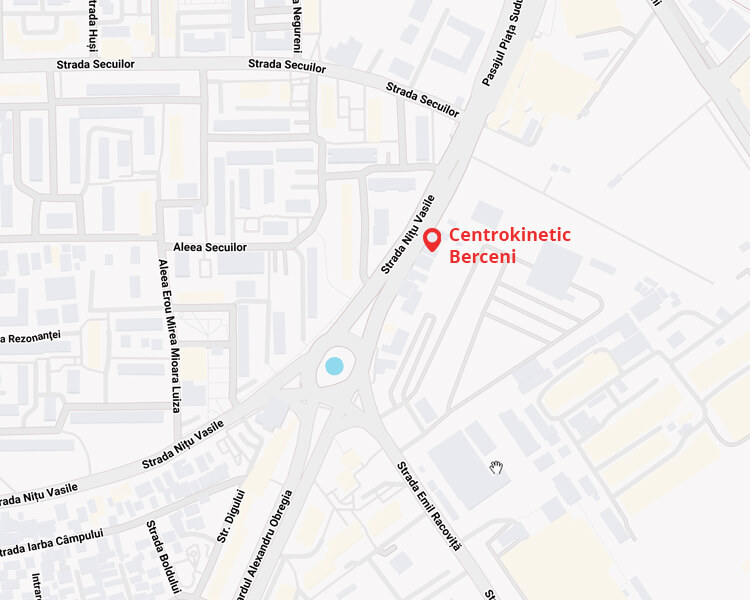
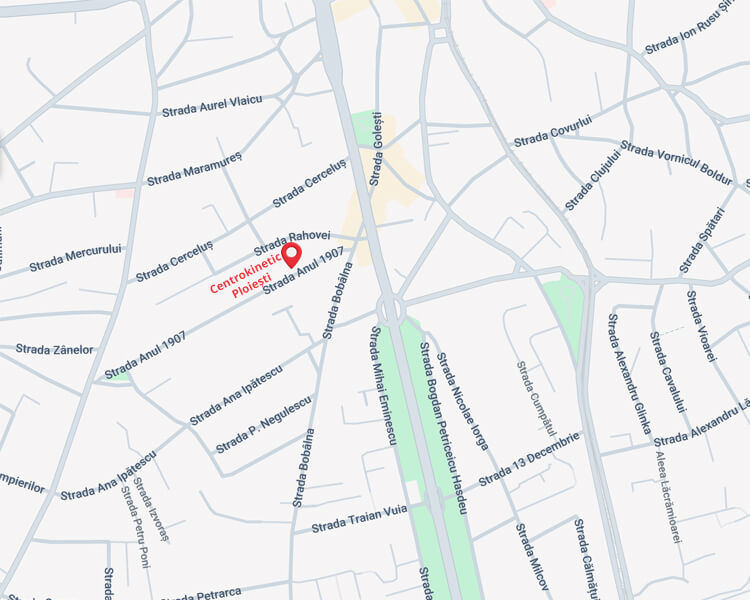
CENTROKINETIC CLUJ-NAPOCA
Cluj-Napoca,
Str. Intre Lacuri, nr.1
Intrarea este in spatele cladirii.
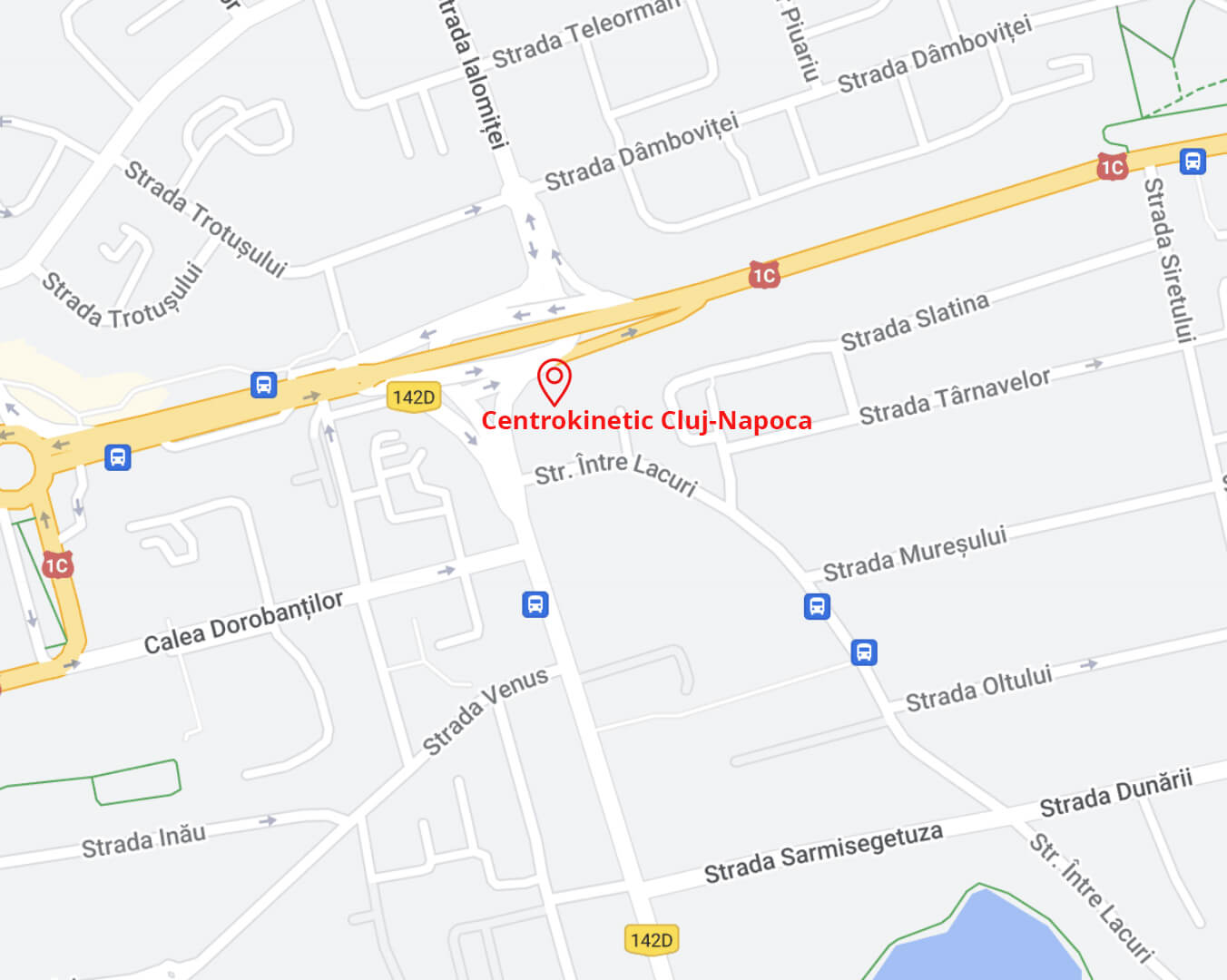
| Navigation |
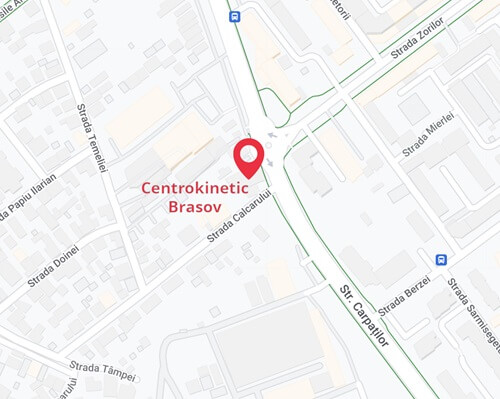
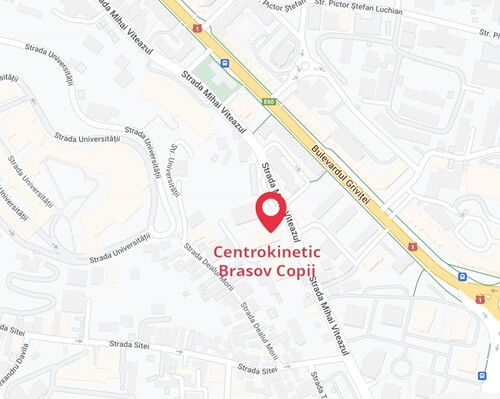
SOCRATES CLINIC TIMISOARA
Timisoara, Calea Martirilor 1989,
nr. 1.
Telefon: 0371 785 374.
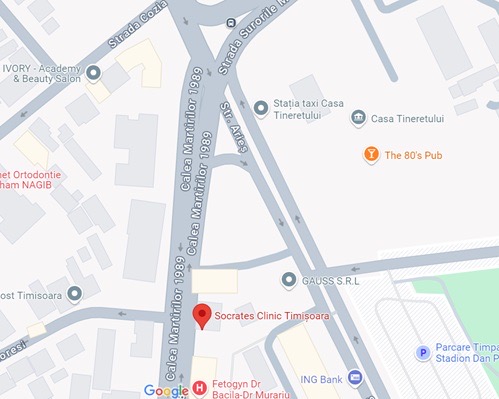
| Navigation |
CONTACT
Phone: 0319693
E-mail: programari@centrokinetic.ro
Operating hours:
Monday – Friday: 07:00 – 21:00
Saturday: 09:00 – 14:00
Sunday: closed.
MAKE AN APPOINTMENT