Actualizat: 17-03-2025 / Publicat: 17-05-2019
.jpg)
People diagnosed with ataxia lose muscle control in their arms and legs, which can lead to a lack of balance, coordination and, eventually, a gait disorder. Ataxia can affect the fingers, hands, arms, legs, body, speech and even eye movements. Ataxia is often used to describe the symptoms of incoordination that can accompany infections, injuries, other diseases and/or degenerative changes of the central nervous system. The symptom of ataxia can be caused by stroke, multiple sclerosis, tumors, alcoholism, peripheral neuropathy, metabolic disorders and vitamin deficiencies. In these cases, treating the condition that caused the ataxia can help relieve the symptoms. While the term ataxia usually describes the symptoms, it also describes a group of specific degenerative diseases of the central nervous system, called hereditary and sporadic ataxias.
There are two types of ataxia: Sporadic ataxias. Ataxias of this type usually begin in adulthood and have no known family history. Hereditary secondary effects: These ataxias are caused by a defect in a gene that has been present since the beginning of a person's life, and can be inherited in a dominant or recessive manner. Recessive disorders cause symptoms to begin in childhood rather than in adulthood. Genetic testing is now available. Friedreich's ataxia is inherited recessively and occurs in childhood, but can have an adult onset in up to a third of patients. Dominant ataxia often begins at age 20 or 30, and sometimes even later in life. Hereditary ataxias are degenerative disorders that can progress over the course of several years. How severe the disability is depends on the type of ataxia, the age of symptom onset, and other factors that are poorly understood. Ataxia is caused by damage to different areas of the central nervous system. Doctors classify ataxia according to the specific part of the brain that is affected, including: • cerebellar (brain) • sensory (nerves) • vestibular (ears)
This is ataxia caused by dysfunction of the cerebellum - a region of the brain involved in the processing of perception, coordination and control of movement. Cerebellar ataxia can cause neurological problems, such as: • fainting • lack of coordination between organs, muscles, limbs or joints • the ability to control the distance, strength and speed of movement of an arm, hand, leg or eyes • difficulty in accurately estimating elapsed time • inability to perform rapid, alternating movements. Symptoms depend on which parts of the cerebellum are damaged, and whether the lesions occur on one side (unilateral) or on both sides (bilateral). If the vestibulocerebellum is affected, the person's balance and eye movement control will be affected. The person will typically stand with their feet apart, to achieve better balance and avoid swaying back and forth. Even when the patient's eyes are open, they may lose their balance if they keep their feet close together. If the spinocerebellum is affected, the patient will have an unusual gait with uneven steps, side steps, and hesitant starts and stops. The spinocerebellum regulates movements of the body and limbs.
Vestibular ataxia affects the vestibular system. This system is made up of the inner ear and the ear canals, which contain fluid. These sense head movements and help with balance and spatial orientation. When the nerves in the vestibular system become damaged, you may have the following problems: • Blurred vision and other eye problems • Nausea and vomiting • Problems standing up and sitting down • Unsteady gait • Trouble walking in a straight line • Vertigo or dizziness
This is ataxia due to loss of proprioception. Proprioception is the sense of the relative position of neighboring parts of the body. Sensory ataxia results from damage to the nerves in the spinal cord or in the peripheral nervous system. This is the part of the nervous system outside the brain and spinal cord. A patient with sensory ataxia typically has an awkward gait, with the heel striking hard as it touches the ground with each step. If a doctor asks the patient to stand with their eyes closed and feet together, their instability will worsen. This is because the loss of proprioception makes the patient rely much more heavily on visual data. The patient may find it difficult to perform coordinated voluntary movements with the limbs, trunk, pharynx, larynx and eyes. Symptoms of sensory ataxia include: • Difficulty touching the nose with a finger with eyes closed • Inability to feel vibrations • Walking problems in low light • Heavy-footed gait
Damage, degeneration or loss of nerve cells in the part of the brain that controls muscle coordination (the cerebellum) results in ataxia. The cerebellum consists of two ping-pong ball-sized portions of folded tissue, located at the base of the brain. The right side of the cerebellum controls coordination on the right side of the body; the left side of the cerebellum controls coordination on the left side. Diseases affecting the spinal cord and the peripheral nerves that connect the cerebellum to the muscles can also cause ataxia. There are numerous causes of ataxia, whether due to an acute injury or infection, or a chronic degenerative process. Even without a family history of ataxia, some people can develop this condition. In some cases, doctors cannot identify the cause. The following can cause ataxia: • brain surgery • a blow to the head • alcohol or drug abuse • infections, such as chickenpox (usually goes away after the infection has cleared) • a brain tumor • exposure to toxic chemicals • multiple sclerosis, cerebral palsy and other neurological conditions • malformation of the cerebellum before birth. Autoimmune disease. Multiple sclerosis, sarcoidosis, celiac disease and other autoimmune conditions can cause ataxia. Paraneoplastic syndromes. These are rare, degenerative disorders, triggered by the immune system's response to a cancerous tumor (neoplasm), most commonly lung, ovarian, breast or lymphatic cancer. Ataxia can appear several months or years before the cancer is diagnosed. Toxic reaction. Ataxia is a potential side effect of certain medications, especially barbiturates, such as phenobarbital; sedatives, such as benzodiazepines; and some types of chemotherapy. These are important to identify, as the effects are often reversible. Also, some medications you take can cause problems as you age, so it may be necessary to reduce the dose or stop the medication. Alcohol and drug intoxication; heavy metal poisoning, such as lead or mercury; and solvent poisoning, such as from paint thinner, can cause ataxia. Vitamin E, vitamin B-12 or thiamine deficiency. An insufficient intake of these nutrients, or the body's inability to absorb enough, due to alcohol abuse or other reasons, can lead to ataxia. For some adults who develop sporadic ataxia, there is no specific cause. Sporadic ataxia can take a number of forms, including multiple system atrophy, a progressive, degenerative disorder.
Damage to the brain or spinal cord from a blow to the head, such as a car accident, can cause acute cerebellar ataxia, which occurs suddenly.
Structural damage to the brain can be caused by any injury that reduces blood supply or invades brain tissue, including the cerebellum. This can include trauma and bleeding, stroke or tumors and multiple sclerosis. When the blood supply to a part of the brain is cut off or severely reduced, depriving brain tissue of oxygen and nutrients, brain cells die.
This is a general term for a group of disorders caused by damage to a child's brain during early development - before, during, or shortly after birth - which affects the child's ability to coordinate body movements.
Ataxia can be a less common complication of chickenpox and other viral infections. It may appear during the healing stages of the infection and last several days or weeks. Ataxia usually resolves over time.
A growth on the brain, cancerous (malignant) or non-cancerous (benign), can damage the cerebellum. A malignant or benign growth in the brain can also affect balance and coordination. If there is a tumor on the brain, the following symptoms may also occur: • unexplained nausea and vomiting • vision problems • behavioral or personality changes • hearing problems • seizures • weakness or numbness • severe headaches
Vitamin B-12 deficiency is a potential cause of ataxia. It can produce overlapping cerebellar and sensory ataxia, as well as other neurological abnormalities. Vitamin B12 is a water-soluble vitamin, also known as cobalamin. It plays a vital role in brain function and in the production of DNA and red blood cells. The deficiency is especially common in the elderly, since the ability to absorb vitamin B12 can decrease with age.
Symptoms can vary depending on the severity and type of ataxia. If the ataxia is caused by an injury or another health condition, symptoms can appear at any age, and can improve and eventually disappear. The initial symptoms of ataxia usually include: • Poor coordination of the limbs. • Dysarthria - slow, difficult-to-produce speech. The patient may also have difficulty controlling volume, rhythm and vibration.
The first symptom that appears is undoubtedly loss of balance, which appears very slowly at the onset of the disease. The person has an unsteady gait. The distance between the feet is not regular. It is impossible for the person to be able to walk in a straight line. Ataxia is a loss of muscle control. People with ataxia lose muscle control in their arms and legs. This can lead to a lack of balance, coordination and walking problems. Difficulty maintaining a normal, upright position also occurs. Patients lose their balance, and can no longer run or walk in a coordinated manner. Loss of balance, stumbling, falling, instability on stairs or maintaining balance on moving platforms are difficulties that are often due to cerebellar dysfunction.
It is difficult for patients with ataxia to use their hands to button their shirt, or to pick up a fork when eating. Writing, typing, sewing and using a tool can be affected. Also, over time, patients may feel weakness in their legs, and find it difficult to use them, needing a wheelchair.
Ataxia leads to walking disorders, with an unsteady gait. Patients often walk with their feet apart and a heavy-footed gait. This can lead to stumbling and falling.
Speech can become slurred and slow with an unusual rhythm of words. People with dysarthria have difficulty controlling the muscles used to produce normal sounds. This disorder can affect many aspects of speech. The patient may lose the ability to pronounce sounds correctly, or to speak at a normal volume. They may not be able to control the quality, intonation and rhythm at which they speak. Speech can become slow or unclear. As a result, it can be difficult for others to understand what a person with ataxia is trying to say.
Very slow eye movements mean that the affected person must move their head a great deal. This can cause blurred vision and difficulty reading, or moving the eyes from one word to another. Oculomotor disorders are considered to be characteristics of cerebellar syndrome.
In addition to a complete medical history, family history and a full neurological and physical examination, the following diagnostic procedures may be performed: • Laboratory tests (including blood and urine tests) • Magnetic resonance imaging (MRI). A diagnostic procedure that uses a combination of large magnets, radiofrequencies and a computer to produce detailed images of the organs and structures in the body. • Genetic testing. Tests performed to determine whether a person has certain genetic changes (mutations) or chromosomal changes, known to increase the risk of inherited conditions. These diagnostic procedures can also be used to rule out other conditions that can cause ataxia. Certain conditions can cause the sudden onset of ataxia, such as head trauma, stroke, cerebral hemorrhage, brain tumors, congenital abnormalities, infections, exposure to certain medications and also cardiac or respiratory arrest. Some conditions can cause the gradual onset of ataxia, such as hypothyroidism, deficiencies of certain vitamins such as B-12 or vitamin E, exposure to certain medications, multiple sclerosis, syphilis and other disorders.
Laboratory tests (blood, urine, lumbar puncture) can look for electrolyte and chemical abnormalities, and can monitor for toxins and other poisons. For a lumbar puncture, a needle is inserted into the lower back (the lumbar region) between two lumbar bones (vertebrae) to remove a sample of cerebrospinal fluid. The fluid, which surrounds and protects the brain and spinal cord, is sent to a laboratory for testing.
A CT scan or MRI of the brain could help determine potential causes. An MRI can sometimes show shrinkage of the cerebellum and other brain structures in people with ataxia. Other treatable findings may also appear, such as a blood clot or a benign tumor, which could be pressing on the cerebellum.
Genetic testing involves taking a blood sample and testing the DNA for any genetic mutation known to cause ataxia. Currently, tests can detect the mutations responsible for Friedreich's ataxia, ataxia-telangiectasia and most of the spinocerebellar ataxias.
At this time, there is no cure for hereditary ataxias. There is also currently no medication available that treats the specific symptoms of ataxia. If the ataxia is due to a stroke, a low vitamin level, or exposure to a toxic medication or toxic chemical, treatment is aimed at treating those specific conditions. Treatment for incoordination or imbalance mostly involves the use of adaptive devices to allow the individual to maintain as much independence as possible. Such devices can include the use of a cane, a support, or a wheelchair. Physiotherapy, speech therapy and medications to help with symptoms such as tremor, stiffness, depression, spasticity and sleep disorders can also be beneficial. Research is ongoing regarding cerebellar and spinocerebellar degeneration, including efforts to find the causes of ataxia and ways to treat, cure and, ultimately, prevent them.
If the ataxia is caused by a stroke, a low vitamin level, or contact with a toxic medication or chemical, then these causes are treated. Vitamin E deficiency ataxia can often be controlled or improved with vitamin E supplements. Episodic ataxia can often be controlled with a medication called acetazolamide and by avoiding triggers such as stress, alcohol and caffeine. If the ataxia is caused by the immune system attacking the brain, treatments may be given to suppress the immune system. Finding and treating the cause of the immune malfunction (such as tumors in the body) can also improve symptoms. Treatment for lack of coordination or imbalance is mostly done through the use of adaptive devices. Acquired ataxia can sometimes be treated depending on the specific cause - for example, antibiotic or antiviral medications can help if the disease is caused by an infection. If acquired ataxia is caused by severe brain damage, such as damage caused by a stroke or a severe head injury, it may not be possible to improve the patient's condition.
IF YOU DON'T ALREADY KNOW US
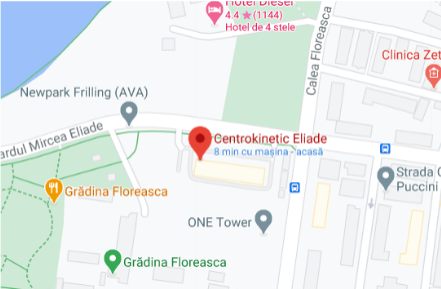
Centrokinetic is the leading medical clinic dedicated to bone and joint conditions, organized into several dedicated departments:
- Orthopedics: made up of a highly experienced team of orthopedic surgeons, led by Dr. Andrei Ioan Bogdan, senior orthopedics-traumatology physician with surgical activity at the Floreasca Clinical Emergency Hospital and at the Medlife Orthopedic Hospital, specialized in sports traumatology and in ankle and foot surgery.
- Pediatric orthopedics, where we treat children's sports injuries (ligament and meniscus injuries), spinal deformities (scoliosis, kyphosis, hyperlordosis), and foot conditions (hallux valgus, hallux rigidus, clubfoot, flat valgus foot, cavus foot).
- Neurology, providing consultations and EMG within the department. The medical team is completed by Dr. Mardare, highly specialized at the University of Oxford in spinal surgery.
- Medical rehabilitation, for children and adults, the department being led by one of the most experienced physicians in the field, senior lecturer Dr. Tache Georgiana. The department specializes in the recovery of performance athletes, in spinal conditions, and in the recovery of children with neurological and traumatic conditions.
- Medical imaging, the clinic being equipped with ultrasound and MRI, dedicated to musculoskeletal conditions. We are proud of our medical team of radiologists, made up of Dr. Ghiea Sorin, Dr. Pantu Cosmin, Dr. Florescu Nicoleta, specialized in musculoskeletal imaging.
Find out the latest news about us by following the Facebook and YouTube accounts of the Centrokinetic clinic.