
See details
READ MORE


Duchenne muscular dystrophy (DMD) is a rare genetic disease that progressively affects the skeletal muscles, the heart muscle, and the respiratory muscles, and it progresses steadily from childhood onward. Although there is no treatment that cures the disease, early diagnosis, multidisciplinary monitoring, and medical rehabilitation can help preserve muscle function and reduce complications. Below, we explain in detail what DMD is, how the diagnosis is established, what treatment options are available, and why periodic evaluation is essential for managing the condition.
DMD is a genetic disease caused by mutations in the DMD gene, located on the X chromosome. This gene produces dystrophin, a protein that protects the muscle fiber during contraction. Without dystrophin, the muscle fiber gradually deteriorates and is replaced by fatty and fibrous tissue. The result is a progressive loss of muscle strength.
The disease affects almost exclusively boys. Girls can be carriers of the mutation and, in some cases, may develop cardiac involvement or mild muscle weakness. For this reason, cardiac monitoring of carriers is recommended.
Becker muscular dystrophy is a milder form, caused by mutations in the same gene, but ones that allow the production of a partially functional dystrophin. Onset is later, and progression is slower.
Mutations in the DMD gene can be:
Transmission is recessive, X-linked:
In about one third of cases, the mutation occurs spontaneously, with no family history. The absence of a family history does not rule out the diagnosis.
Precisely identifying the mutation grants access to specific gene-targeted therapies, such as exon-skipping treatments, which are available only for certain types of mutations. Genetic counseling helps you understand the risks for other family members and reproductive options.
Blood tests frequently show very high creatine kinase (CK) values, sometimes 10–100 times above the normal limit. Elevated transaminases often initially lead to suspicion of a liver condition, even though the cause is muscular. If you notice such signs, schedule a pediatric neurological evaluation. Early intervention makes a difference in how the disease progresses.
DMD progresses steadily, but the pace varies from one patient to another:
About 30% of patients have learning difficulties or attention disorders. Neuropsychological evaluation and personalized educational support improve school adaptation.
A correct diagnosis provides access to appropriate treatment and personalized monitoring.
Confirmation is done by identifying the mutation in the DMD gene:
Genetic confirmation allows guidance toward specific therapies and genetic counseling for the family.
A complete evaluation at a center experienced in pediatric neurology and medical rehabilitation, such as Centrokinetic, ensures proper coordination of all these investigations.
There is no curative treatment, but the management options currently available help preserve autonomy for longer. The approach must be personalized and may include:
Corticosteroid therapy:
The doctor closely monitors side effects: weight gain, osteoporosis, behavioral disorders.
Specific gene therapy applies only to certain mutations. Precise genetic testing thus becomes indispensable.
Cardioprotective treatment can be started before symptoms appear, depending on age and the results of cardiac evaluations. The doctor may recommend ACE inhibitors or angiotensin receptor blockers, and beta-blockers are introduced when there is an indication.

Rehabilitation begins immediately after diagnosis and continues for life. The program must be adapted to the stage of the disease and the individual's capacity.
A personalized plan includes:
If you are a parent or a patient undergoing rehabilitation, choose to work with specialists in pediatric medical rehabilitation and physical therapy adapted to neuromuscular conditions. Early intervention can prevent certain complications that are difficult to manage later on.
Annual respiratory monitoring includes spirometry. If lung function declines, the doctor may recommend:
Periodic cardiology evaluation detects structural changes early. Treatment started early slows the deterioration of cardiac function.
Proper evaluation provides clear benefits:
The earlier the diagnosis is made, the better the chances of slowing progression. In the early stages, the muscle retains part of its functional capacity. Physical therapy, started promptly and applied correctly, preserves joint range of motion and reduces the occurrence of contractures.
Early intervention also means genetic counseling, early cardiac monitoring, and education for the family. All of these contribute to a more controlled course of the disease.
In recent decades, life expectancy has increased thanks to coordinated management. Many patients reach young adulthood or even over 30–40 years of age, if they benefit from modern treatment and careful monitoring.
Quality of life depends on:
Each case progresses differently. That is why a personalized approach and collaboration between specialties are a priority.
DMD requires coordination between a neurologist, cardiologist, pulmonologist, orthopedist, and rehabilitation specialist. A team experienced in neuromuscular conditions can establish a coherent plan and adapt it continuously.
The benefits are clear:
Book an appointment now at Centrokinetic for a specialist consultation.
Usually between 2 and 5 years of age. Parents notice difficulty walking, frequent falls, or motor delay. If you have doubts, request a neurological evaluation.
There is currently no curative treatment. Available therapies slow progression and improve quality of life. Research in gene therapy continues.
Testing confirms the diagnosis, identifies the type of mutation, and establishes eligibility for specific therapies. In addition, it helps with family counseling.
Yes. Some may develop cardiomyopathy or mild muscle weakness. Periodic cardiology monitoring is recommended.
Disclaimer: This material is intended for informational purposes only and does not replace a medical consultation, diagnosis, or the recommendations of a specialist. Duchenne muscular dystrophy requires multidisciplinary evaluation and monitoring, and investigations, medication, physical therapy, and other interventions must be established individually, based on the patient's age, disease stage, type of genetic mutation, and general condition.
Centrokinetic is the place where you will find clear answers and effective solutions for musculoskeletal conditions. Our clinic, dedicated to musculoskeletal disorders, is organized into the following specialized departments:
Stay up to date by following Centrokinetic on Facebook, Instagram, and YouTube.
Sources:
See details
READ MORESee details
READ MORESee details
READ MORESee here how you can make an appointment and the location of our clinics.







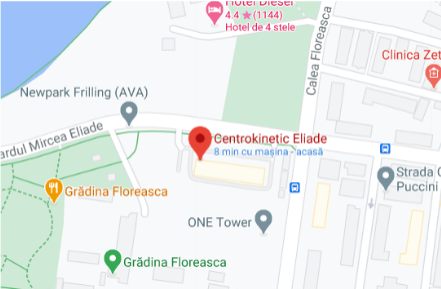
CENTROKINETIC FLOREASCA
Bucharest, 1st District,
Mircea Eliade Street, no. 18,
Eliade Tower, Entrance A, Floor 3
| Navigation | Explore 3D |
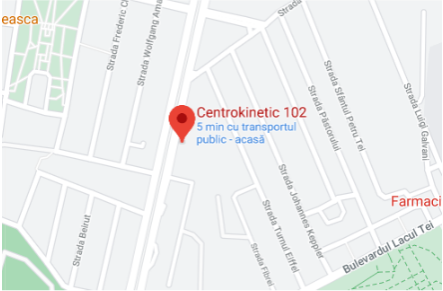
CENTROKINETIC Barbu Vacarescu
Bucharest, 2nd District,
Barbu Vacarescu Street, no. 102,
102 The Address, ground floor.
| Navigation | Explore 3D |
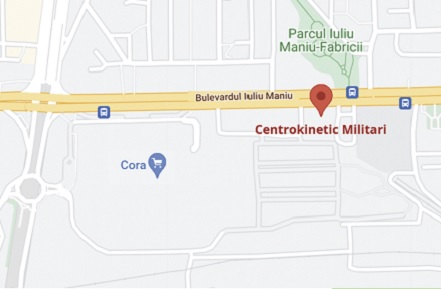
CENTROKINETIC MILITARI
Bucuresti, Sector 6,
Bld. Iuliu Maniu, nr. 15G,
Cladirea PBT, etaj 3.
| Navigation |
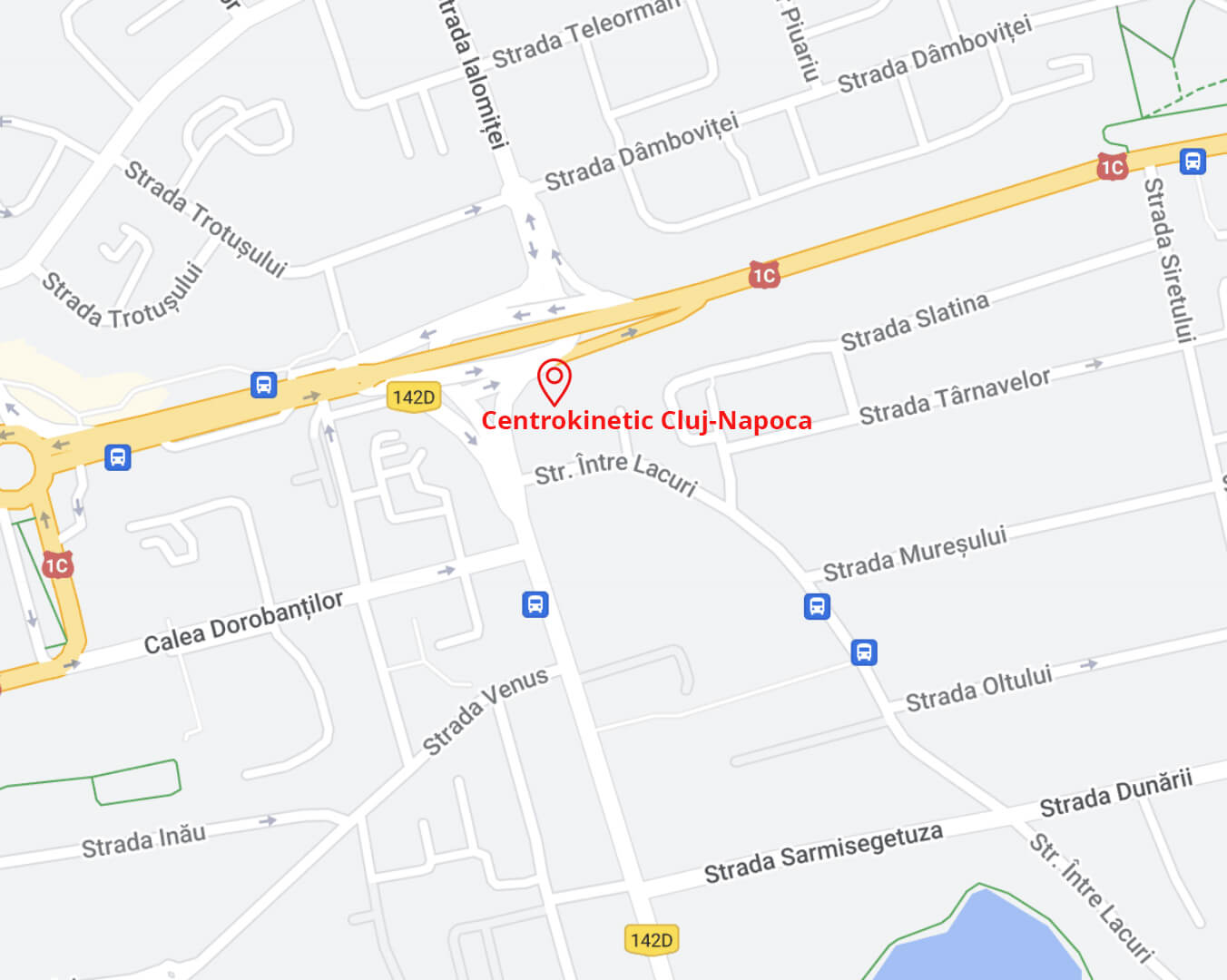
CENTROKINETIC CLUJ-NAPOCA
Cluj-Napoca,
Str. Intre Lacuri, nr.1
Intrarea este in spatele cladirii.
| Navigation |
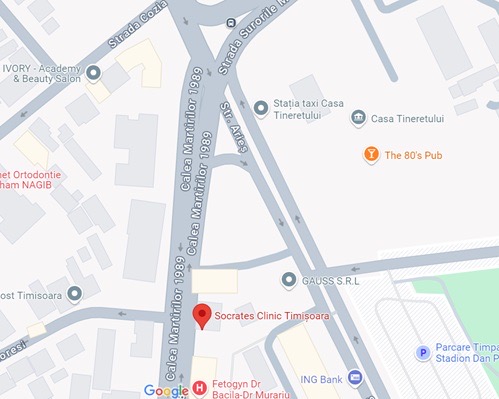
SOCRATES CLINIC TIMISOARA
Timisoara, Calea Martirilor 1989,
nr. 1.
Telefon: 0371 785 374.
| Navigation |
Phone: 0319693
E-mail: programari@centrokinetic.ro
Operating hours:
Monday – Friday: 07:00 – 21:00
Saturday: 09:00 – 14:00
Sunday: closed.
MAKE AN APPOINTMENT