
See details
READ MORE

.jpg "e123308a2385d57a42f8f6fbacd84a465a")
Meniscus injuries in children and teenagers occur more often than you'd think, especially in those who play contact sports or follow an intense training schedule. Knee pain after a pivoting movement, joint swelling, or being unable to fully straighten the leg should not be ignored. A proper evaluation, done in time, helps establish a treatment plan that is safe and suited to the child's age.
Below, we explain what a meniscus injury in a child means, how to recognize it, what investigations are needed, and what treatment options exist. The information is useful both for parents and for teenage athletes or active adults who want to better understand these common knee problems.
The meniscus is a crescent-shaped fibrocartilaginous structure, located between the femur and the tibia. Each knee has two menisci: medial (inner) and lateral (outer). They contribute to the joint's proper function.
The meniscus:
Compared to an adult, a child has better blood supply to the meniscus, which means better chances of healing after a suture. After about 10 years of age, the structure starts to resemble that of an adult. In addition, the presence of growth plates calls for caution when choosing treatment.
Preserving the meniscus is a priority. Removing too much meniscal tissue increases the risk of joint wear in the following years.
The most common injuries occur during sports. The typical mechanism involves a rotational movement of the slightly bent knee, while the foot stays fixed on the ground. For example, a teenager who suddenly changes direction while playing soccer may feel a pop followed by pain.
Other causes include:
The risk factors are well known:
In most cases, there is a clear traumatic episode. However, some children complain of progressive pain, without a precise moment of injury. Repeated microtrauma can produce meniscal tears over time.
Tears are classified by shape and location. Understanding the type of injury helps choose the right treatment.
Meniscus tears can be:
| Affected zone | Location | Healing potential | Common approach |
|---|---|---|---|
| Red zone | peripheral, vascularized | good | meniscal suture |
| White zone | central, poorly vascularized | low | partial meniscectomy |
In children, a discoid meniscus (an abnormal rounded shape) appears mostly on the lateral side and tears more easily. Identifying this anatomical variant influences the surgical plan.
Symptoms vary depending on the size and location of the tear. The most common signs are:
A child may keep playing despite the pain. If the knee stays swollen for several days, or if repeated locking episodes occur, seek a pediatric orthopedic evaluation.
.jpg "e1ec8b2bae591b9d57d25c2f44fbcb98f5")
A correct diagnosis brings clear benefits: the right treatment, avoiding complications, and reducing the time off activity.
The orthopedic doctor:
An X-ray rules out fractures or bone injuries, but does not show the meniscus. A knee MRI confirms the tear, establishes its type, and identifies any associated injuries. For good results, the doctor correlates the images with the clinical examination.
Even if the pain decreases, don't assume the injury has healed. Schedule a complete evaluation at a specialized center, such as Centrokinetic, where the team has experience in pediatric sports pathology.
The treatment plan depends on:
The approach must be personalized. There is no single solution for all patients.
The doctor recommends it in carefully selected cases:
The protocol can include:
Physical therapy aims to reduce inflammation, restore mobility, and strengthen the thigh muscles. Monitoring is mandatory. If symptoms persist, the doctor reassesses the surgical indication.
In many situations, a symptomatic tear requires arthroscopic surgery. The procedure is performed through small incisions, with the help of a video camera.
The main options are:
In children, suturing is the first option, if the anatomy allows it. Preserving the meniscus reduces the risk of joint degeneration.
Any surgery carries general risks: infection, joint stiffness, suture failure. That is why the procedure must be performed by a team experienced in knee arthroscopy.
Proper recovery directly influences the long-term outcome. Follow the medical instructions and avoid returning to sport too early.
Duration varies:
The program must be adapted to the child's age and growth stage. The doctor and the physical therapist set clear goals and periodically reassess progress. If persistent pain, fever, or significant swelling occur, seek a medical check-up immediately.
An ignored tear can lead to:
Early intervention reduces these risks. A proper evaluation provides an accurate diagnosis and a treatment plan tailored to your child.
Meniscus injuries in children require collaboration between the orthopedic doctor, the radiologist, and the physical therapist. The medical team's experience influences the treatment decision and the recovery process.
At a center dedicated to musculoskeletal conditions, such as Centrokinetic, you benefit from:
Book an appointment now for a specialist consultation!
Small tears, located in the vascularized zone, can heal in certain cases with conservative treatment and careful monitoring. Most symptomatic tears require an orthopedic evaluation and, sometimes, surgery.
Not always. The doctor recommends surgery if there is joint locking, persistent pain, or an unstable tear. The decision is based on the clinical examination and the MRI.
Return depends on the type of procedure and the progress of recovery. After a meniscal suture, resuming sport happens only after functional testing and medical approval.
A properly performed arthroscopy does not affect the growth plates. The techniques used in pediatric orthopedics protect the structures that are still developing.
Knee locking, persistent swelling, significant pain, or the inability to bear weight require a prompt specialist evaluation.
Disclaimer: This material is intended for informational purposes only and does not replace a specialist medical consultation. The diagnosis, treatment indication, need for surgery, and recovery program must be established individually by the orthopedic doctor, based on the child's age, the type of injury, and any associated conditions.
See details
READ MORESee details
READ MORESee details
READ MORESee here how you can make an appointment and the location of our clinics.






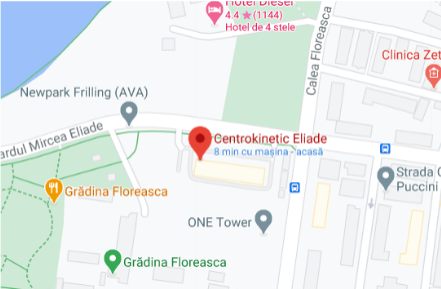
CENTROKINETIC FLOREASCA
Bucharest, 1st District,
Mircea Eliade Street, no. 18,
Eliade Tower, Entrance A, Floor 3
| Navigation | Explore 3D |
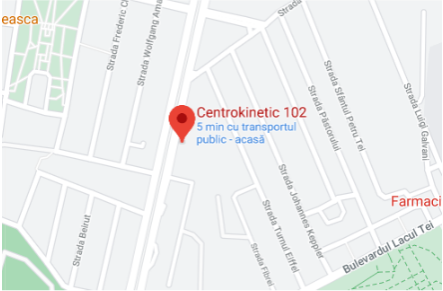
CENTROKINETIC Barbu Vacarescu
Bucharest, 2nd District,
Barbu Vacarescu Street, no. 102,
102 The Address, ground floor.
| Navigation | Explore 3D |
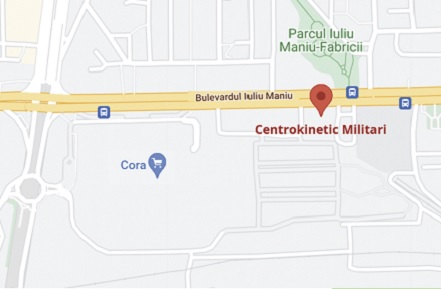
CENTROKINETIC MILITARI
Bucuresti, Sector 6,
Bld. Iuliu Maniu, nr. 15G,
Cladirea PBT, etaj 3.
| Navigation |
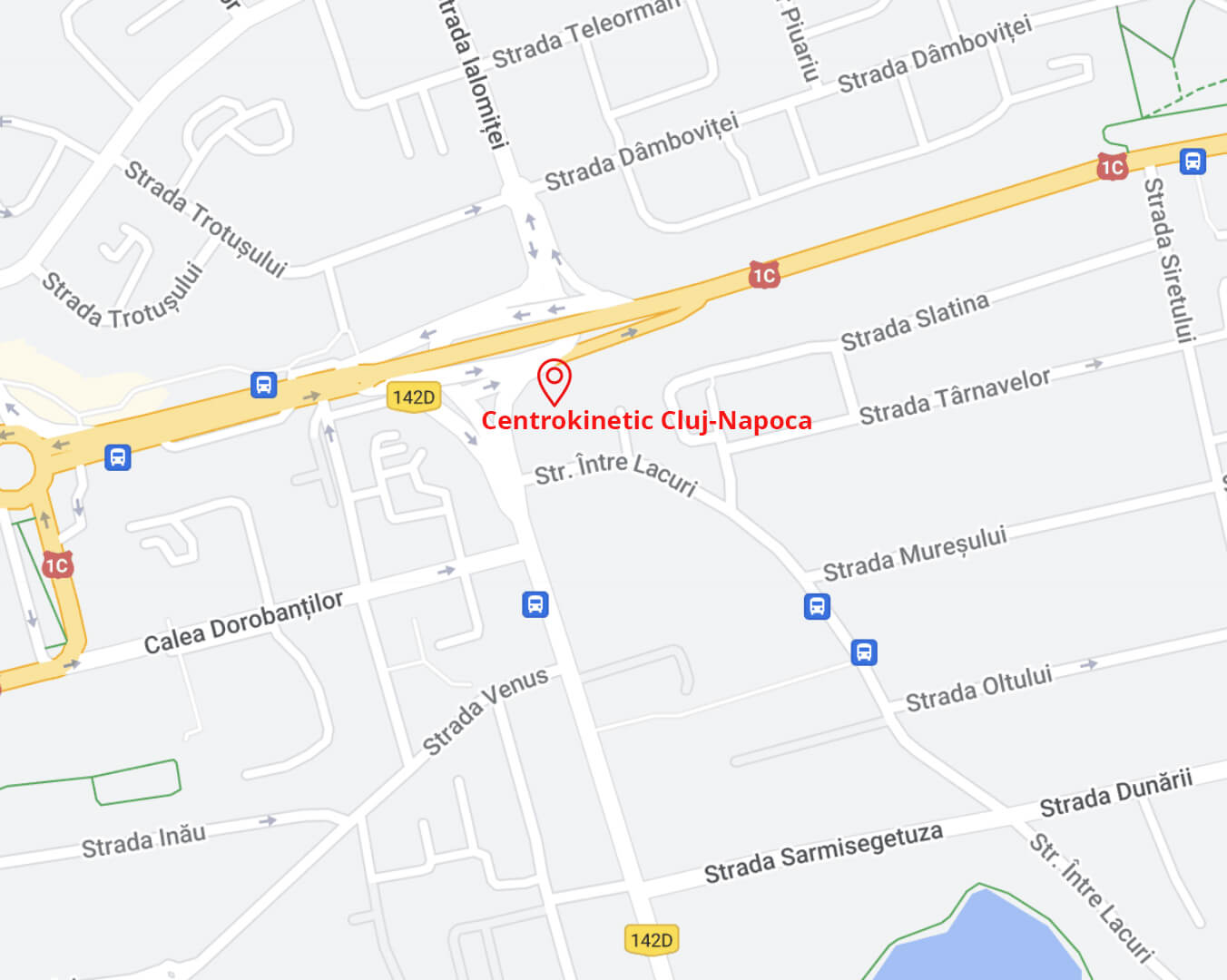
CENTROKINETIC CLUJ-NAPOCA
Cluj-Napoca,
Str. Intre Lacuri, nr.1
Intrarea este in spatele cladirii.
| Navigation |
SOCRATES CLINIC TIMISOARA
Timisoara, Calea Martirilor 1989,
nr. 1.
Telefon: 0371 785 374.
| Navigation |
Phone: 0319693
E-mail: programari@centrokinetic.ro
Operating hours:
Monday – Friday: 07:00 – 21:00
Saturday: 09:00 – 14:00
Sunday: closed.
MAKE AN APPOINTMENT