We use cookies to personalize content, ads, and analyze our traffic. We also share information about how you use our site with our advertising and analytics partners, who may combine it with other information you have provided or that they have collected from your use of their services.

Afiseaza detalii
  •  

7 Types of exercises for scoliosis

Contul meu Contact
Article written by: ANNE IORDANESCU, Kinetoterapeut
Actualizat: 18-03-2025 / Publicat: 26-05-2020

i.php?p=header(9).jpg

Introduction to scoliosis

Scoliosis causes the spine to curve sideways, causing pain and changes in a person's gait. Exercises and stretches are vital components of treatment. In mild cases, people can treat scoliosis with specific exercises and stretches, eliminating the need for surgery. While some medical conditions can cause scoliosis, the most typical form of scoliosis is adolescent idiopathic scoliosis. This form of scoliosis develops during the growth spurt and affects 2-3% of the population.

While research has found evidence supporting specific exercises for scoliosis, it is much better for a person with scoliosis to consult with a healthcare provider or physical therapist about the best stretches and exercises for them.

Exercises for scoliosis

The right exercises for scoliosis depend on the location of the scoliosis curve. People with lumbar scoliosis should focus on exercises appropriate for the lumbar area, while people with thoracic scoliosis need to do exercises specific to the shoulders. Doctors may recommend the following exercises and stretches for people with scoliosis:

Pelvic tilts

A pelvic tilt will help stretch the contracted muscles and the lumbar area. To do a pelvic tilt:

  • Lie on your back, with your feet flat on the floor and your knees bent.
  • Tighten your abdominal muscles while flattening your back toward the floor.
  • Hold for 5 seconds, while breathing normally.
  • Relax.
  • Do two sets of 10 repetitions.

Raise your arms and legs at the same time

People can work their lumbar area by simultaneously raising their arms and legs. To do the raises:

  • Lie on your stomach with your forehead on the ground.
  • Extend your arms overhead, with your palms positioned flat on the ground. Keep your legs straight.
  • Raise one arm off the ground.
  • Hold for one or two full breaths, then lower the arm down.
  • Repeat with each arm and each leg.
  • Do 15 repetitions for each limb.

Cat-Camel

Cat-Camel is a yoga pose. It can help keep the spine flexible and pain-free. To do the Cat-Camel pose:

  • Start on your hands and knees, making sure your back is aligned, and your head and neck are relaxed.
  • Breathe in deeply, then pull your abdominal muscles up, arching your back.
  • Exhale and release your abdominal muscles, arching your back the other way, letting your belly drop and raising your head toward the ceiling.
  • Do two sets of 10 repetitions.

Bird-Dog

The bird-dog pose is another exercise inspired by yoga. To do this exercise:

  • Start on your hands and knees with your back straight.
  • Place your hands directly under your shoulders, with your knees directly under your hips.
  • Extend one arm straight forward while extending the opposite leg straight back.
  • Breathe normally and hold for 5 seconds.
  • Repeat with the opposite arm and leg.
  • Do 10-15 repetitions on each side.

Latissimus dorsi stretch

People can stretch their latissimus dorsi - the largest muscle in the upper body - with this stretch. Thoracic scoliosis directly affects these muscles. Lumbar scoliosis can also cause tension in the lumbar area that extends up to the latissimus dorsi.

To do a latissimus dorsi stretch:

  • Stand with good posture in a neutral position.
  • Keep your feet shoulder-width apart and your knees very slightly bent.
  • Reaching overhead with both hands, grab your right wrist with your left hand.
  • Lean slightly to the right side until you feel a stretch on the left side of your body.
  • Hold for one to two breaths, then push with your left foot to return to the starting position.
  • Repeat on the opposite side.
  • Do 5-10 repetitions on each side.

Abdominal press

Having strong abdominal muscles can help take some of the pressure off the back muscles. It can also help a person maintain good posture.

To do an abdominal press:

  • Lie on your back with your feet flat on the ground and your knees bent.
  • Keep your back in a neutral position, without tension.
  • Raise both lower legs off the floor until they reach a 90-degree angle.
  • To contract the abdominal muscles, use your hands to push down on your knees while pulling your knees toward your hands at the same time. This is a static exercise, which means your legs and arms should not move when you press.
  • Hold for three full breaths and then relax.
  • Do two sets of 10 repetitions.

Practicing good posture

Good posture can reduce pain and muscle tension. Several times a day, each person can realign their posture correctly. To have good posture when standing:

  • Let your shoulders drop down and back.
  • Position your ears over your shoulders.
  • Gently tuck in your chin so that it does not lift forward or drop too far down.
  • Gently contract your abdomen.
  • Slightly unlock your knees.

When sitting, keep your back straight and your ears over your shoulders. Your legs should be in a neutral position and not crossed. It can help to scan your body to detect signs of tension. For example, some people unconsciously tense their shoulders or lean slightly to one side, especially when experiencing pain or stress.

Targeted exercise program

Doctors and researchers have developed several targeted scoliosis programs. For example, the Scientific Exercises Approach to Scoliosis (SEAS) is an individualized program that teaches a person to consistently correct their posture and correct the position of their spine.

The most suitable exercise program depends on the type and degree of scoliosis. If a doctor recommends a specific exercise program, ask whether it is safe to do other exercises at home and which exercises should be avoided.

Exercises to avoid

Some activities and exercises can worsen or amplify scoliosis symptoms and can increase the risk of secondary injuries. People with scoliosis should avoid:

  • Keeping the neck bent forward, so that the head is facing down, such as when using a smartphone.
  • Playing football and other high-contact sports are dangerous for people with scoliosis.
  • Ballet and gymnastics can also injure the thoracic spine.
  • Repeated extension of the torso, which can occur in some yoga poses, ballet steps, or gymnastics.
  • Exposing the spine to repeated impacts from jumping or running, with trampolining, horseback riding, and long-distance running or running on hard surfaces being responsible for this type of activity.

Home management tips

In addition to physical exercise, a number of home management solutions can be helpful. These include:

  • Bracing. Bracing can prevent a spinal curve from worsening, reduce pain, and improve mobility. The right bracing strategy depends on the type of scoliosis a person has, so talk to a doctor before trying it at home.
  • Choosing the right furniture. An ergonomic chair or mattress can better support the spine and back, reducing pain.
  • Massage. Some people find that massage helps with scoliosis pain.
  • Chiropractic treatment: Visiting a chiropractor specialized in scoliosis can help ease discomfort and pain. While this will not cure scoliosis, it can greatly improve quality of life for a person with the condition.

Conclusions on scoliosis

Scoliosis ranges from mild to severe. In some cases, observation and exercises at home are enough to correct a curve of the spine. In more severe cases, a person may need additional treatment, including bracing, exercise, and surgery. Since scoliosis can affect a person's mobility and well-being, it is essential to see a specialist in scoliosis treatment before deciding on a treatment.

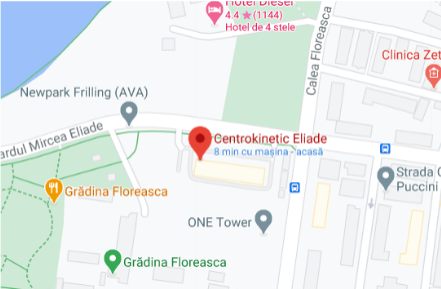
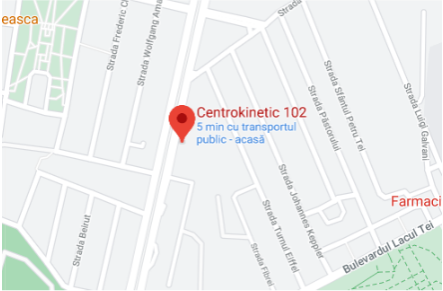
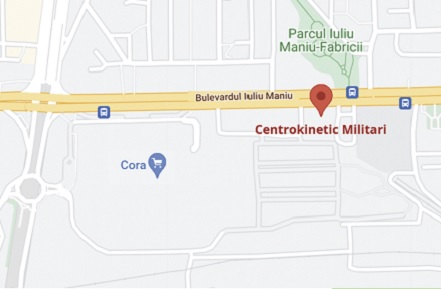
Centrokinetic is the place where you will find clear answers and solutions for your movement issues. The clinic dedicated to osteoarticular conditions is divided into the following specialized departments:

  • Orthopedics, a department made up of a highly experienced team of orthopedic doctors, led by Dr. Andrei Ioan Bogdan, senior orthopedics-traumatology physician, with surgical activity at Medlife Orthopedics Hospital, specialized in sports traumatology and in ankle and foot surgery.
  • Pediatric orthopedics, where children's sports-related conditions are treated (ligament and meniscus injuries), spine deformities (scoliosis, kyphosis, hyperlordosis) and foot conditions (hallux valgus, hallux rigidus, clubfoot, flatfoot, cavus foot).
  • Neurology, which has a high-performance department, where consultations, electroencephalograms (EEG), and electromyography (EMG) are performed.
  • Medical rehabilitation for adults and children, a department specialized in the recovery of performance athletes, spinal conditions, and the recovery of children with neurological and traumatic conditions. Our experience is extremely rich, having treated over 5000 performance athletes.
  • Medical imaging, the clinic being equipped with an ultrasound and an MRI machine, high-performance equipment dedicated to musculoskeletal conditions, and complemented by an experienced team of radiologists: Dr. Sorin Ghiea and Dr. Cosmin Pantu, specialized in musculoskeletal imaging.

Find out the latest news by following the Centrokinetic clinic's Facebook and YouTube accounts.

SUCCESSFUL RECOVERY STORIES

programare

MAKE AN APPOINTMENT

Because in our clinic every treatment is based on a diagnosis and is done under medical supervision.

CONTACT US

MAKE AN APPOINTMENT
FOR AN EXAMINATION

See here how you can make an appointment and the location of our clinics.


MAKE AN APPOINTMENT
BUCHAREST TEAM


Asiguratori privati

Parteneriate