We use cookies to personalize content, ads, and analyze our traffic. We also share information about how you use our site with our advertising and analytics partners, who may combine it with other information you have provided or that they have collected from your use of their services.
Cookies are text files that your browser stores when you visit the website, so that it remembers your preferences and certain information (such as the language displayed and options) set in the website), so as to offer you a browsing experience customized and optimized in terms of display and content. Cookies contain information about your IP, about the type of browser, about the device, about certain preferences navigation set by you on the site, even if you are not logged in. Cookies cannot identify you directly, but your IP can be associated with a country, a city and an Internet access provider. Cookies can be stored in the browser by the site visited or by partner traffic analysis services or advertising. Because we respect your right to privacy, you can choose enabling or disabling certain types of cookies, preferences that you can further express.
Necessary cookies
Mandatory
The necessary cookies are essential for the operation of the site and cannot be disabled. These are cookies that store information related to the preferences you declare on the site: acceptance of policies, including that of cookies, preference of language, information and login preferences. These cookies do not contain personal data through which you can be identified in a way direct.
You can block these cookies from your browser settings, but then some parts of the site will not work properly or will not it doesn't work at all.
Cookies used by this website:
• preferences - necessary for content display and storage your preferences
• session - temporary cookie, required to validate the session tale
Functional cookies
Allowed
These are cookies that allow us to show you personalized content on the site, depending on your previous activity on the site. Some of these cookies may be part of modules created by other IT companies and used by us in the development and management of the site.
Cookies used for this website:
FeedbackTracker – this cookie remembers if you have already clicked on the Google Review link found at the end of the feedback form, in order not to display this button every time you fill out the form if you have already provided a Google Review.
Traffic analysis cookies
Allowed
Traffic analysis cookies store statistical, anonymous information about the date and time of each visit to the site, the duration of the visit, the pages accessed and the actions on each page. Some cookies can record the movement of the cursor on the screen, in order to determine which were the areas of interest followed by the website visitors.
These cookies are installed by third-party modules, used in the development of the site, and processed by them in an anonymized way, in order to provide us with centralized reports about the traffic on the site.
Marketing cookies are installed by third-party services, of companies with which we carry out marketing and advertising activities. These cookies are used by these advertising companies to create marketing profiles and to show you ads on other sites you visit. The information processed through these cookies is not data that can identify you directly, but they make the unique identification of your browser. This process helps us not to spend on ads displayed to an audience uninterested in our products, and it helps you to receive fewer irrelevant ads, and more information about products and services that might really interest you. This process does NOT target direct marketing. You will not receive information by e-mail, SMS or other direct communication channel after accepting this type of cookie.
Cookies used by this website:
Google Adwords / Remarketing
Facebook Pixel
To view Google's policy on processing personal data, please visit the site regarding Google's privacy, terms, and conditions: https://business.safety.google/privacy/
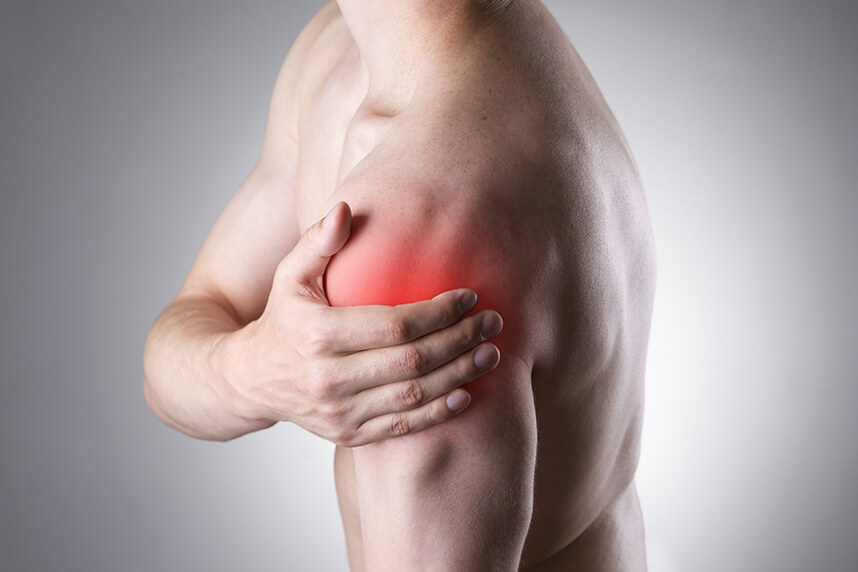
According to surveys, shoulder pain affects 18-26% of the population. Symptoms can be persistent and can "disable" a person's ability to carry out daily activities both at home and at work. Especially those with jobs that involve combinations of exposure to: overhead work, heavy loads, vibrations, and repeated movements.
At the same time, among the causes of this condition are also:
changes in the body triggered by aging;
overuse of tissue in the joint and peri-articular area;
dehydration, malnutrition, lack of rest;
trauma resulting from accidents, for example falling onto the shoulder;
reduction of the subacromial space caused by osteophyte buildup;
Specific rehabilitation techniques may include stretching exercises, as well as those aimed at strengthening the muscles of the shoulder. These exercises will focus on improving flexibility, will increase your range of motion, and will provide greater comfort and ease of movement.
Perform these simple exercises three to six times a week. Start with a 10-minute routine and gradually increase the duration as the joint becomes stronger and more flexible. While performing them, focus on relaxing and releasing any tension in the shoulders. Perform the movement only as far as is comfortable, without forcing it.
Standing or seated on a chair, lower your chin toward your chest, gently tilt your head to the right, making a semicircle, to stretch the muscles on the left side. Return, then tilt your head to the left to stretch the muscles on the right side. Hold this position for up to 1 minute. Repeat 3-5 times on each side. To increase the stretching effect, place one hand on your shoulder and one hand above your ear to gently guide the movement.
From the same position, bring your right arm in front of you, at 90 degrees, hold your elbow with your left hand to support the arm, bring your right arm across your chest, pulling toward the opposite shoulder, without bending the elbow. Repeat 3-5 times on each side, holding this position for up to a minute.
From a standing position, hold an elastic band or a towel behind your back, low down, with both hands, trying to gently lift the band or towel without bending your elbows and without leaning your torso forward. Chin raised, looking toward the ceiling, try to hold this position for up to 30 seconds. Repeat 3-5 times. To increase the stretching effect, bring your hands as close together as possible on the band or towel.
Seated on a chair, raise your arms in front of you, bend your elbows at 90 degrees, place your right elbow in the crook of your left elbow, then try to touch your palms together. Then place your left elbow in the crook of your right elbow, trying to do the same movement. Hold this position for 15 seconds. On the exhale, gently pull your elbows toward your chest, on the inhale - return.
Seated on a chair, knees bent at 90 degrees, palms on your thighs, twist your torso to the left, trying to grab the edge of the chair on the opposite side with your left hand, while your right hand provides resistance at the level of your left knee, so that the body does not twist from the pelvis with the lower limbs. Repeat the same movement on the other side. Hold this position for up to 30 seconds, repeating the movement 3-5 times on each side.
From a standing position with the right knee bent and resting on a chair, the right hand holding the back of the chair, and the torso slightly leaning forward. Let your left upper limb "hang" down. Perform a pendulum motion of the arm forward-backward, left-right, then perform a circular motion to the right and to the left, without forcing the movement, letting the upper limb move by its own momentum. Then switch sides, performing the same movements with the other arm. Repeat these movements 5-10 times on each side and with each limb.
Standing facing a wall, at a right angle in the room. Elbows bent at 90 degrees, palms resting, one on one wall, one on the other wall. Lean your torso forward, gently pressing your chest so that it slightly passes the line of your shoulders, but without forcing the movement. Hold this position for 30 seconds to a minute. You can perform this exercise from the same position at a doorframe.
From a face-down position supported on your palms, or the "plank" position, palms spaced at shoulder width and feet spaced at hip width. From this position, gently raise your hips toward the ceiling, evenly distributing your body weight on your palms and soles, until your body forms an inverted "V" shape, keeping your soles perfectly flat on the ground, elbows extended and head pointed down, between your upper limbs, keeping your spine straight, try to look at your abdomen. Hold this position for up to a minute.
From an all-fours position, twist your torso and head to the left, bringing your right arm under your chest, palm facing the ceiling and elbow extended. The left elbow being bent, maintaining support on the left palm, the right ear, and the right shoulder. Perform the same movement on the right side. Hold this position for up to 30 seconds. To increase the stretching effect, you can perform the same exercise without maintaining support on the left/right palm, raising the arm upward, with the elbow extended.
From a kneeling position, arms in front, gently lean your torso forward until you rest on your palms, letting your seat rest on your heels. Let your chest fall heavily toward the floor, relaxing your spine and shoulders. You can hold this position for up to 5 minutes. To increase the stretching effect, you can perform the same exercise with your palms resting on a chair, trying to lower your chest toward your knees as much as possible, keeping your seat on your heels and your elbows extended.
In addition to doing these exercises, you can prevent shoulder pain by following a few simple tips and recommendations:
maintain correct posture when standing, at your desk, or when performing certain daily activities;
rest from any activity that causes pain; if you must do these activities as part of your job, decide how you can move your body to minimize discomfort;
if you practice sports that cause shoulder pain, make sure you use proper form and technique;
regular massage treatments, manual therapy, and physiotherapy can also help prevent and relieve shoulder pain;
continuing exercises and treatments even after the pain has eased will help prevent the pain from returning.
See a doctor or a physical therapist if the pain worsens or does not improve, to determine what exactly is causing the pain and to recommend the best treatment plan. You should also see a doctor immediately if you have deep pain or severe pain in both shoulders, difficulty raising your arm, or difficulty sleeping on your arm. These being symptoms of a more severe injury. Also talk to your doctor before starting any exercise program if you have other associated medical conditions.
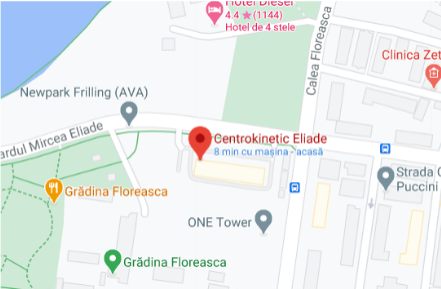
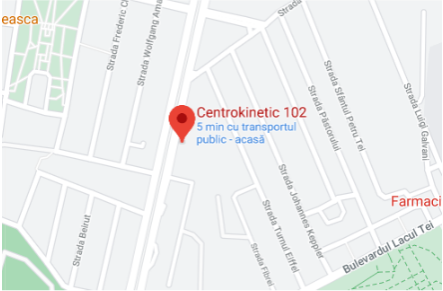
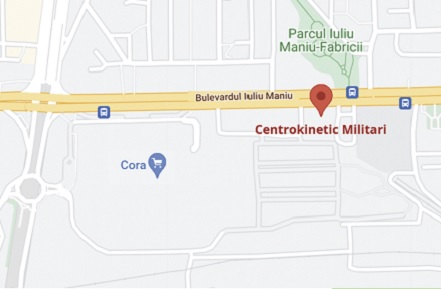
Centrokinetic is the place where you will find clear answers and solutions for your movement issues. The clinic dedicated to osteoarticular conditions is divided into the following specialized departments:
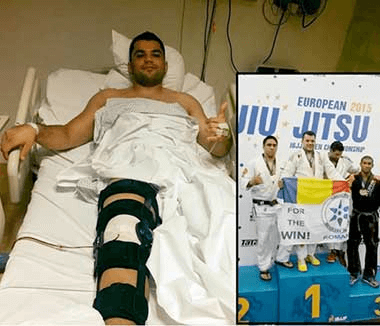
Orthopedics, a department made up of a highly experienced team of orthopedic doctors, led by Dr. Andrei Ioan Bogdan, senior orthopedics-traumatology physician, with surgical activity at Medlife Orthopedics Hospital, specialized in sports traumatology and in ankle and foot surgery.
Pediatric orthopedics, where children's sports-related conditions are treated (ligament and meniscus injuries), spine deformities (scoliosis, kyphosis, hyperlordosis) and foot conditions (hallux valgus, hallux rigidus, clubfoot, flatfoot, cavus foot).
Neurology, which has a high-performance department, where consultations, electroencephalograms (EEG), and electromyography (EMG) are performed.
Medical rehabilitation for adults and children, a department specialized in the recovery of performance athletes, spinal conditions, and the recovery of children with neurological and traumatic conditions. Our experience is extremely rich, having treated over 5000 performance athletes.
Medical imaging, the clinic being equipped with an ultrasound and an MRI machine, high-performance equipment dedicated to musculoskeletal conditions, and complemented by an experienced team of radiologists: Dr. Sorin Ghiea and Dr. Cosmin Pantu, specialized in musculoskeletal imaging.
Find out the latest news by following the Centrokinetic clinic's Facebook and YouTubeaccounts.