Actualizat: 11-11-2021 / Publicat: 11-01-2018
This article was written by Dr. Cezar Tomescu, pediatric orthopedic specialist, who practices medicine at our clinic and at the Medlife Pediatric Hospital.
Normal structure of the hip joint
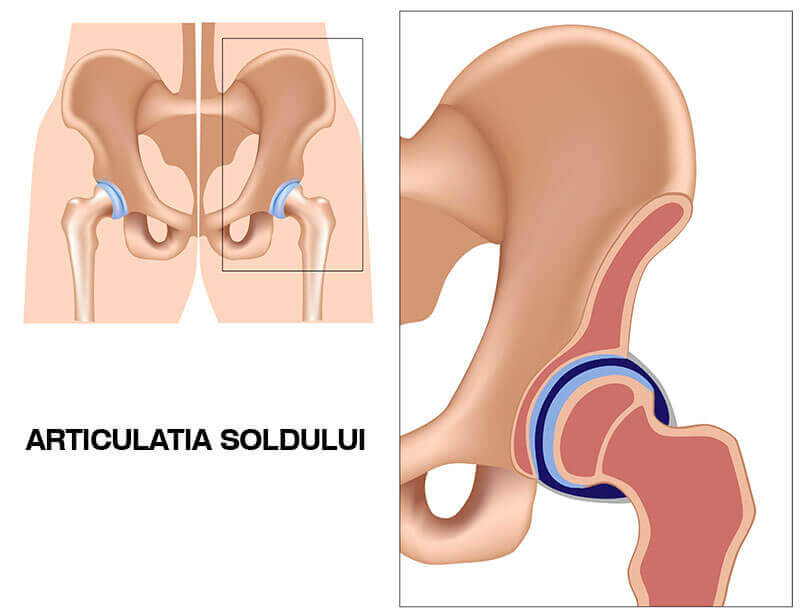
The hip joint is one of the most stable joints in the human body, providing, in the vast majority of cases, support and pain-free mobility throughout life.
Put simply, hip anatomy is a "ball in a pocket" - the femoral head, shaped like a ball, rotates in a pocket of the same shape, called the acetabulum.
![acetabulum]()
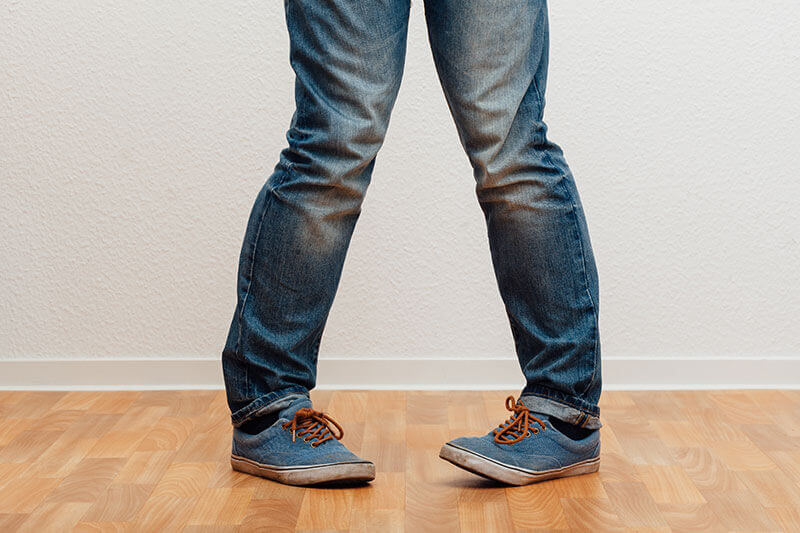
In young children, walking with the feet slightly turned inward is a normal stage of neuro-motor development, even though it is caused by femoral anteversion. Usually, anteversion corrects itself once walking has stabilized.
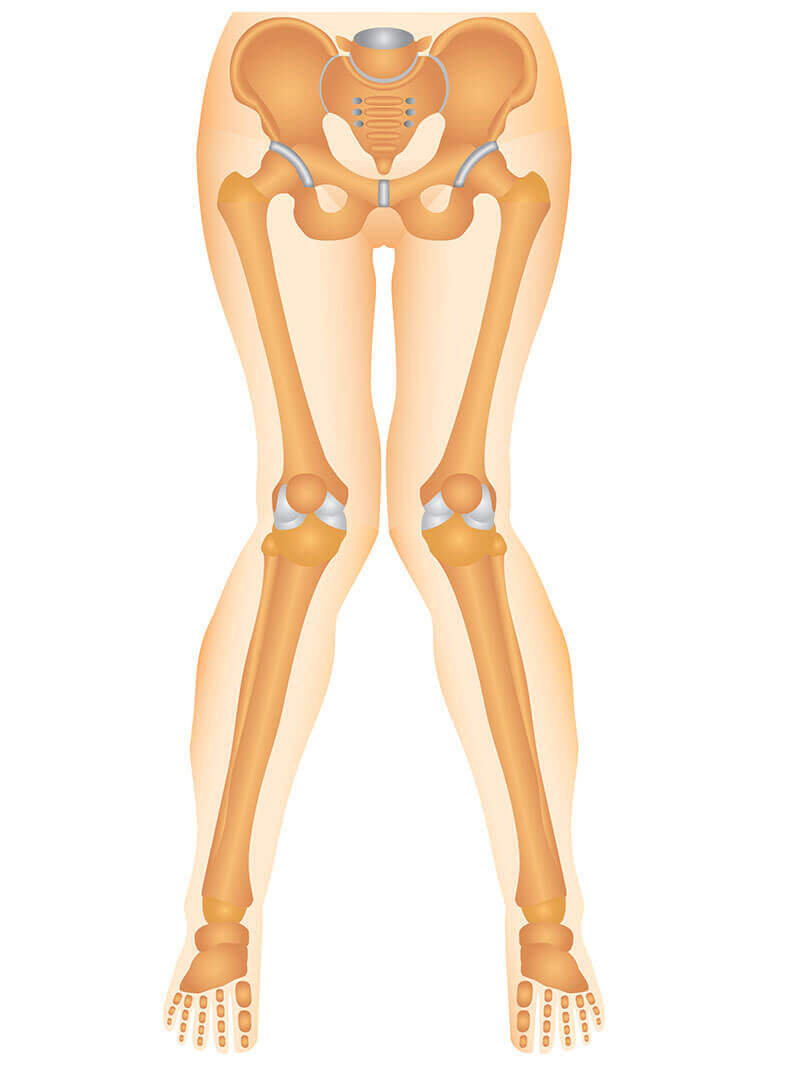
What is femoral anteversion? Femoral anteversion is the twisting of the thigh bone - the femur - which leads to internal rotation of the child's knees and feet, so that the child's big toes touch each other when walking.
Because the knees and femur are rotated inward, the legs appear to be permanently bent, this shape helping the child balance in the standing position. When the child tries to stand up with their feet close together and rotated outward, they lose their balance and can even trip and fall very frequently.
![]()
When does femoral rotation become evident?
Femoral anteversion is usually observed in children between 2 and 4 years old, since femoral rotation increases during this period. The condition is best highlighted when the child is between 5 and 6 years old.
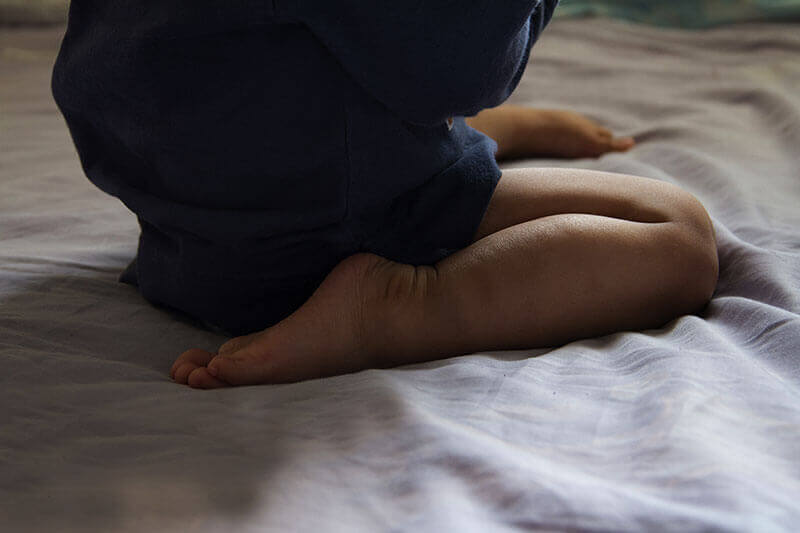
The causes of femoral anteversion are not known; it is considered to be a developmental variation, most often accentuated by the "W" sitting position that the child easily manages to adopt. The child's position should be corrected, so that they manage to spontaneously and naturally adopt the cross-legged sitting position or sit with their legs stretched out in front.
![femoral anteversion]()
When should you see a doctor?
If your child shows the following signs, a specialist consultation is needed:
- Walks with the toes turned inward - the child is unable to walk with their feet together and stand with them straight
- Runs, especially when tired, with the feet thrown outward
- Trips and falls often
- Wears down the toe of their shoes
- Frequently and easily sits in the "W" position
In most cases, a natural correction occurs by age 8. After this age, the correction is much slower or no longer occurs at all, and there are also extreme cases in which surgery is performed for correction.
IF YOU DON'T ALREADY KNOW US
Centrokinetic is the place where you will find answers and clear solutions for your mobility problems. The clinic dedicated to bone and joint conditions is divided into the following specialized departments:
- Orthopedics, a department made up of a highly experienced team of orthopedic surgeons, led by Dr. Andrei Ioan Bogdan, senior physician in orthopedics-traumatology, with surgical activity at the Medlife Orthopedic Hospital, specialized in sports traumatology and in ankle and foot surgery.
- Pediatric orthopedics, where children's sports injuries are treated (ligament and meniscus injuries), spinal deformities (scoliosis, kyphosis, hyperlordosis) and foot conditions (hallux valgus, hallux rigidus, clubfoot, flat valgus foot, cavus foot).
- Neurology, which has a state-of-the-art department, where consultations, electroencephalograms (EEG) and electromyograms (EMG) are performed.
- Medical rehabilitation for adults and children, a department specialized in the recovery of performance athletes, in spinal conditions, and in the recovery of children with neurological and traumatic conditions. Our experience is extremely rich, having treated over 5000 performance athletes.
- Medical imaging, the clinic being equipped with ultrasound and MRI, high-performance devices dedicated to musculoskeletal conditions, and complemented by an experienced team of radiologists: Dr. Sorin Ghiea and Dr. Cosmin Pantu, specialized in musculoskeletal imaging.
Find out the latest news by following the Facebook and YouTube accounts of the Centrokinetic clinic.