Everything you need to know about hyaluronic acid for knee injections


- Types of hyaluronic acid for knee injections
- How does hyaluronic acid help you?
- When are hyaluronic acid knee injections recommended?
- How is the injection performed?
- How often are these injections given?
- Side effects
- About Centrokinetic
Types of hyaluronic acid for knee injections
Hyaluronic acid works as a lubricant and shock absorber in joints, helping them function properly. Hyaluronic acid injection is used to treat knee pain caused by knee osteoarthritis, in people who have already been treated with painkillers or who have followed other treatments that did not work. This product is available in the form of a solution and a gel.
The following medications are types of joint injections or infiltrations with hyaluronic acid:
- sodium hyaluronate;
- hyaluronan or high molecular weight hyaluronate;
- Hylan G-F 20;
- cross-linked sodium hyaluronate.
Attention! Hyaluronic acid is administered only by, or under the supervision of, a specialist doctor in orthopedics.
To benefit from professional treatment with hyaluronic acid knee injections, book an appointment with a Centrokinetic specialist doctor.

How does hyaluronic acid help you?
Normally, the human body produces hyaluronic acid, a natural part of the fluid that helps lubricate and cushion the joints, coating the cartilage, facilitating normal movement of the limbs.
When you suffer from osteoarthritis of the knee joint, the hyaluronic acid in the affected area thins out. Hyaluronic acid injections address this problem, helping to supplement the fluid needed for the joints to function normally. These injectable preparations are also called viscosupplements, which literally means that they help build up viscous/lubricating substance in the joints in order to prevent the bones from rubbing directly against each other.
At the same time, hyaluronic acid reduces joint inflammation and, therefore, joint pain and swelling. However, there are no studies demonstrating that hyaluronic acid would help regenerate articular cartilage.
When are hyaluronic acid knee injections recommended?
The goals of treating knee osteoarthritis through hyaluronic acid injections are:
- reducing pain;
- improving joint movement by increasing the level of joint lubrication and reducing friction and inflammation:
- reducing the progression of osteoarthritis.
Hyaluronic acid injections are recommended for people suffering from knee osteoarthritis whose symptoms have not improved following treatment with painkillers (acetaminophen, ibuprofen, sodium naproxen) or who cannot undergo total knee replacement surgery.
How is the injection performed?
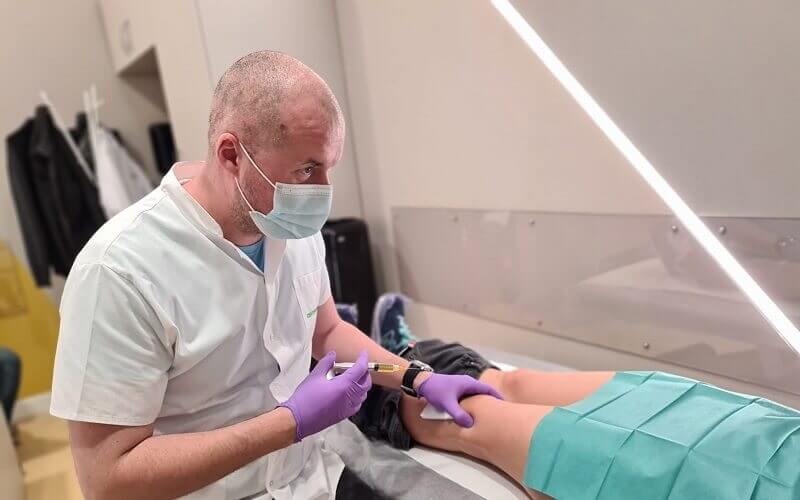
During a hyaluronic acid injection, or viscosupplementation, a small amount of substance, often as little as 2 ml, is injected directly into the capsule of the knee joint. Hyaluronic acid injections are administered by a specialist doctor. Depending on the brand used, this treatment involves 1, 3, 4, or 5 injections. If several injections are needed, the doses are given one week apart.
The injection is performed in the same way for all types of treatment. First, the doctor cleans the area. If the knee is inflamed and has excess fluid, the doctor may inject a local anesthetic, then insert a needle into the joint to withdraw the fluid. Then, the doctor injects the hyaluronic acid into the knee joint.
Attention! After an injection, a person should not perform particular physical activities or lift weights for one or two days. After this period, a person can resume normal daily activities.
How often are these injections given?
In general, the effect of higher-concentration hyaluronic acid injections lasts between 6 and 12 months, these being more effective than cortisone-based knee injections. However, some research suggests that these injections may have better results for younger people who suffer from arthritis at less advanced stages.
Side effects
The knee joint must not be stressed for two days after the procedure is performed. Therefore, activities such as jogging, football, tennis, weight lifting, or standing for a long period of time must be strictly avoided.
Temporary pain or swelling of the knee joint may occur after the hyaluronic acid injection is given.
This treatment must not be contaminated with disinfectants containing quaternary ammonium salts such as benzalkonium chloride, since these can alter the effect of the hyaluronic acid injection.
Attention! If pain or inflammation of the knee persists or worsens after the hyaluronic acid injection, consult the specialist doctor.
Adverse reactions
Treatment with hyaluronic acid can cause any of the following adverse reactions:
- ➢ More frequent:
- difficulty moving;
- muscle pain or stiffness;
- joint pain.
- ➢ Less frequent:
- swelling or redness of the joints;
- bleeding;
- the appearance of blisters;
- burning sensation;
- feeling of coldness;
- skin discoloration;
- feeling of pressure;
- hives;
- infection;
- inflammation;
- itching sensation;
- numbness;
- skin rash;
- stinging;
- tingling;
- ulcerations;
- warmth at the injection site.
These adverse reactions may disappear during treatment, as the body adapts to the injected substance.
Attention! This presentation is strictly for informational purposes.
Conclusion
Hyaluronic acid knee injections are a successful method for treating problems related to knee joint osteoarthritis. Hyaluronic acid injections can be recommended and administered by a specialist doctor. If you suffer from health problems in your knee joints, see a Centrokinetic specialist doctor to be shown the appropriate treatment formula.
About Centrokinetic
Centrokinetic is the place where you will find clear answers and effective solutions for musculoskeletal conditions. Our clinic, dedicated to musculoskeletal disorders, is organized into the following specialized departments:
- Orthopedics, a department composed of a highly experienced team of orthopedic surgeons specializing in sports traumatology.
- Pediatric Orthopedics, where sports injuries in children (ligament and meniscus injuries), spinal deformities (scoliosis, kyphosis, hyperlordosis), and foot deformities (hallux valgus, hallux rigidus, equinovarus foot, flatfoot, cavus foot) are treated.
- Neurology, featuring a state-of-the-art department where consultations, electroencephalograms (EEG), and electromyography (EMG) examinations are performed.
- Medical Rehabilitation for adults and children, a department specialized in the rehabilitation of professional athletes, spinal disorders, and children with neurological and traumatic conditions. Our extensive experience includes treating more than 5,000 professional athletes.
- Medical Imaging, with the clinic equipped with ultrasound and MRI systems dedicated to musculoskeletal conditions, complemented by an experienced radiologist, Dr. Cosmin Pantu, specialized in musculoskeletal imaging.
- Rheumatology, a comprehensive department dedicated to the diagnosis, treatment, and rehabilitation of patients with non-surgical musculoskeletal disorders.
- Vascular Surgery, a highly specialized department focused on the diagnosis and treatment of vascular diseases affecting arteries, veins, and lymphatic vessels.
- Psychology and Speech Therapy. Neurological and musculoskeletal conditions can have a psychological impact on patients, which is why we believe complete recovery requires addressing both the physical condition and its psychological consequences.
- Neurofeedback. This innovative method helps improve concentration, reduce anxiety, and achieve emotional balance through a simple and interactive process.
Stay up to date by following Centrokinetic on Facebook, Instagram, and YouTube.
MAKE AN APPOINTMENT
FOR AN EXAMINATION
See here how you can make an appointment and the location of our clinics.
MAKE AN APPOINTMENT
BUCHAREST TEAM


































































CLUJ NAPOCA TEAM


































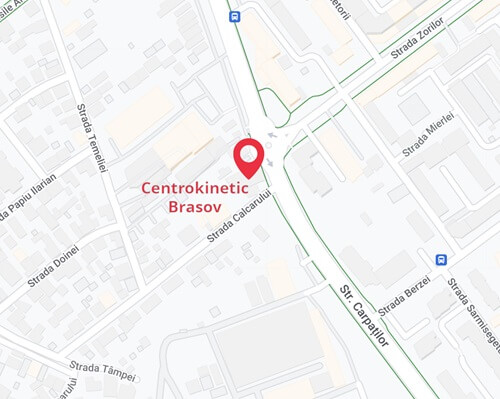
BRASOV TEAM


















Asiguratori privati





Parteneriate



CENTROKINETIC FLOREASCA
Bucharest, 1st District,
Mircea Eliade Street, no. 18,
Eliade Tower, Entrance A, Floor 3

| Navigation | Explore 3D |
CENTROKINETIC Barbu Vacarescu
Bucharest, 2nd District,
Barbu Vacarescu Street, no. 102,
102 The Address, ground floor.
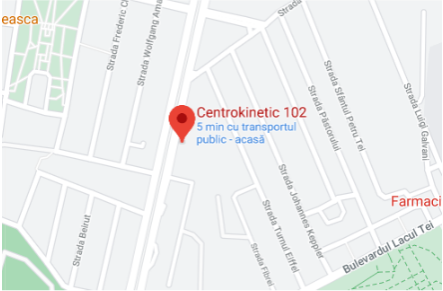
| Navigation | Explore 3D |
CENTROKINETIC MILITARI
Bucuresti, Sector 6,
Bld. Iuliu Maniu, nr. 15G,
Cladirea PBT, etaj 3.
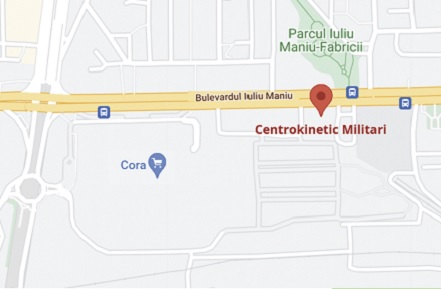
| Navigation |
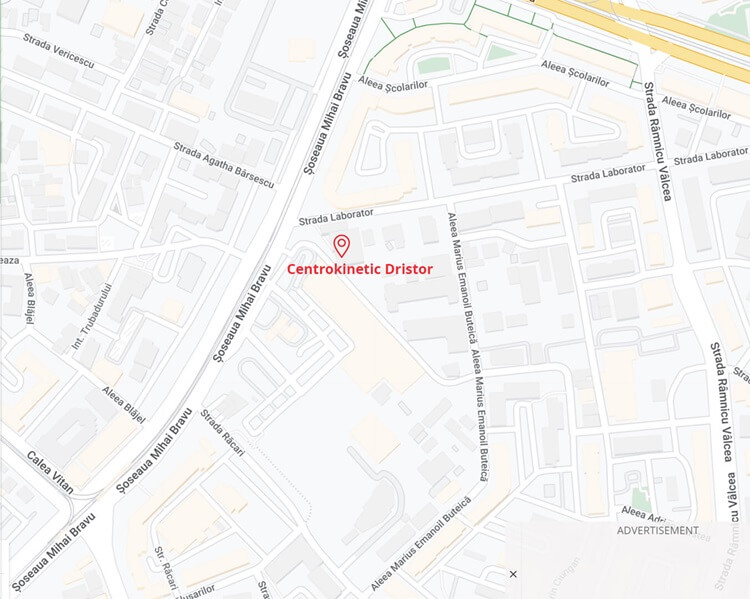
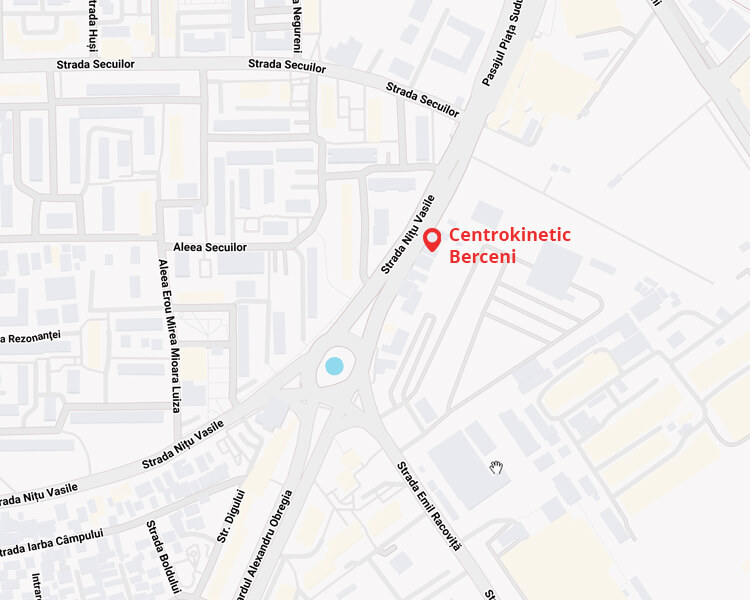
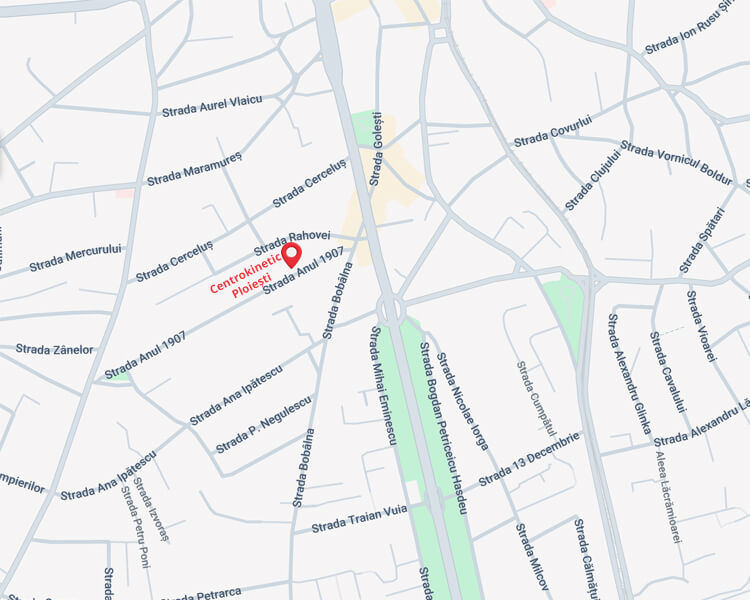
CENTROKINETIC CLUJ-NAPOCA
Cluj-Napoca,
Str. Intre Lacuri, nr.1
Intrarea este in spatele cladirii.

| Navigation |

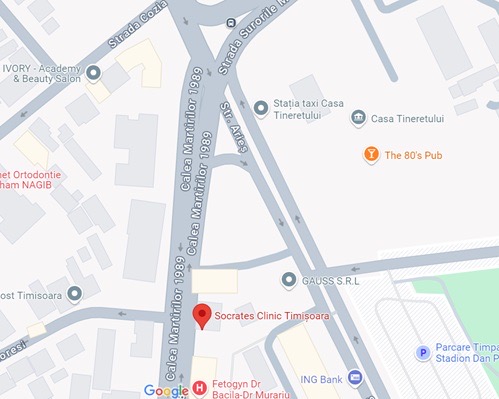
SOCRATES CLINIC TIMISOARA
Timisoara, Calea Martirilor 1989,
nr. 1.
Telefon: 0371 785 374.
| Navigation |
CONTACT
Phone: 0319693
E-mail: programari@centrokinetic.ro
Operating hours:
Monday – Friday: 07:00 – 21:00
Saturday: 09:00 – 14:00
Sunday: closed.
MAKE AN APPOINTMENT