
See details
READ MORE

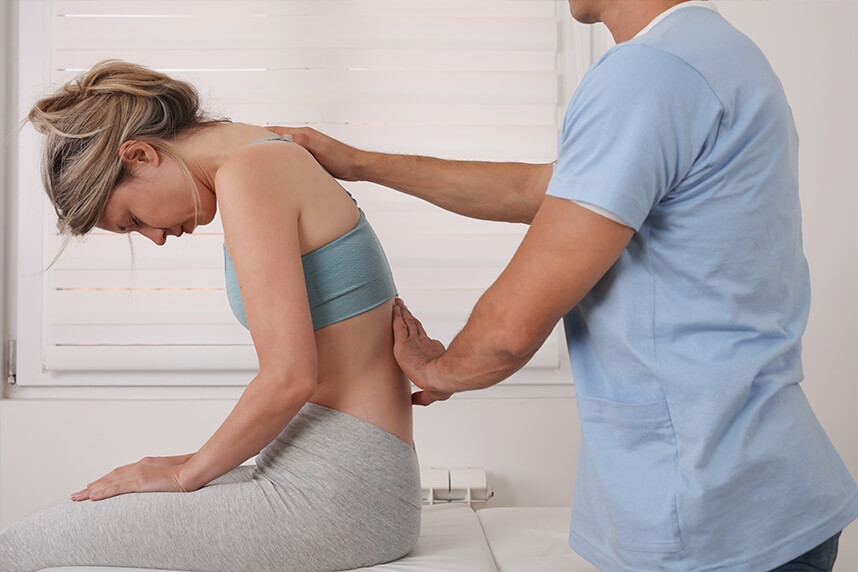
Incorrect posture is increasingly common nowadays, not only among adults, but also among children, who, due to the development of technology and the use of various devices, are gradually starting to develop poor posture. Aspects of modern life, such as using a smartphone, sitting in front of a laptop, and slouching against the back of a chair, are important factors affecting body posture. Prolonged use of these devices leads to the head tilting forward and the development of what is known as a "hump."
You will now notice that many young people have a curved upper back, otherwise known as thoracic hyperkyphosis.
Although everyone is susceptible, and incorrect posture has practically become something normal, the consequences are more severe than you might think.
In this article, we will talk about the "hump" and why you cannot ignore this posture if you have it or see it in your children. Then, we will explain how to correct it with exercises that can straighten it out. Please note that the purpose of this article is to address thoracic kyphosis caused by muscle imbalances, and not structural problems, such as arthritis, bone deformities, or hyperkyphosis caused by Scheuermann's disease. If thoracic kyphosis is caused by any of these problems listed, we advise you to undergo some more thorough investigations.
Thoracic kyphosis is the technical term for the usual "hunched" position, where the upper part of the back is rounded and the chest is pulled inward. Instead of standing up straight as in a normal, healthy posture, a person with thoracic hyperkyphosis will be leaning forward and will have to tilt their head up and back in order to maintain a normal visual line, which can also lead to vision problems. The thoracic spine is the region of the spine that extends from the neck down to the abdomen.
A rounded upper back is the main symptom of hyperkyphosis. Kyphosis can cause pain in the upper back area, especially with certain movements, due to compression of the intervertebral space or the nerves. Stiffness in the spine can also occur due to degeneration of the intervertebral discs. Thoracic hyperkyphosis and stiffness of the thoracic spine can cause a forward head position. As the spine rounds, the pelvic area also suffers, especially the hamstring muscles, which shorten and stiffen. In severe cases, hyperkyphosis can cause pressure on the lungs and can lead to breathing problems.
The good news about thoracic hyperkyphosis is that it can be corrected. You need to address it as early as possible, because the more time passes, the harder it is to correct and the more problems it can cause.
Here are a few reasons why you should take this postural problem seriously:
If you don't fix your hyperkyphosis problem, you are also predisposed to other associated problems, such as lumbar hyperlordosis, which is an excessive curvature in the lumbar area. When the upper back is rounded, the lumbar area also begins to curve in the opposite direction, leading to excessive "S"-shaped modeling of the spine in the sagittal plane. The vertebrae are designed to sit one on top of the other in a vertical column with physiological curves. When there is excessive curvature throughout the entire spine, the intervertebral discs must absorb much more shock. This increases the risk of spinal health problems, because the increased "load" on the discs can restrict the blood flow that keeps them healthy.
To compensate for the rounded back, you have to bring your head forward in order to maintain an upright position. Your back is meant to support the weight of your head, but with a forward head position, the neck bears almost all the weight. In fact, just a few centimeters of forward head position can double or triple the weight load on the cervical spine. Like cervical hyperlordosis, the extra weight and unnatural position put the health of your spine at risk. It also causes tension in the neck muscles, which can lead to neck pain and headaches.
In addition, thoracic hyperkyphosis doesn't look good on anyone, and appearance can also affect how we feel. The way you carry yourself physically translates into who you are as a person, in terms of confidence and self-worth. No one wants to have this type of posture, especially as a child or teenager. Fixing your posture is a very important aspect when it comes to getting a good start in life.
As you age, thoracic hyperkyphosis predisposes you to neurological problems caused by restricted blood flow to the brain. It has been shown that there is a risk of fractures in the elderly due to the way it affects mobility. The longer you have thoracic hyperkyphosis, the more it will worsen over time.
It is fairly easy to tell if you or your child has thoracic hyperkyphosis. Thoracic hyperkyphosis is just one of the many posture problems you can have, but it is also the most common one. You may only have forward shoulders and internal rotation, but not hyperkyphosis. When the shoulders are protracted and internally rotated, the shoulder blades also stick out instead of lying flat against the chest wall. This can give the impression of a "hump," but it is not necessarily thoracic hyperkyphosis. To diagnose hyperkyphosis, you only need to look at the spine, and the best way to do this is to compare it against a wall.
If you cannot press your entire spine against the wall, due to curvature at the thoracic level, you may have thoracic hyperkyphosis.
As discussed above, the main cause is maintaining incorrect posture for a long period of time. Thoracic hyperkyphosis involves an imbalance between the back muscles and the chest muscles. This usually happens over time, due to maintaining poor posture. When we sit with a rounded back and leaning over with our head above a smartphone, the chest muscles are shortened and contracted while the back muscles are long and stretched. Over time, the muscles adapt to these positions. Because the chest muscles are contracted, and the shoulders are also pulled forward, the chest begins to collapse inward. At the same time, the muscles in the upper back area lose their tone and are not strong enough to counteract the position. The chest muscles remain shortened and contracted as long as we don't stretch enough. It takes about 20 minutes for the muscles to develop tension and, as a result, bring about deformities through changes in posture. To fix your posture, you need to address these muscle imbalances.
In particular, the pectoral muscles, the upper abdomen, and the front part of the intercostal muscles are the shortened muscles, and also the most affected in thoracic hyperkyphosis. First of all, it helps to stretch these muscle groups.
The weak and overstretched muscles are those of the spinal erectors. Along the spine, we have small stabilizing muscles that make up the erector spinae group. The thoracic erector spinae supports the thoracic spine and is affected when we have hyperkyphosis.
For this, you need a multifunctional approach. First, you need to discover the causes that led to this incorrect posture; second, you need to perform mobilizations and release tension from the soft tissues, such as the muscles; and third, you need to strengthen a particular muscle area. If we take these things step by step, we will achieve the desired results.
It is very important to observe poor posture in our children, whether it involves the limbs, but especially the spine: whether we're talking about sitting at a desk doing homework, or about free time spent playing on a phone, tablet, or simply on the floor with toys, we need to pay attention to how we sit and how we hold our backs during these activities.
As a way of approaching the exercises that you can or cannot do with your child once you notice that they have problems, you should first ask for the advice of a specialist. This is because many of the exercises only work in certain combinations. For example, crunches alone are not recommended, because they perform trunk flexion, and thus we would already be working a part of the musculature that is already under tension.
Massage to release tension in the muscles around the spine is always a first step in correcting the curvature. Through massage, we bring a large supply of blood to that area and can thus relieve tension in it; we can also use various instruments for this purpose. But be very careful when using them on children's sensitive skin. This type of massage is called myofascial release. We can also use self-massage techniques, especially for older children and teenagers. Here are a few ideas:
Stretching the spine is the key point in its mobility. This is achieved by mobilizing the intervertebral joints. Daily stretching makes the spine much more flexible. Just as important in the treatment of hyperkyphosis is chest stretching. This is recommended to be performed at least 3 times a day.
Strengthening the back muscles causes them to contract, so that they help you keep the spine in an upright position, instead of allowing it to curve. These strength exercises are easy to do at home and should be performed daily.
In the article above, we talked about a few exercises that can help you correct hyperkyphosis, through simple exercises performed at home, but regularly. However, the most important thing in succeeding with these is to avoid, as much as possible, positions that favor curvature of the spine. By avoiding poor habits and positions and training the muscles, we can correct and maintain a spine with physiological curves. A very important aspect is to be persistent in performing the exercises; usually, however long it takes the body to become deformed, it takes about the same amount of time, or a little longer, to recover.
Here are a few tips:
Centrokinetic is the place where you will find answers and clear solutions for your movement problems. The clinic dedicated to osteoarticular conditions is divided into the following specialized departments:
Find out the latest news by following the Facebook and YouTube accounts of Centrokinetic clinic
See details
READ MORESee details
READ MORESee details
READ MORESee here how you can make an appointment and the location of our clinics.







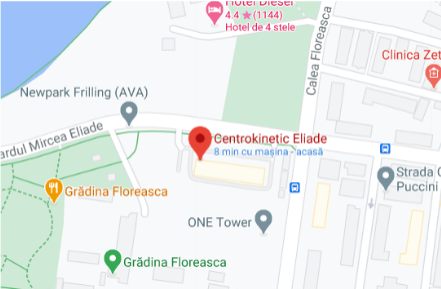
CENTROKINETIC FLOREASCA
Bucharest, 1st District,
Mircea Eliade Street, no. 18,
Eliade Tower, Entrance A, Floor 3
| Navigation | Explore 3D |
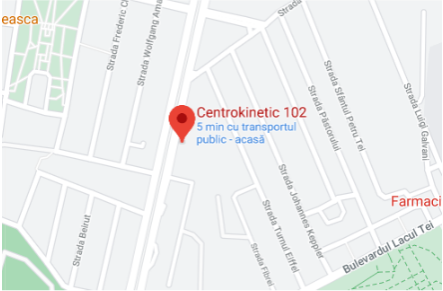
CENTROKINETIC Barbu Vacarescu
Bucharest, 2nd District,
Barbu Vacarescu Street, no. 102,
102 The Address, ground floor.
| Navigation | Explore 3D |
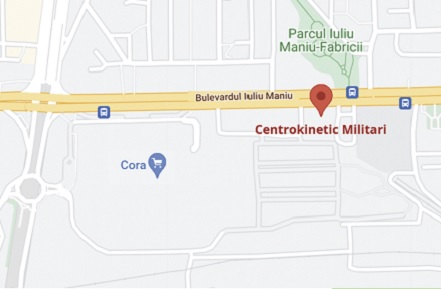
CENTROKINETIC MILITARI
Bucuresti, Sector 6,
Bld. Iuliu Maniu, nr. 15G,
Cladirea PBT, etaj 3.
| Navigation |
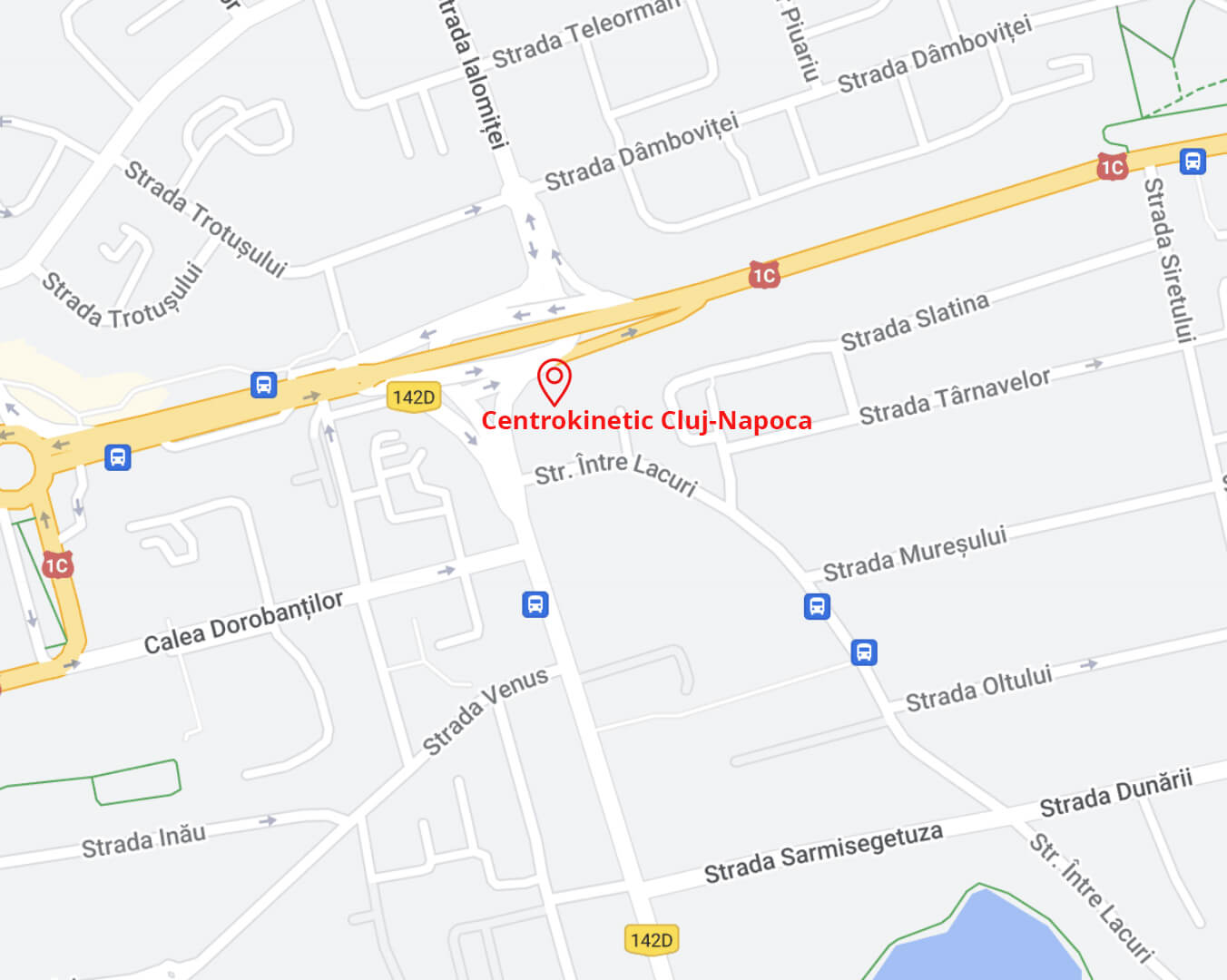
CENTROKINETIC CLUJ-NAPOCA
Cluj-Napoca,
Str. Intre Lacuri, nr.1
Intrarea este in spatele cladirii.
| Navigation |
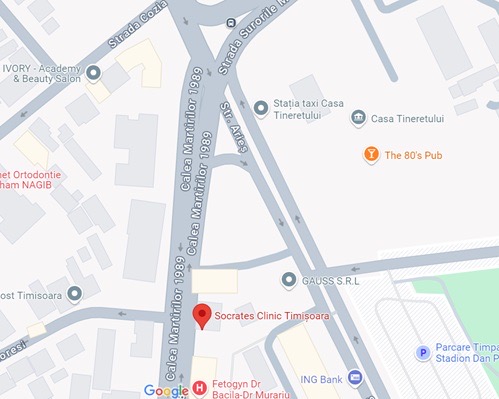
SOCRATES CLINIC TIMISOARA
Timisoara, Calea Martirilor 1989,
nr. 1.
Telefon: 0371 785 374.
| Navigation |
Phone: 0319693
E-mail: programari@centrokinetic.ro
Operating hours:
Monday – Friday: 07:00 – 21:00
Saturday: 09:00 – 14:00
Sunday: closed.
MAKE AN APPOINTMENT