Actualizat: 18-03-2025 / Publicat: 12-03-2019
This article was written by Dr. Catalin Vlad Gican, orthopedic specialist, with over 10 years of experience, highly specialized in sports traumatology.
The human spine is naturally curved, but too much curvature can cause problems. Hyperlordosis occurs when the inner curve of the spine in the lower back is exaggerated. Hyperlordosis can occur at any age, but is rare in children. It is a reversible condition that often occurs as a result of poor posture, or a lack of physical exercise.
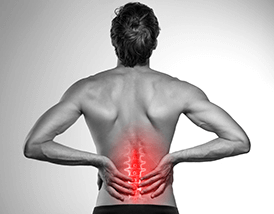
Hyperlordosis is associated with lower back pain and varies in symptoms - in mild cases it causes only minimal discomfort, however in more severe cases hyperlordosis can cause considerable pain and disability.
Lordosis, anatomically speaking, is the anterior curvature of the spine. Hyperlordosis is usually separated into different regions of the spine: lumbar and cervical. Cervical hyperlordosis is the inner curve in the neck region. Lumbar hyperlordosis is the inner curve in the lower back region. Both regions are diagnosed and treated in similar ways. Lumbar hyperlordosis is more common than cervical hyperlordosis.
In a healthy spine, the neck should look like a very wide C, with the curve pointing toward the back of the neck. Cervical hyperlordosis occurs when the spine in the neck region does not curve as it normally should.
This can mean:
• There is an exaggerated curve.
• The curve runs in the wrong direction, also called reverse cervical lordosis.
• The curve has shifted to the right.
• The curve has shifted to the left.
Hyperlordosis in the lower back, or lumbar spine, is the most common type. The easiest way to check for this condition is to lie on your back on a flat surface. You should be able to slide your hand under your back, and notice that only a little free space remains.
A person with lumbar hyperlordosis will have extra space between their back and the surface they are lying on. If there is an extreme curve, a C-shaped arch will be seen when the person stands upright. Viewed from the side, their abdomen and buttocks will stick out.
The natural curvature of the spine is essential for keeping the body in an upright position. If the lumbar spine were straight, rather than curved, the connection to the pelvic region would force the body to lean forward. However, a congenital spinal deformity or other medical conditions or incorrect practices can cause abnormal curvature of the spinal vertebrae.
There are various factors that can cause hyperlordosis to occur. Depending on the type of hyperlordosis, cervical or lumbar, some of the causes may be slightly different.
Cervical hyperlordosis: Discitis, curvature disorders such as kyphosis and scoliosis, obesity, osteoporosis, spondylolisthesis, poor posture, congenital conditions and previous injuries.
Lumbar hyperlordosis: Achondroplasia (the most common form of dwarfism), spondylolisthesis, osteoporosis, obesity, kyphosis, discitis, congenital conditions and arthritis.
Incorrect back position is one of the most common causes of hyperlordosis. When the body is in a seated position, the muscles in the lumbar region can strain too much as they try to stabilize and support the spine. This gradually pulls the spine out of alignment, causing the curvature of the spine to increase. People with jobs that involve sitting for long periods of time may be at higher risk of having hyperlordosis.
Hyperlordosis is also associated with musculoskeletal injuries, often seen in dancers and gymnasts. Many of them start training at a young age and work for long periods of time in certain postures, which can increase any negative impact on their health. Poor overall posture in the long term can lead to the formation of hyperlordosis, as well as other back-related problems.
Obesity results in the presence of excess fat in the abdomen and buttocks. This causes additional pressure on the lower back, which can lead to the bending of the lumbar spine. Most obese people experience pain more frequently in the lower or lumbar region of the back. The extra weight will eventually pull the hips down, causing the curve in the spine to shift forward. This forward shift is lumbar hyperlordosis, and obesity carries a higher risk of developing this condition.
In addition to increasing the risk of obesity, a lack of physical exercise can weaken the core muscles located around the trunk and pelvis. Weak muscles are less able to support the spine, allowing excessive curvature of the spine.
In some cases, hyperlordosis can be the result of other underlying spinal problems, such as kyphosis, spondylolisthesis and discitis. Certain conditions and factors can increase the risk of hyperlordosis. These include:
Spondylolisthesis: spondylolisthesis is a condition of the spine in which one of the lower vertebrae slips onto the bone below. It is usually treated with therapy or surgery.
Osteoporosis: osteoporosis is a bone disease that causes a loss of bone density, which increases the risk of fractures.
Kyphosis: kyphosis is a common condition that leads to outward rounding of the upper back region. Compared to natural shapes that have a curve of 20-50 degrees, kyphosis has a curve greater than 50 degrees. This leads to a hunchback. Kyphosis can be observed at any age, but is most commonly observed in older women after osteoporosis weakens the bones in the spine, until they break and compress.
Scoliosis: scoliosis is a spinal disorder in which the vertebrae curve sideways. This curve looks like the shape of an "S" or "C." There are different types of scoliosis, including congenital, neuromuscular, degenerative and idiopathic. People who suffer from scoliosis usually have one shoulder or hip higher than the other. In addition, the head might not be centered in the middle of the body, and they may have lower back pain, numbness and fatigue.
Hyperlordosis can cause muscle tightness and stiffness in the lower back. It can also damage the spine and soft tissues in the lumbar region. Most cases of hyperlordosis are mild, and the back remains flexible. If the arch of the back is rigid and does not disappear when the affected person bends forward, there may be a more serious problem.
A person with hyperlordosis may present the following symptoms:
• Curved spine. Hyperlordosis leads to excessive curvature of the spine in the lower back, causing the abdomen and buttocks to appear more prominent when viewed from the side.
• Lower back pain. People with hyperlordosis may experience mild to severe back pain, which can worsen during movement.
If you have these symptoms, book an appointment at our clinic for a consultation.
Diagnosis can be difficult because there is massive variation in the lumbosacral angle among the population. Any value between 39 and 53 degrees is considered to be within normal limits. Other factors, such as gluteal prominence, can also lead to a false impression of lumbar lordosis.
Accurate measurement of the lumbar angle is essential, as are accurate measurements of any deviations in the sagittal plane. X-rays are used to measure the curvature. MRI and CT scans can be useful to investigate any soft tissue abnormalities.
The doctor will examine the patient's medical history, perform a physical exam and ask about symptoms to determine whether hyperlordosis is present. During the physical exam, the doctor will ask the patient to bend forward and sideways. They will check:
• whether there is flexibility or not in the curve
• range of motion
• whether the spine is aligned
• whether there are any abnormalities
The doctor will determine whether the patient has hyperlordosis based on the angle compared with other factors, such as height, age and body mass.
If you have pain or your hyperlordosis is rigid, see a doctor to determine the cause. Depending on the diagnosis, the doctor may refer you to a specialist or a physical therapist. Sometimes, hyperlordosis can be a sign of a pinched nerve, bone loss in the spine or a damaged disc.
Your doctor will perform a physical exam. They will ask you when the pain started and how it has affected your daily activities.
It is recommended that you see a doctor urgently if you experience other symptoms, such as:
• numbness
• tingling
• electric shock sensations
• poor bladder control
• weakness
• difficulty maintaining muscle control
These may be signs of a more serious condition, such as a pinched nerve.
X-rays use a small dose of radiation to create images from inside the body. An X-ray can help measure the curvature of the spine. The X-ray device will be placed over an area of the body. You will be asked to remain still while the X-ray is taken. The device will send X-rays through your body. The X-rays will be captured through a computer, or on film.
The doctor will request a magnetic resonance imaging (MRI) scan if they suspect that a soft tissue abnormality is responsible for the hyperlordosis. An MRI scan uses magnetic waves and computers to take pictures of the inside of the body. It can take 2D and 3D pictures. The scanner usually looks like a large tube, with a table in the middle, on which the patient lies down.
An MRI scan differs from CT scans and X-rays, since it does not use potentially harmful ionizing radiation.
When it comes to investigations, Centrokinetic relies on the collaboration between the orthopedics team led by Dr. Andrei Ioan Bogdan (senior orthopedic physician, highly specialized in sports traumatology, specialized in ankle and foot surgery) and the team of imaging physicians, made up of Dr. Sorin Ghiea (one of the most experienced radiologists in Romania and President of the Romanian Society of Musculoskeletal Imaging) and Dr. Pantu Cosmin, radiologist highly specialized in musculoskeletal pathology. The experience of the coordinating physicians is complemented by a complete center with state-of-the-art equipment - which includes MRI and musculoskeletal ultrasound.
The doctor may begin treatment by prescribing pain medication or anti-inflammatory medication, to relieve the painful symptoms of hyperlordosis.
Long-term treatment will depend on the cause of the condition. If hyperlordosis is related to a structural problem of the spine, consulting a physical therapist or a back specialist may be necessary.
If obesity may be a contributing factor to hyperlordosis, the doctor will develop a weight loss plan. This may include physical therapy exercises, which stretch and strengthen the core muscles to improve posture.
In rare cases, surgery may be necessary. Surgery may be used when the curve is severe, is progressing, or when other treatment methods fail. The goal of surgery is to correct the exaggeration of the curve. The spine is corrected with a metal rod, hooks or screws in the back bones. Surgeons also use a bone graft to promote new growth and stability.
Conservative treatment may include:
• over-the-counter medications such as acetaminophen, ibuprofen or naproxen
• a weight loss program
• physiotherapy
Physiotherapy techniques can be very beneficial - through physical manipulations, specific strengthening, stretching and stabilization exercises, the excessive curvature can, in some cases, see substantial improvement.
A brace is sometimes used as a corrective measure, especially in children and adolescents, whose spine is still growing.
Medications, such as nonsteroidal anti-inflammatories, may be given for discomfort, pain relief or to reduce swelling.
It is particularly important for the patient to improve their posture and become more active, since these factors affect how the condition progresses. Patients can primarily make these changes through physiotherapy.
Dynamic sitting is the first therapeutic measure recommended for people who are particularly sedentary. With dynamic sitting, patients regularly alternate between sitting with a straight back and leaning back in the chair. These changes provide effective relief for the muscles and intervertebral discs. Patients who want to go further to improve their position while sitting can opt for an ergonomic chair or an inflatable cushion.
Another method for relieving pain at night is sleeping on your back with pillows under your knees. This will allow the lumbar muscles to relax.
Medical devices are also used to support therapy, and to correct the lumbar spine in patients with hyperlordosis. When hyperlordosis is too severe or continues to worsen, it is recommended that the patient wear a special brace. Wearing the brace prevents incorrect posture and helps relieve pain.
Your doctor may refer you to a physical therapist. The therapist can give you a set of exercises to do at home, to help you maintain proper posture.
There are many types of exercises and stretches, depending on age and fitness level. Yoga and the yoga chair are good choices. The most important thing is to develop an exercise routine that you can maintain. You must also be mindful of maintaining good posture when standing, sitting or during activities.
Treatment of lumbar hyperlordosis consists of strengthening the hip extensors (group of muscles that extend the thigh) on the back of the thigh, and stretching the hip flexors (group of muscles that flex the thigh) on the front of the thigh. The muscles at the front and back of the thigh can rotate the pelvis forward or backward while in an upright position. Back extensions on an exercise ball will strengthen the entire posterior chain (group of muscles on the back of the body) and will help treat hyperlordosis. Neuromuscular re-education techniques are used to target the problem specifically.
Strengthening the abdomen can contribute to better pelvic alignment, in people with a forward-tilted pelvis.
You can often prevent hyperlordosis by practicing correct posture. Maintaining the correct position of the spine will prevent stress on the neck, hips and legs, which could lead to problems later in life. Here are some tips to prevent this condition:
• If you are concerned about your weight, start a weight loss program. Talk to your doctor if you need help getting started. Click here for details about our weight loss program, ALL IN ONE SLIM PROGRAM.
• If you sit a lot during the day, take short breaks to get up and stretch. Also, prolonged sitting can change the curve of the spine. According to one study, sitting significantly decreases changes in the lower curve of the back. If you stand for a long time, due to work or habits, try to take sitting breaks. Make sure your chair has enough back support. Use a pillow or a rolled towel to support your lower back when sitting down.
• If you have to stand for a long time, periodically shift your weight from one leg to the other.
• Wear comfortable shoes with a low heel.
Although there are no exact studies on preventing hyperlordosis, you can perform some exercises to maintain good posture and a healthy spine. These exercises can be:
• shoulder shrugs
• neck tilts
• yoga poses such as Cat and Bridge
• leg raises
• pelvic tilts on a stability ball
IF YOU DON'T ALREADY KNOW US
Centrokinetic is the leading medical clinic dedicated to bone and joint conditions, organized into several dedicated departments:
- Orthopedics: made up of a highly experienced team of orthopedic surgeons, led by Dr. Andrei Ioan Bogdan, senior orthopedics-traumatology physician with surgical activity at the Floreasca Clinical Emergency Hospital and at the Medlife Orthopedic Hospital, specialized in sports traumatology and in ankle and foot surgery.
- Pediatric orthopedics, where we treat children's sports injuries (ligament and meniscus injuries), spinal deformities (scoliosis, kyphosis, hyperlordosis), and foot conditions (hallux valgus, hallux rigidus, clubfoot, flat valgus foot, cavus foot).
- Neurology, providing consultations and EMG within the department. The medical team is completed by Dr. Mardare, highly specialized at the University of Oxford in spinal surgery.
- Medical rehabilitation, for children and adults, the department being led by one of the most experienced physicians in the field, senior lecturer Dr. Tache Georgiana. The department specializes in the recovery of performance athletes, in spinal conditions, and in the recovery of children with neurological and traumatic conditions.
- Medical imaging, the clinic being equipped with ultrasound and MRI, dedicated to musculoskeletal conditions. We are proud of our medical team of radiologists, made up of Dr. Ghiea Sorin, Dr. Pantu Cosmin, Dr. Florescu Nicoleta, specialized in musculoskeletal imaging.
Find out the latest news about us by following the Facebook and YouTube accounts of the Centrokinetic clinic.