KNEE INFILTRATIONS



- Types of intra-articular injections
- How the knee injection is performed (procedure)
- Results
- Adverse effects
This article was written by Dr. Crintea Alexandru, orthopedic specialist, with over 10 years of experience, highly trained through numerous national and international courses.
General information about knee injections
Injection is a technique used to inject fluid into the body, more precisely into a tissue or a joint. Knee injections use products containing corticosteroids, and are administered directly into the joint. The objective is to bring the medication into direct contact with the area that needs treatment. This type of treatment is usually very effective for certain joint conditions and is widely used in sports medicine, where knee injuries and inflammation are common. This medication is also used in certain inflammatory diseases, such as arthritis, a condition affecting the meniscus or cartilage. So-called viscosupplement injections are sometimes given in the context of pain associated with osteoarthritis.Our Centrokinetic medical team is highly specialized in Germany in limb injections. At our clinic you can access anti-inflammatory injections, hyaluronic acid injections, as well as specific therapies.
The role of knee injections
Corticosteroid injection can quickly relieve pain caused by inflammation of the knee joint. The injection will not need to be repeated regularly, due to the small crystals contained in the injected medication. These gradually dissolve over the course of the week following the injection, allowing for a prolonged action. However, when injected incorrectly, these crystals can be a source of pain for 1 or 2 days. It is necessary to administer anti-inflammatory medication until the injection takes effect. The effects of these injections are, however, transient and usually only last a few weeks.Specific pathologies for which injections are indicated
A steroid injection includes both a corticosteroid (for example triamcinolone, methylprednisolone, dexamethasone) and an anesthetic agent (for example, lidocaine or bupivacaine). The medications are delivered to the painful joint, inside the joint capsule. Corticosteroid injections can reduce inflammation and can be effective when administered directly into the painful area.Injections can be given in the following affected areas:
- the facet joints of the spine
- the sacroiliac joint and coccyx
- the hip joint
- shoulder, elbow, and hand
- knee, ankle and foot

Injections can help treat any of the following inflammatory conditions:
- synovitis
- osteoarthritis
- bursitis
- gouty arthritis
- gonarthrosis
- post-traumatic osteoarthritis (frozen shoulder syndrome)
- tendinitis
- rheumatoid arthritis
- muscular trigger points
- carpal tunnel and other entrapment syndromes
- fasciitis
- ganglion cysts
- neuroma
Types of intra-articular injections
The purpose of intra-articular injections varies depending on the medication used. While pain relief is the most common goal, they can also be used to deliver chemotherapy drugs such as Doxil (doxorubicin) directly into a joint affected by cancer. They can also be an effective means of eradicating a fungal infection in the joints (also known as fungal arthritis).When used for pain relief, intra-articular injections work in different ways:
Corticosteroids act by decreasing local inflammation. They do this by inhibiting the production of inflammatory cells, which are naturally produced in response to an acute injury or a chronic condition. Intra-articular treatments are most commonly used for the treatment of osteoarthritis, acute gout and rheumatoid arthritis of the knee. However, long-term use of corticosteroids is known to cause progressive joint damage.
Hyaluronic acid is a natural substance found in the synovial fluids that lubricate the joints. With osteoarthritis, this substance can break down quickly and can lead to a worsening of the condition. Intra-articular injections aim to increase lubrication, reduce pain and improve the range of motion in the joint.
Local anesthetics are sometimes delivered through intra-articular injections as a form of pain relief after arthroscopic surgery. But it is a practice that has come under scrutiny because evidence suggests that it can degrade chondrocytes (the only cells found in cartilage) in the joint.
Platelet-enriched plasma is derived from whole blood and contains platelets (the blood cells central to clotting) and the liquid portion known as plasma. This type of intra-articular injection has been shown to reduce pain and improve physical function in people with osteoarthritis, while supporting collagen regeneration in the joints. Some people benefit more than others, but most patients do not experience improvement, but rather a slowdown in the progression of arthritis.
Hyaluronic acid injections
Although technically not medications, these substances are injected into the knee joints to supplement the body's natural hyaluronic acid. In healthy joints, hyaluronic acid acts as a shock absorber and a lubricant, allowing the joints to move smoothly over one another. However, the acid appears to break down in people with osteoarthritis. Injecting it into a joint can reduce pain and inflammation. The injections are given weekly for three to five weeks, depending on the product (examples are Synvisc and Hyalgan). A small amount of joint fluid is first removed to make room for the hyaluronic acid.People usually try hyaluronic acid injections when treatments such as physical therapy, exercise, and painkiller and steroid injections do not provide sufficient help. One advantage is that side effects, such as swelling and discomfort on the surface of the skin in the area where the injection is given, are mild. Because the risks are low, your doctor may recommend hyaluronic acid injections, especially if the only other option is surgery.
Hyaluronan can also be a good choice if you have problems with the side effects of other treatments. For example, some people cannot take common painkillers, such as aspirin, ibuprofen, or naproxen, because of the risk of gastrointestinal bleeding. And steroid injections, another common treatment for osteoarthritis, can affect your joints if used excessively.
Platelet-enriched plasma injections
Platelet activation plays an essential role in the wound and soft tissue healing process. Using plasma, a part of the patient's own blood with a platelet concentration above baseline, to promote the healing of injured tendons, ligaments, muscles and joints, can be applied to various musculoskeletal problems.The treatment has been used since the 1990s in maxillofacial and plastic surgery. Plasma injections are prepared from one to several tubes of the patient's own blood, using strict aseptic technique. After centrifugation, the activated platelets are injected into the abnormal tissue, releasing growth factors that recruit and increase the proliferation of repair cells. Ultrasound imaging may or may not be used to guide the injection.
Several clinical studies have shown that plasma injections have improved function and decreased pain in various conditions, including - but not limited to - Achilles tendinosis, wrist, shoulder, knee and ankle. Early treatment also shows improvements in osteoarthritis.
The side effects of platelet-enriched plasma injections are very limited, since the patient uses their own blood, to which they should not react. Relative rest is required immediately after the procedure, usually followed by a progressive stretching and strengthening program.
Corticosteroid injections
Corticosteroids are medications that mimic the effects of the hormone cortisol, which is naturally produced by the adrenal glands. Cortisol affects many parts of the body, including the immune system. It helps lower prostaglandin levels and reduces the interaction between certain white blood cells (T cells and B cells) involved in the immune response. Corticosteroids enhance this effect to control inflammation.Corticosteroids are a class of medications related to cortisone, a steroid. Drugs in this class powerfully reduce inflammation. Many healthcare professionals administer cortisone injections, including the specialists at the Centrokinetic clinic. The specialty administering the cortisone depends on the condition being treated. For example, a primary care physician or nurse may administer a systemic cortisone injection into the gluteus muscle to treat an allergic reaction. Orthopedic surgeons generally give cortisone injections into a joint, such as the knee, to treat knee osteoarthritis. Dermatologists treat certain skin conditions with special cortisone preparations (to minimize the risk of changes in skin appearance after injection). Rheumatologists administer cortisone injections into joints to treat joint inflammation caused by rheumatoid arthritis or other forms of arthritis.
Corticosteroids modify the vascular inflammatory response to injury, inhibit destructive enzymes and restrict the action of inflammatory cells. Intrasynovial steroid administration is designed to maximize local benefits, while minimizing systemic adverse effects. Local corticosteroid injections can provide significant pain relief, and can often improve acute exacerbations of knee osteoarthritis associated with significant effusions. The purpose of the injection is to reduce the irritation caused by bone interacting with other bone - which happens when the smooth cartilage interface wears away.
How the knee injection is performed (procedure)
The injection is performed in different ways, depending on the area being treated. In all cases, it is important to disinfect the area in question. The doctor will then prepare a needle and syringe and inject the product into the desired area. If the injection is done properly, it is only slightly painful. A small bandage is placed immediately over the injection site and must be kept in place for several hours.Superolateral approach
For the superolateral approach, the patient lies on their back with the knee nearly fully or fully extended, with a thin support under the knee, to facilitate relaxation. The clinician's finger is used to gently rock and then stabilize the patella, while the needle is inserted under the superolateral surface of the patella, aimed toward the center of the patella and then directed slightly posteriorly and inferiorly into the knee joint.
Superomedial approach
For the superolateral approach, the patient lies on their back with the knee nearly fully or fully extended, with a thin support under the knee, to facilitate relaxation. The clinician's finger is used to gently move and stabilize the patella while the needle is inserted under the superomedial surface of the patella, aimed toward the center of the patella and then directed slightly posteriorly and inferolaterally into the knee joint
Anterolateral and anteromedial approaches
For the anterolateral and anteromedial approaches, the patient may sit in a chair or lie down with the knee flexed at 90 degrees to allow better exposure of the intra-articular surface and thus facilitate needle entry into the joint space.
The sterile needle is inserted either lateral to the patellar tendon (for the anterolateral approach) or medial to the tendon (for the anteromedial approach), approximately 1 cm above the tibial level and directed at 15-45 degrees relative to the vertical midline of the knee surface, toward the intra-articular joint space.
Results
The post-procedural protocol includes a comparison of pain levels pre-injection and post-injection, with specific knee examinations and palpation. The effect of lidocaine should be immediate, while steroids usually take effect within 1-2 days.Hyaluronic acid injections - The injection can help relieve pain and swelling, but it is not immediate. Studies show that it takes about five weeks before feeling the full effects of the treatment. The effect can last between three and six months.
Corticosteroid injections - Corticosteroids can provide pain relief for two to three months, and can reduce inflammatory cell activity in the joint. Factors such as the degree of inflammation and the patient's overall health can determine how long the effect of a steroid lasts.
Platelet-enriched plasma injections - Reduce pain and improve physical function in people with osteoarthritis, while supporting collagen regeneration in the joints.
Adverse effects
The two main side effects associated with intra-articular injections are infections and local reactions. Other adverse reactions may occur in relation to specific medications or injected substances. Intra-articular injections, in general, should never be considered the sole means of treating osteoarthritis or other joint conditions. The effects of many of these medications tend to decrease over time, and the negative impact on the joints can sometimes be profound.Hyaluronic acid injections, by comparison, are usually administered as a series of scheduled injections over a period of three to five weeks. They are mainly used to buy time before knee replacement surgery in people who are unable to tolerate steroids, and who have not felt improvement from oral medications. There is a 1 in 100 chance of an inflammatory reaction with hyaluronic acid injections. However, this reaction is less common with newer injections.
Platelet-enriched plasma has no known side effects, but its effectiveness can vary significantly from person to person. The benefits of the treatment can last from six to nine months.
Centrokinetic is the place where you will find clear answers and effective solutions for musculoskeletal conditions. Our clinic, dedicated to musculoskeletal disorders, is organized into the following specialized departments:
- Orthopedics, a department composed of a highly experienced team of orthopedic surgeons specializing in sports traumatology.
- Pediatric Orthopedics, where sports injuries in children (ligament and meniscus injuries), spinal deformities (scoliosis, kyphosis, hyperlordosis), and foot deformities (hallux valgus, hallux rigidus, equinovarus foot, flatfoot, cavus foot) are treated.
- Neurology, featuring a state-of-the-art department where consultations, electroencephalograms (EEG), and electromyography (EMG) examinations are performed.
- Medical Rehabilitation for adults and children, a department specialized in the rehabilitation of professional athletes, spinal disorders, and children with neurological and traumatic conditions. Our extensive experience includes treating more than 5,000 professional athletes.
- Medical Imaging, with the clinic equipped with ultrasound and MRI systems dedicated to musculoskeletal conditions, complemented by an experienced radiologist, Dr. Cosmin Pantu, specialized in musculoskeletal imaging.
- Rheumatology, a comprehensive department dedicated to the diagnosis, treatment, and rehabilitation of patients with non-surgical musculoskeletal disorders.
- Vascular Surgery, a highly specialized department focused on the diagnosis and treatment of vascular diseases affecting arteries, veins, and lymphatic vessels.
- Psychology and Speech Therapy. Neurological and musculoskeletal conditions can have a psychological impact on patients, which is why we believe complete recovery requires addressing both the physical condition and its psychological consequences.
- Neurofeedback. This innovative method helps improve concentration, reduce anxiety, and achieve emotional balance through a simple and interactive process.
Stay up to date by following Centrokinetic on Facebook, Instagram, and YouTube.

MAKE AN APPOINTMENT
CONTACT US
MAKE AN APPOINTMENT
FOR AN EXAMINATION
See here how you can make an appointment and the location of our clinics.
MAKE AN APPOINTMENT
BUCHAREST TEAM

































































CLUJ NAPOCA TEAM


































BRASOV TEAM


























Asiguratori privati





Parteneriate



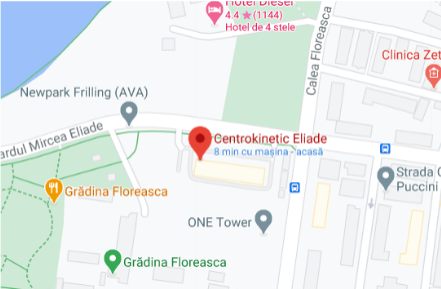
CENTROKINETIC FLOREASCA
Bucharest, 1st District,
Mircea Eliade Street, no. 18,
Eliade Tower, Entrance A, Floor 3
| Navigation | Explore 3D |
CENTROKINETIC Barbu Vacarescu
Bucharest, 2nd District,
Barbu Vacarescu Street, no. 102,
102 The Address, ground floor.
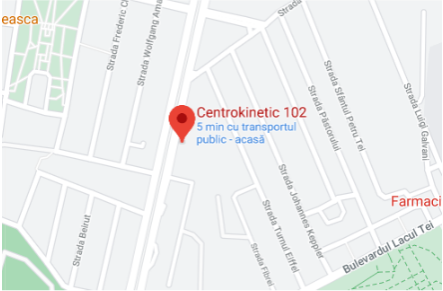
| Navigation | Explore 3D |
CENTROKINETIC MILITARI
Bucuresti, Sector 6,
Bld. Iuliu Maniu, nr. 15G,
Cladirea PBT, etaj 3.

| Navigation |
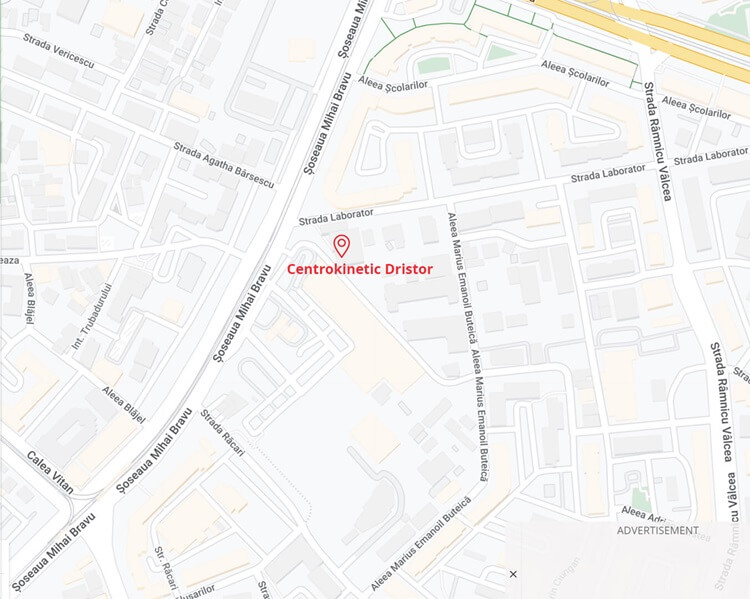


CENTROKINETIC CLUJ-NAPOCA
Cluj-Napoca,
Str. Intre Lacuri, nr.1
Intrarea este in spatele cladirii.
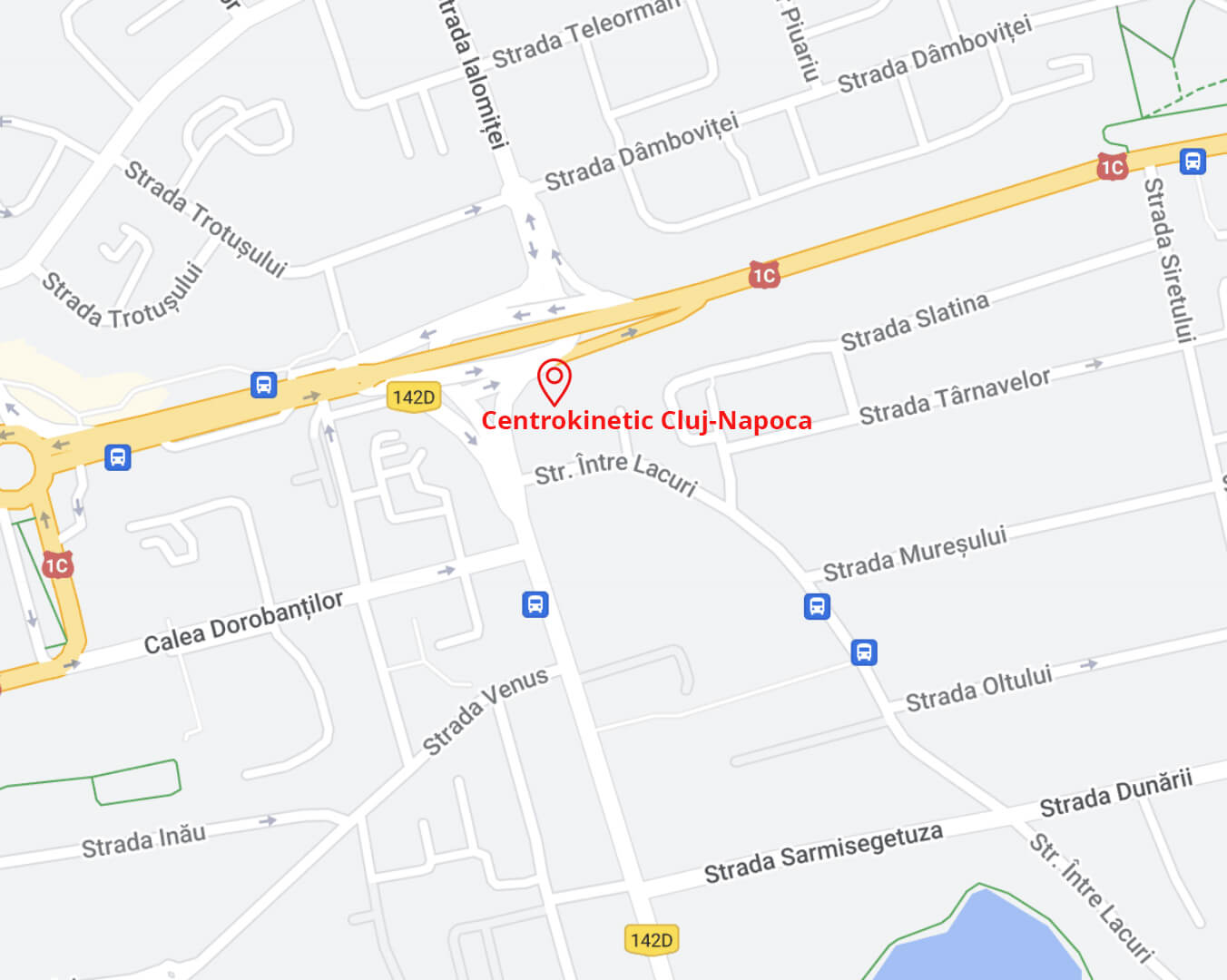
| Navigation |
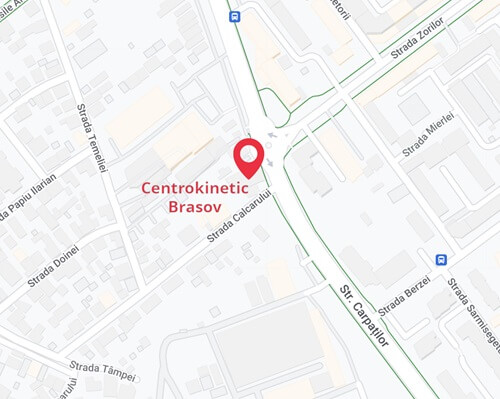

SOCRATES CLINIC TIMISOARA
Timisoara, Calea Martirilor 1989,
nr. 1.
Telefon: 0371 785 374.

| Navigation |
CONTACT
Phone: 0319693
E-mail: programari@centrokinetic.ro
Operating hours:
Monday – Friday: 07:00 – 21:00
Saturday: 09:00 – 14:00
Sunday: closed.
MAKE AN APPOINTMENT