What Options Exist for Treating Osteoarthritis Before Joint Replacement?



Osteoarthritis can change the way you walk, play sports, climb stairs, or organize your daily activities. However, a diagnosis doesn't automatically mean you need a joint replacement. In many cases, pain and stiffness can be controlled through treatments adapted to the stage of the disease, so that you maintain your mobility for as long as possible.
Options can include physical therapy, weight adjustment, medication, injections, or minimally invasive procedures, depending on the affected joint and symptoms. It's important to get a proper evaluation, so that the treatment plan is chosen according to your needs.
Why does an accurate assessment of the osteoarthritis stage matter?
The first step is the orthopedic consultation. The doctor correlates your symptoms with the clinical examination and imaging investigations. An X-ray can show joint space narrowing and bone changes, while an MRI can, in certain cases, reveal cartilage or meniscus lesions.
It's important not to treat only the result on paper. You may have grade 3 osteoarthritis on an X-ray and still walk without major difficulty. Likewise, you may have moderate changes but intense pain on exertion. An evaluation carried out within Centrokinetic's orthopedics department gives you:
- an accurate diagnosis and staging;
- identification of aggravating factors, such as excess weight, muscle imbalances, or poor alignment;
- recommendations adapted to your activity level;
- a staged plan, with clear objectives.
Early intervention increases the chances of keeping the disease under control without surgery. Don't delay the consultation if the pain persists for more than a few weeks.
Personalized physical therapy

Physical therapy remains the foundation of conservative treatment. Correctly chosen exercises reduce pressure on the joint and increase stability. In knee osteoarthritis, strengthening the quadriceps and gluteal muscles decreases the load on the cartilage. In hip osteoarthritis, exercises for the pelvic muscles improve gait control.
Don't follow generic programs available online. You need a functional assessment and a plan adapted to your limitations. For optimal results, work with a physical therapist and follow the recommended frequency.
Physical therapy can be combined with physiotherapy procedures, such as TECAR therapy, which supports the recovery process and reduces local inflammation. TECAR therapy uses high-frequency currents to stimulate circulation and tissue repair. The doctor determines whether it's indicated in your case.
Weight loss
Excess weight increases the load on the joints, especially the knees and hips. A 5–10% reduction in weight can lead to pain improvement in most cases.
Weight loss can also reduce overall inflammation in the body. Don't follow restrictive diets without supervision. Choose a balanced plan, with an adequate intake of protein and micronutrients.
Combine proper nutrition with adapted movement. Walking on flat ground at a moderate pace, or swimming, are suitable options for many people with osteoarthritis.
Medication treatment
Medications don't repair cartilage, but they can reduce symptoms.
Nonsteroidal anti-inflammatory drugs (NSAIDs)
Certain NSAIDs can reduce pain and inflammation during acute flare-ups. It's important to use them short-term and only as recommended by your doctor. Prolonged use can affect the stomach, kidneys, or cardiovascular system.
Anti-inflammatory gels and creams can be an alternative for mild or moderate pain.
Joint supplements
In general, supplements have variable results. Some patients notice mild improvement after a few months, others report no change. Talk to your doctor before starting any supplement.
Intra-articular injections
When pain persists despite baseline treatment, injections can represent the next step.
Corticosteroids
Joint injections with corticosteroids can reduce inflammation and pain in a short time. The effect can last a few weeks or months. Frequent repetition isn't recommended, since these substances can affect joint structures if administered excessively.
Corticosteroids are useful in intense painful episodes, especially when inflammation is clinically evident.
Hyaluronic acid
Hyaluronic acid injections improve the viscosity of the joint fluid. Hyaluronic acid acts as a lubricant and can reduce friction between the joint surfaces.
Results are better in mild and moderate stages. The effect can last 6–12 months, depending on the product and the patient's particularities. Mild local reactions, such as pain or temporary swelling, may occur.
PRP (platelet-rich plasma)
PRP uses your own blood, processed to concentrate the platelets. These release growth factors that can modulate inflammation and support tissue repair. Results vary and depend on the stage of the osteoarthritis.
The doctor recommends the type of injection suited to you based on age, activity level, and degree of joint damage.
Braces and biomechanical corrections
Orthopedic devices can reduce pain by redistributing the load. For unicompartmental knee osteoarthritis, an offloading brace can shift the pressure away from the affected area. A cane, used in the hand opposite the painful knee, reduces the compression force during walking.
Footwear with cushioned soles and custom insoles help correct alignment. These measures don't stop the disease, but they can improve daily comfort.
Intermediate surgical procedures
For young, active patients, the doctor may recommend interventions that delay joint replacement.
Osteotomy
Osteotomy involves cutting and realigning the bone to redistribute weight in the joint. The procedure is indicated for osteoarthritis localized to a single compartment of the knee. Recovery takes a few months and requires sustained physical therapy.
Partial joint replacement
If the damage is limited, a unicompartmental replacement replaces only the damaged area. Recovery is generally faster compared to total joint replacement. The doctor decides eligibility after a clinical and imaging evaluation.
Specifics of hip osteoarthritis (coxarthrosis)
Hip osteoarthritis (coxarthrosis) causes pain in the groin, buttock, or front of the thigh. Many patients notice difficulty putting on shoes or climbing stairs.
You can read more about the causes and treatment options in our dedicated article on coxarthrosis. Treatment follows the same principles: accurate assessment, physical therapy, weight control, injections when needed.
When does joint replacement become a justified option?
Joint replacement is considered if:
- pain occurs daily, including at rest;
- mobility is severely limited;
- properly applied conservative treatment is no longer sufficient;
- quality of life visibly declines.
Joint replacement is an effective solution for properly selected patients. However, many active adults can delay this stage through consistent treatment and periodic monitoring.
Comparison of the main non-surgical options
| Option | What it does | When it's indicated | Limitations |
|---|---|---|---|
| Physical therapy | Strengthens muscles, increases stability | At all stages | Requires consistency |
| Weight loss | Reduces joint loading | Overweight/obesity | Progressive results |
| NSAIDs | Reduces pain and inflammation | Painful flare-ups | Adverse effects with prolonged use |
| Hyaluronic acid | Improves lubrication | Mild and moderate stages | Reduced efficacy in advanced stages |
| Braces | Redistributes pressure | Unicompartmental damage | Doesn't change disease progression |
Osteoarthritis treatment must be adapted to your lifestyle, age, and personal goals. Centrokinetic's medical team has extensive experience in orthopedics and rehabilitation and can establish the right strategy based on your needs.
Don't ignore persistent pain. Act early and follow your specialist's recommendations. Book an appointment now for a specialist consultation!
Frequently asked questions about treating osteoarthritis before joint replacement
Can osteoarthritis be kept under control without surgery?
Yes, in many cases symptoms can be kept under control through physical therapy, weight loss, medication, and injections. Results depend on the stage of the disease and how consistently you follow the recommended plan.
How long can I delay joint replacement?
Some patients delay joint replacement for years if they start treatment in the early stages and follow medical recommendations. Progression varies from person to person.
Are injections painful?
Discomfort is usually mild and short-lived. The procedure is performed under sterile conditions, and the doctor explains the steps beforehand.
Does walking make osteoarthritis worse?
Moderate walking on flat ground is recommended in most cases. Avoid overexertion and adjust the distance according to your symptoms.
Disclaimer: This article is for informational purposes only and does not replace a specialist medical consultation or personalized recommendations from your doctor.
Sources:
- "Osteoarthritis-Osteoarthritis - Diagnosis & Treatment - Mayo Clinic." Mayo Clinic, 2025. Accessed June 30, 2026.
- Brumat, Peter, et al. "The Surgical Treatment of Osteoarthritis." Life, vol. 12, no. 7, 30 June 2022, p. 982, 10.3390/life12070982. Accessed June 30, 2026.
BUCHAREST TEAM


































































CLUJ NAPOCA TEAM


































BRASOV TEAM


















MAKE AN APPOINTMENT
FOR AN EXAMINATION
See here how you can make an appointment and the location of our clinics.
MAKE AN APPOINTMENT
Asiguratori privati





Parteneriate



CENTROKINETIC FLOREASCA
Bucharest, 1st District,
Mircea Eliade Street, no. 18,
Eliade Tower, Entrance A, Floor 3

| Navigation | Explore 3D |
CENTROKINETIC Barbu Vacarescu
Bucharest, 2nd District,
Barbu Vacarescu Street, no. 102,
102 The Address, ground floor.
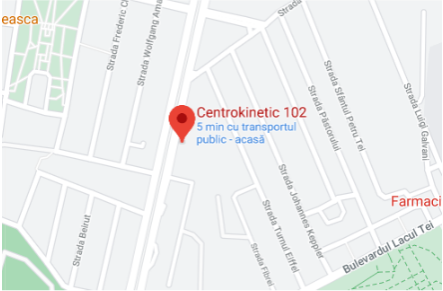
| Navigation | Explore 3D |
CENTROKINETIC MILITARI
Bucuresti, Sector 6,
Bld. Iuliu Maniu, nr. 15G,
Cladirea PBT, etaj 3.
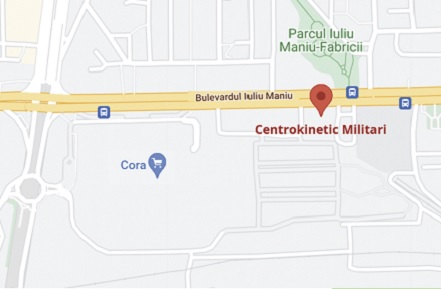
| Navigation |
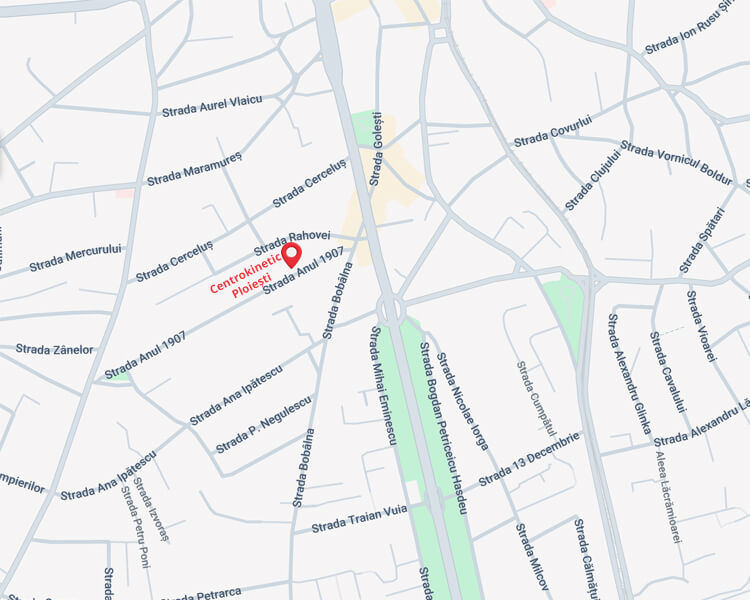
CENTROKINETIC CLUJ-NAPOCA
Cluj-Napoca,
Str. Intre Lacuri, nr.1
Intrarea este in spatele cladirii.

| Navigation |
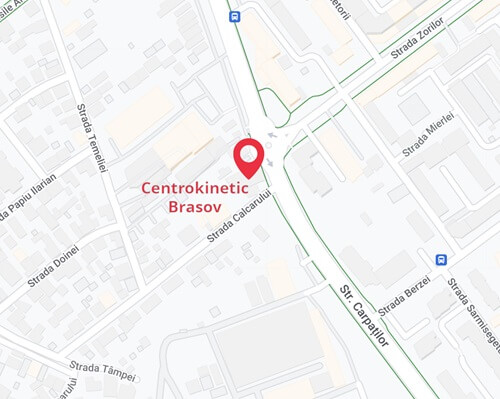

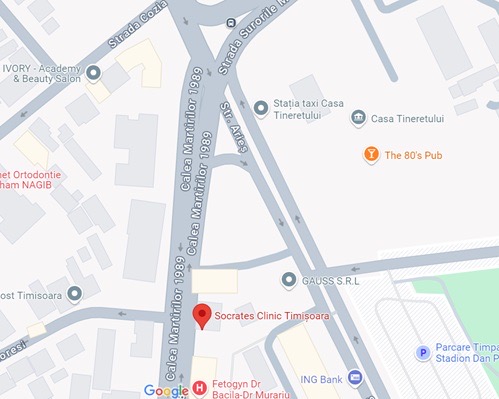
SOCRATES CLINIC TIMISOARA
Timisoara, Calea Martirilor 1989,
nr. 1.
Telefon: 0371 785 374.
| Navigation |
CONTACT
Phone: 0319693
E-mail: programari@centrokinetic.ro
Operating hours:
Monday – Friday: 07:00 – 21:00
Saturday: 09:00 – 14:00
Sunday: closed.
MAKE AN APPOINTMENT