Actualizat: 25-07-2025 / Publicat: 01-11-2017
About scoliosis
Because most people have some degree of spinal deviation, scoliosis is not obvious until it becomes a problem. This spinal condition frequently appears in childhood, but if not treated at the right time, scoliosis causes severe back pain and, if it worsens, patients may experience breathing difficulties.
We'll tell you everything you need to know about scoliosis: the causes, symptoms, treatment methods, and prevention, so that you're informed and can notice any symptom before it progresses and has unwanted effects.
Scoliosis is a permanent deformity of the spine, related to a twisting of the vertebrae relative to one another, in the three planes of space (up-down, right-left, front-back). It appears mostly in childhood and adolescence, but can also occur in adulthood. This condition is sometimes the result of another disease or malformation.
This deviation of the spine is related to a rotation of the vertebrae relative to one another. In this condition, the spine shows a twist. Its natural curves, forward and backward, are altered. Scoliosis is a common disease in Romania - in fact, our country ranks first among European countries from this point of view.
Scoliosis is a condition that causes the spine to curve sideways. It can affect any part of it, but the most common regions are the thoracic area (thoracic scoliosis) and the lower back (lumbar scoliosis). In most cases, the reasons for the change in shape are not known, but in others cerebral palsy, muscular dystrophy, and spina bifida are factors in the development of scoliosis.
Other causes:
- Neuromuscular conditions - these affect the nerves and muscles and include cerebral palsy, poliomyelitis, and muscular dystrophy.
- Congenital scoliosis (present at birth) - this is rare and occurs because the bones in the spine developed abnormally during fetal development.
- Specific genes - at least one gene is considered to be involved in the onset and development of scoliosis.
- Leg length - if one leg is longer than the other, the person may develop scoliosis.
- Syndromic scoliosis - scoliosis can develop as part of another disease, including neurofibromatosis and Marfan syndrome.
- Osteoporosis - can cause secondary scoliosis due to bone degeneration.
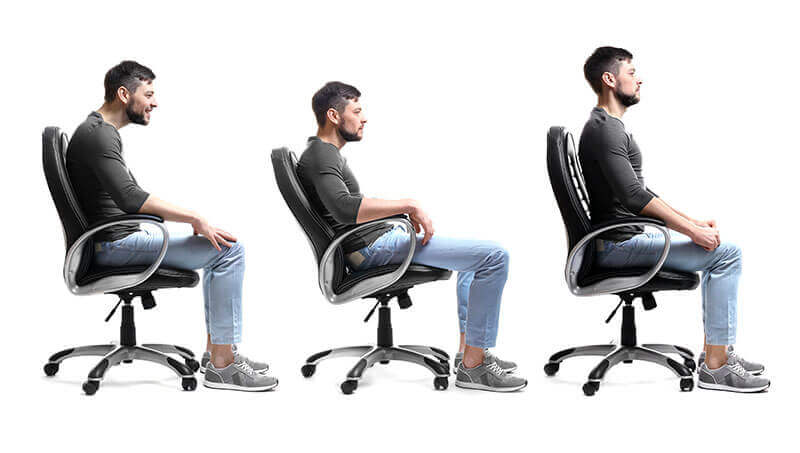
- Improper posture, wearing backpacks incorrectly, connective tissue disorders, and certain injuries.
Scoliosis is the number one problem affecting school-age children. Reports show that approximately 80% of scoliosis patients receive idiopathic diagnoses, meaning there is no definitive cause or cure for their condition.
The exact causes are still not known, but contributing risk factors include:
- Congenital defects (congenital scoliosis, meaning scoliosis has a hereditary origin).
- Spinal cord injuries and problems with muscle and nerve function, such as muscular dystrophy.
Complications can arise when the body's muscles and tissues are deformed over months or even years, compensating for the abnormal twisting and bending of the spine. These complications can continue even after surgery.
While waiting for treatment, many cases continue to progress, even after the point of skeletal maturity. Studies show an average progression of 2.4 degrees per year over 5 years, and in adolescents scoliosis progresses, on average, by more than 10 degrees after the age of 22.
Beyond affecting the normal position of the spine, scoliosis can have a negative impact on quality of life, can cause pain, can affect normal lung function, can disturb sleep, and can reduce the ability to play sports and live normally. Poor body image is also common, and repeated X-rays can also increase the risk of serious problems due to radiation exposure.
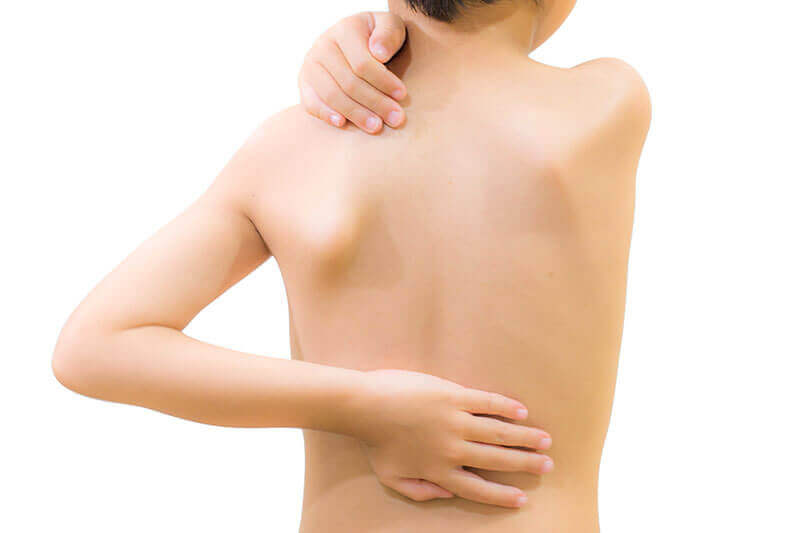
The most visible signs of scoliosis can usually be observed through the patient's posture. As the spine grows, it pushes the shoulders and hips out of alignment. The changes can be subtle - the lack of symmetry in posture often appears before the spinal curve becomes visible.
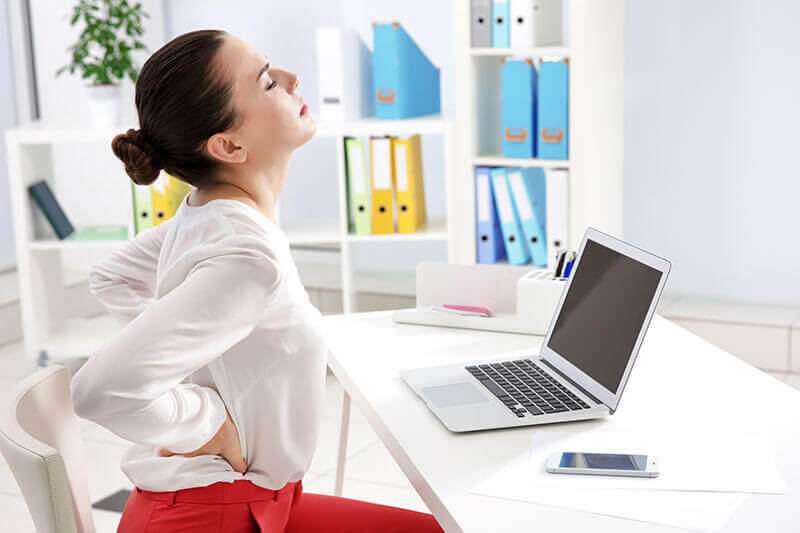
In most cases, scoliosis does not limit movement or cause consistent back pain until the curves become severe. However, unexplained back pain can be a symptom of scoliosis - especially if it persists, as the curvature of the spine puts pressure on the nerves and, sometimes, on the entire spinal cord. This can cause milder back pain, as well as weakness, numbness, or pain in the lower extremities.
A feeling of fatigue after long periods of sitting or standing can also indicate scoliosis. The more pronounced the curves, the harder the muscles around the spine must work to keep the body aligned and balanced. This causes them to wear out more easily. In addition, severe scoliosis can put pressure on the chest cavity and, ultimately, can restrict the patient's ability to breathe, which can also cause chronic fatigue.
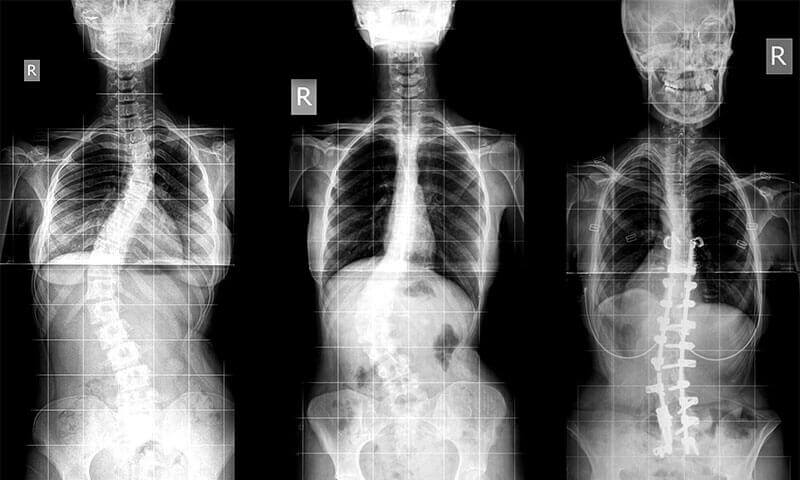
![Radiografie pacient scolioza coloana vertebrala]()
Scoliosis is usually first identified during periodic pediatrician checkups, at a routine school examination, or when a parent or teacher notices a lateral curvature of the spine.
An official diagnosis of scoliosis requires confirmation of an abnormal lateral curvature and rotation of the spine, as well as ruling out other possible causes of the deformity (such as Scheuermann's disease, juvenile disc disorder, or ankylosing spondylitis).
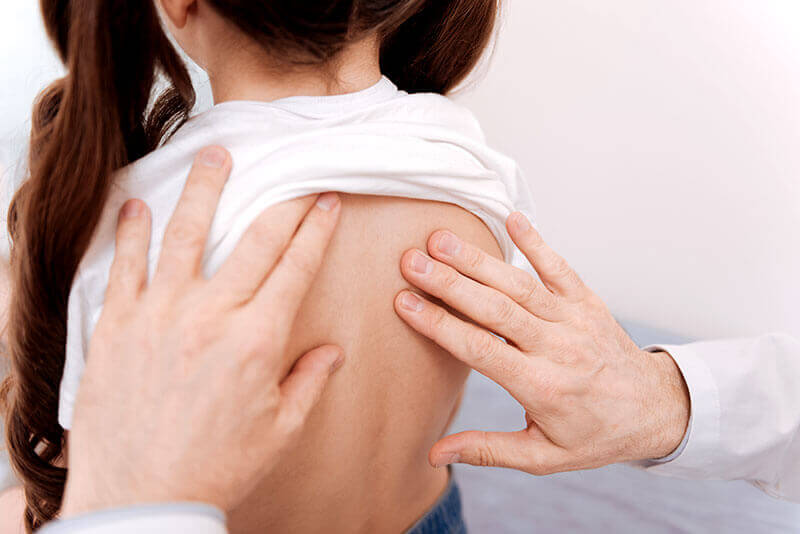
This test involves a specialist consultation in which the doctor observes the patient bending forward from the waist at 90 degrees with the arms extended toward the floor and the knees straight. From this position, the most common signs of scoliosis showing asymmetry are clearly visible in the spine and/or trunk of the body:
- one shoulder is higher than the other;
- one hip is higher or more prominent than the other;
- the waist appears uneven;
- the body leans to one side;
- one leg may appear shorter than the other;
The test can be useful in detecting scoliosis located in the upper or middle part of the back, where idiopathic scoliosis usually occurs. However, the test is not as effective at detecting scoliosis in the lower back, since it does not involve rotation of the nerves.
In medical practice, we speak of structural and non-structural scoliosis. Both types of scoliosis have characteristics by which they can be recognized and classified. Both types manifest through certain symptoms and require specialist treatment.
Non-structural scoliosis
This form of scoliosis manifests through curves of the spine, without rotation. Non-structural scoliosis is a reversible condition. The conditions that cause it are: pain or muscle spasm, acute appendicitis or other inflammatory causes, unequal lower limbs, etc.
Structural scoliosis
Structural scoliosis involves curves of the spine, and this form of scoliosis is irreversible. Structural scoliosis is usually caused by an unknown factor (idiopathic) or by a disease or condition, such as:
- Disorders present at birth (congenital), such as spina bifida, in which case the spinal canal does not close properly; or a disorder affecting bone formation. These curves can be harder to correct. Often, the situation worsens as the child grows, especially during the teenage years.
- Nerve or muscle disorders, such as cerebral palsy, Marfan syndrome, or muscular dystrophy.
- Injuries, infections, tumors.
Congenital scoliosis
This is a malformation present at birth, caused by a segmentation defect and, at the same time, a formation defect. Its characteristic feature is the presence of an abnormal vertebra. Typically, this type of scoliosis can be diagnosed right from birth, but there are also cases where the diagnosis is made later. 75% of patients with congenital scoliosis need to be operated on, while 25% should be monitored.
Idiopathic scoliosis
Scoliosis is a sinuous deformity of the spine in the three planes of space. It appears and evolves in childhood, up until the end of puberty. Scoliosis is called idiopathic because it occurs in the absence of any other pathological process. Most often, moderate scoliosis does not cause pain.
Severe scoliosis can induce back pain at the level of the spine and can cause breathing difficulties, and this can worsen as the child grows. Girls are more affected than boys and develop more severe scoliosis. Any scoliosis can worsen, which is why it requires regular monitoring.
Neuromuscular scoliosis
Neuromuscular scoliosis involves an irregular curvature of the spine, caused by abnormalities of the body's neuromuscular (nerve-muscle) system. It is usually more severe in patients who do not walk much. Worsening of the curves is much more frequent than in idiopathic scoliosis and can continue into adulthood. Brace treatment does not prevent the progression of the curves.
Depending on the etiology, patients may or may not be able to walk. Some disorders allow the child to walk when still young, but make them dependent on a wheelchair during adolescence.
This type of scoliosis is associated with diseases such as:
- spinal muscular atrophy (SMA);
- Arnold-Chiari malformation;
- cerebral palsy (CP);
- Angelman syndrome;
- spinal cord trauma.
Syndromic scoliosis
We speak of syndromic scoliosis when the curvature of the spine is part of a recognized set of symptoms of a known disease. This is the rarest form of scoliosis and suggests a genetic link.
Syndromic scoliosis is linked to:
- Myopathic disorders:
- arthrogryposis;
- muscular dystrophy;
- poliomyelitis;
- spina bifida.
- Connective tissue diseases:
- Marfan syndrome;
- Ehlers-Danlos syndrome;
- Genetic factors:
- dwarfism;
- Noonan syndrome;
- neurofibromatosis;
- syndromes related to multiple congenital malformations:
- VATER syndrome.
Degenerative scoliosis
Degenerative scoliosis usually occurs in people over 50 years of age and is more frequent in women. The main cause is intervertebral disc insufficiency associated with muscle loss, osteoporosis, and ligament weakening. The deformity is often the cause of a general imbalance that leads to mechanical instability and neurological signs.
Management depends on changes in symptoms and the degree of deformity.
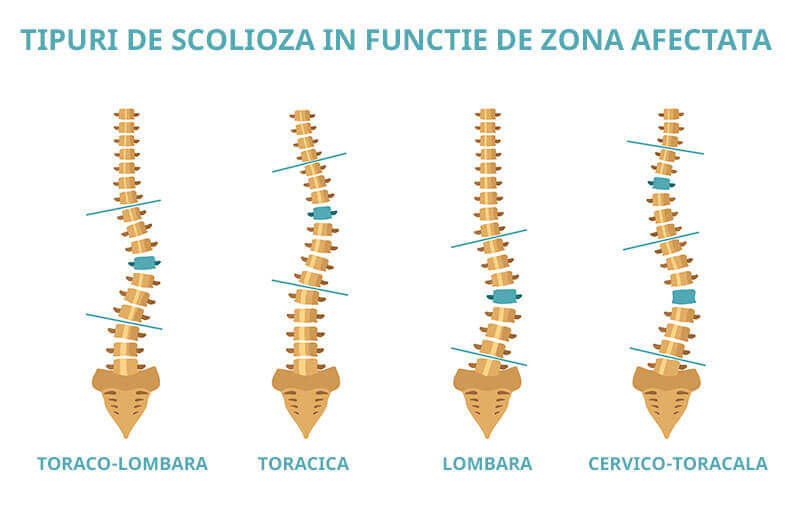
Depending on the area affected by scoliosis, we can speak of the types of scoliosis that describe the location of the curve, which means that from this point of view scoliosis has 4 types: cervico-thoracic scoliosis; thoracic scoliosis; thoracolumbar scoliosis; and lumbar scoliosis, described as follows:
Cervico-thoracic scoliosis
Cervico-thoracic scoliosis falls into the category of scoliosis with a single main curve. In this type of scoliosis, the deformities produced by abnormalities of the cervico-thoracic vertebrae are much more visible compared to similar ones that occur in other areas.
Thoracic scoliosis
In thoracic scoliosis, the curve includes the vertebrae located in the middle part of the back. In fact, the term thoracic scoliosis describes the location of the curve. This type of scoliosis is considered to be the most common. Treatment for this type of scoliosis includes: medical gymnastics (kinesiotherapy) - exercises specially designed for scoliosis. The purpose of specialist treatment is to prevent the curve from worsening.
Thoracolumbar scoliosis
This type of scoliosis is characterized by a curve that includes the vertebrae located in the lower thoracic portion, as well as the vertebrae in the upper lumbar portion. Treatment for this type of scoliosis may also include surgery.
Lumbar scoliosis
In lumbar scoliosis, the curve includes the vertebrae located in the lower part of the spine. In this case too, the term describing it refers to the location of the curve. Medical treatment aims to prevent the curve from worsening.
The fundamental characteristic of scoliosis is the deviation of the spine in the frontal plane (to one side). Typically, this condition appears in the middle of the back or the lower back, and the spine curves in the shape of the letter S or the letter C.
Scoliosis causes the bones of the spine to twist or rotate so that instead of a straight line down the back, the spine takes the shape of the letter "C" or "S". Scoliosis curves most commonly occur in the upper and middle part (thoracic spine). They can also develop in the lower back and, occasionally, can occur in both the upper and lower parts of the spine.
In conclusion, we can speak of:
- Left-convex thoracic scoliosis, in C;
- Right-convex – left-convex lumbar scoliosis, in S.
Left-convex thoracic scoliosis, in C
The left-convex thoracic scoliosis type, in C, is characterized by a C-shaped curve. This type of curve is described as thoracolumbar dextroscoliosis. So, it is a single curve that starts from the lower thorax and reaches the upper lumbar vertebrae.
Right-convex – left-convex lumbar scoliosis, in S
The type of scoliosis - left-convex lumbar, in S, is described as thoracic dextroscoliosis and lumbar levoscoliosis, which means there are two curves at the level of the spine:
- upper curve: located at the level of the thoracic spine, leaning to the right;
- lower curve: located at the level of the lumbar spine, leaning to the left.
Scoliosis is a condition that causes lateral curvature of the spine. There are several types of scoliosis that affect children and adolescents. By far, the most common type is idiopathic scoliosis, meaning the exact cause is not known. Most cases of idiopathic scoliosis occur between the age of 10 and the time the child is fully grown.
Scoliosis is rarely painful - small curves often go unnoticed by parents, but can be detected during a routine pediatrician checkup. In many cases, scoliosis curves are small and do not require treatment. Children found to have larger curves may need to wear a brace or undergo surgery to restore their normal position.
Idiopathic scoliosis is classified by age group, with 3 forms distinguished in children:
- Infantile idiopathic scoliosis - from birth to 3 years;
- Juvenile idiopathic scoliosis - from 3 years to puberty;
- Adolescent scoliosis - after puberty;
Infantile idiopathic scoliosis
The infantile idiopathic scoliosis type manifests from birth until the child reaches 3 years of age. Idiopathic scoliosis curves vary in size, and mild curves are more common than larger curves. If a child is still growing, the scoliosis curve can worsen quickly during growth.
Juvenile idiopathic scoliosis
The juvenile idiopathic scoliosis type can manifest from age 3 until puberty. Although it can also develop in young children, idiopathic scoliosis most often begins during puberty. Both boys and girls can be affected, however, girls are more likely to develop larger curves that require medical care.
Scoliosis is like any other disease: the earlier it is identified, the greater the chances of treating it successfully. Diagnosing scoliosis is easy, but identifying it before diagnosis can be surprisingly difficult. In fact, it will often go unnoticed for many years, in the case of infantile scoliosis and in young patients. Many cases are not identified until the patient goes through puberty, and the curve becomes increasingly visible. Research has shown that there is up to a 30% chance that scoliosis will occur if someone has a relative who suffers from this disease.
Physical tests and anatomical observation
The purpose of the functional exam is to distinguish between faulty posture and true idiopathic scoliosis. Examination of active movements of the spine in the cervical, thoracic, and lumbar segments:
- Flexion;
- Extension;
- Lateral bending;
The Adam forward bend test can be used to distinguish between structural scoliosis or non-structural scoliosis of the lumbar spine. The test can be performed in a standing position and in a seated position. The physical therapist has three important tasks: to inform, to advise, and to observe. Observing the patient with the help of an educational program ensures that the patient's condition improves.
Neurological tests
Testing for scoliosis usually begins with the family history and a physical exam. This includes the forward bend test, a simple test in which the child bends forward from the waist with the arms hanging loosely and the palms touching, while the examiner looks for irregularities on the child's back or ribs. A scoliometer may also be used to measure and estimate the rotation of the spinal curve.
If the findings from the history and those revealed by the neurological tests show a significant curve of the spine, an X-ray of the spine may be taken to obtain a more precise measurement of the spinal curve. Skeletal age, determined by the Risser sign, is also a useful measure for reducing the risk of the curve worsening.
Imaging exams to confirm the diagnosis
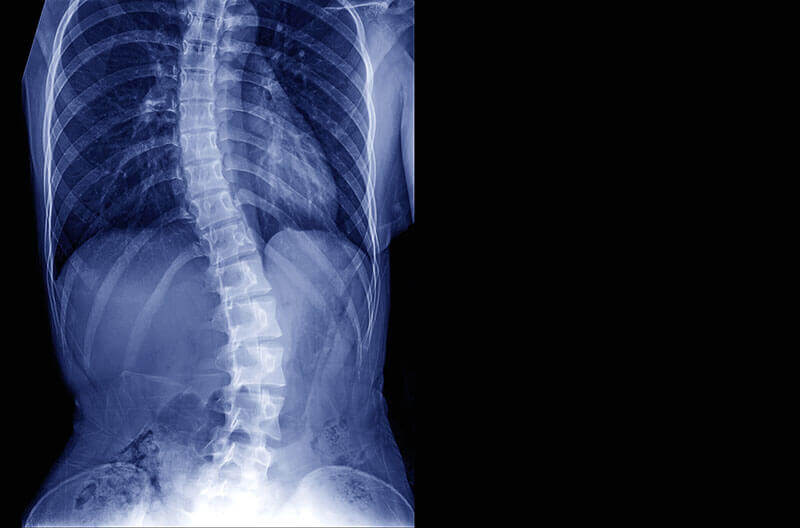
X-ray is the main tool in scoliosis imaging, both to confirm the diagnosis and to rule out any underlying conditions. Although it is defined as a lateral deformity, this is actually a three-dimensional (3D) rotational deformity. Indications for X-ray include changes in the normal alignment of the spine on physical examination, evaluation of spinal curve progression, and treatment monitoring. For studying scoliosis, the preferred method is a posteroanterior X-ray with the patient in a standing position.
For those patients who are being evaluated or clinically treated for scoliosis, other images include right and left bending images, a lateral image of the spine, and a posteroanterior image of the left wrist to determine bone age.
Radiographic analysis should identify the presence, direction, location, and apex of the curve. Establishing skeletal maturity is important because mild to moderate scoliotic curves do not progress after growth has stopped.
For the treatment of scoliosis, a treatment based on a standardization protocol has been established, applied according to the scoliotic curve. Thus:
- For a curve of 0-30 degrees, kinesiotherapy (medical gymnastics) is recommended;
- For a curve of 30-50 degrees, kinesiotherapy and orthotic treatment (the brace) are recommended;
- For a curve of over 50 degrees, surgery is recommended.
Treating non-structural scoliosis
Generally speaking, such cases of scoliosis do not raise problems in terms of treatment, and surgical treatment is not an option. Kinesiotherapy treatment is recommended, and it can provide very good results. On the other hand, the following are recommended:
- a specialist checkup every 4 months, so the doctor can observe how the curvature of the spine is progressing;
- a brace that can stop the curve from worsening;
- medical gymnastics;
- physiotherapy;
- medication.
Treating structural scoliosis
In the case of structural scoliosis, complex treatment methods are required. This includes idiopathic, osteopathic, neuropathic scoliosis secondary to certain conditions, myopathic, dysmetabolic, thoracogenic scoliosis, scoliosis of extrinsic cause, and so on.
The brace, a standard treatment for most cases of scoliosis
Wearing a brace is an orthotic treatment. This can prove effective if, at the end of bone growth, the value of the curve is 5 out of the initial angulation value, which means that a brace can prevent the risk of the scoliotic curve worsening, but it does not correct it. A child found to have an angulation of less than 30 degrees should not be recommended a brace, since the scoliosis may be non-progressive.
The brace has a dynamic action and is effective in children, since they are in their growth period. Girls should wear a brace only during the first three years after menarche.
Typically, specialists recommend wearing the brace 8-12 hours a day, depending on the following factors:
- the aggressiveness of the disease;
- the type of curve;
- age;
Kinesiotherapy and medical gymnastics
The most effective treatment for structural scoliosis is:
- kinesiotherapy + brace, when scoliosis is under 50 degrees;
- surgery + kinesiotherapy, when scoliosis is over 50 degrees;
Kinesiotherapy aims to:
- improve the position of the spine;
- increase the flexibility of the spine;
- increase muscle strength, both abdominal and paravertebral;
- improve breathing;
To achieve the goals mentioned above, kinesiotherapy uses
fixed postures;
- postural correction exercises;
- exercises from the Klapp positions;
- exercises proposed by the Cotrel technique (extension-derotation-elongation-lateral flexion),
- exercises aimed at strengthening the abdominal muscles;
- exercises aimed at strengthening the gluteal muscles;
- exercises aimed at strengthening and rebalancing the paravertebral muscles;
- exercises for improving breathing;
- exercises aimed at increasing respiratory muscle strength;
Medical gymnastics is particularly important in scoliosis, working, as the case may be, asymmetrically or symmetrically with the patient.
Surgery to improve or eliminate the deformity of the spine
If the Cobb angle is found to have a value of 45-50 degrees, surgery is recommended. Scoliosis surgery is not simple, requiring a high degree of difficulty. Its purpose is to achieve good vertebral arthrodesis, combined with segmental metal instrumentation with intrapedicular screws or hooks.
If treatment is started as early as possible, the chances of complete recovery are very high. Thus, parents are responsible for closely observing their children and taking them to the doctor for early detection of scoliosis. If you have concerns about the health of your spine, put yourself in the hands of specialists!
IF YOU DON'T ALREADY KNOW US
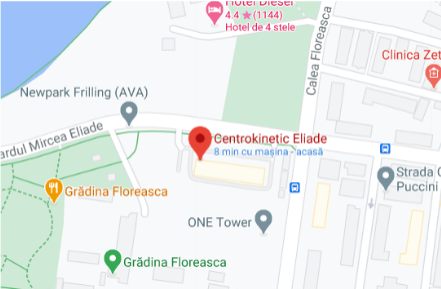
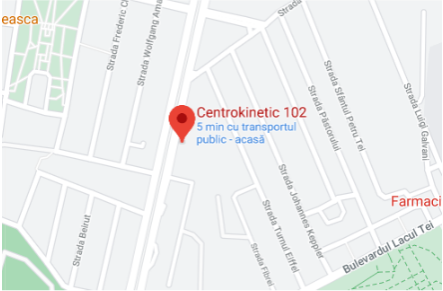
Centrokinetic is the place where you'll find clear answers and solutions for your movement problems. The clinic dedicated to musculoskeletal conditions is divided into the following specialized departments:
- Orthopedics, a department made up of a highly experienced team of orthopedic doctors, led by Dr. Andrei Ioan Bogdan, senior physician in orthopedics-traumatology, with surgical activity at Medlife Orthopedic Hospital, specialized in sports traumatology and in foot and ankle surgery.
- Pediatric orthopedics, where children's sports conditions are treated (ligament and meniscus injuries), spinal deformities (scoliosis, kyphosis, hyperlordosis), and foot conditions (hallux valgus, hallux rigidus, clubfoot, flat valgus foot, cavus foot).
- Neurology, which has a state-of-the-art department, where consultations, electroencephalograms (EEG), and electromyography (EMG) are performed.
- Medical recovery for adults and children, a department specialized in the recovery of performance athletes, in spinal conditions, and in the recovery of children with neurological and traumatic conditions. Our experience is extremely rich, having treated over 5000 performance athletes.
- Medical imaging, the clinic being equipped with ultrasound and MRI, high-performance devices dedicated to musculoskeletal conditions, and complemented by an experienced team of radiologists: Dr. Sorin Ghiea and Dr. Cosmin Pantu, specialized in musculoskeletal imaging.
Find out the latest news by following the Centrokinetic clinic's Facebook and YouTube accounts.