Shoulder Impingement Syndrome: What Treatment Solutions Do Orthopedists Recommend?



Do you feel pain in your shoulder when you lift your arm, when you get dressed, or when you place an object on a higher shelf? Do you wake up at night because you can't lie on the affected side? These signs frequently indicate shoulder impingement syndrome, one of the most common causes of pain in active adults and athletes.
Subacromial conflict occurs when the tendons and bursa in the shoulder are repeatedly compressed in a narrow space. Without a proper evaluation and early intervention, the pain can become chronic and can lead to more complex rotator cuff injuries. Find out what this condition involves, how orthopedists diagnose it, and what treatment options are available.
What is shoulder impingement syndrome?
Impingement syndrome, also known as subacromial impingement, describes the compression of the soft structures located between the acromion (the upper part of the shoulder blade) and the humeral head. This space contains:
- the supraspinatus tendon;
- the other rotator cuff tendons;
- the subacromial bursa (a small fluid-filled sac that reduces friction).
When you lift your arm overhead, these structures glide through a limited space. If the space narrows or inflammation occurs, the tendons become compressed and pain appears.
Doctors distinguish two main forms:
- primary impingement – caused by anatomical factors, such as the shape of the acromion or the presence of osteophytes (bone spurs);
- secondary impingement – associated with muscle imbalances and shoulder instability, common in athletes.
Without treatment, repeated inflammation can progress to a partial or complete rotator cuff tear. That's why, if you're dealing with persistent shoulder pain, it's important to seek a specialized evaluation to determine the exact cause.
Causes and risk factors
In most cases, impingement syndrome results from overuse or from structural changes in the shoulder.
Repetitive overhead movements
Sports such as:
- swimming,
- tennis,
- volleyball,
- handball,
- crossfit with overhead exercises,
put intense strain on the shoulder. The same applies to certain professions: electricians, painters, warehouse workers, or medical staff who frequently lift weights. Repeating these movements leads to microtrauma and inflammation.
Muscle imbalances and poor posture
Many active adults spend hours in front of the computer, with their shoulders rounded forward and their back hunched. This posture reduces the subacromial space. The resulting imbalance favors tendon compression.
Additional factors
- age over 40;
- previous trauma (dislocations, fractures);
- tendon degeneration;
- smoking or metabolic conditions that affect healing.
Identifying these factors helps establish a personalized treatment and prevention plan.
Symptoms that should send you to the doctor
Shoulder pain has a specific pattern. It usually occurs in the front-lateral part of the shoulder and can radiate down the arm, to about halfway. Common signs:
- pain when lifting the arm between 70 and 120 degrees (painful arc);
- difficulty getting dressed or combing your hair;
- discomfort when sleeping on the affected shoulder;
- weakness with external rotation or when lifting the arm.
At first, the symptoms are bearable. Over time, the intensity increases and limits daily activities or athletic performance.
Don't wait for the pain to go away on its own. Early intervention lowers the risk of complications and shortens the recovery period.
How does the orthopedist establish the correct diagnosis?
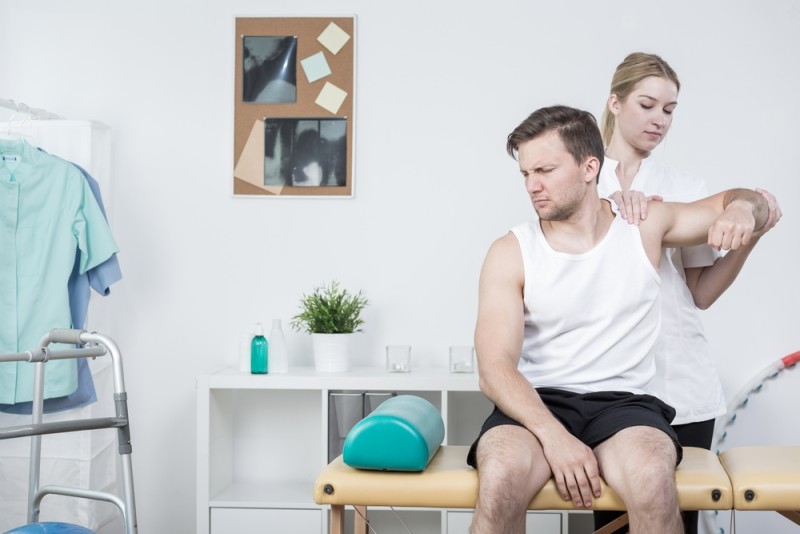
A correct diagnosis is the foundation of effective treatment. Simple shoulder pain can hide several conditions, including periarthritis of the shoulder or rotator cuff tears.
- discusses the history of your symptoms;
- assesses your posture and mobility;
- performs specific clinical tests (Neer, Hawkins-Kennedy, Jobe).
For confirmation, the doctor may recommend imaging investigations:
| Investigation | What it shows | When it's useful |
|---|---|---|
| X-ray | shape of the acromion, osteophytes | initial evaluation |
| Ultrasound | bursa inflammation, partial tears | dynamic evaluation, injection guidance |
| MRI | complex lesions, complete tears | suspected need for surgery |
A proper evaluation offers clear benefits:
- it differentiates impingement from other conditions;
- it establishes the severity of the injury;
- it allows the right treatment to be chosen.
Don't try to self-diagnose. Only a medical consultation can confirm the condition.
Conservative treatment: the first recommended option
In most cases, doctors start with conservative treatment. Over 70% of patients respond well if they follow the recommendations correctly.
Relative rest and adapting activities
Don't fully immobilize the shoulder. Avoid painful movements and adapt your workouts. For example:
- replace overhead presses with chest-level exercises;
- temporarily reduce your swimming training volume.
This strategy reduces inflammation without compromising mobility.
Anti-inflammatory medication
Nonsteroidal anti-inflammatory drugs can reduce pain and inflammation in the short term. Take them only as recommended by your doctor, especially if you have digestive, kidney, or cardiovascular conditions.
Subacromial injections
In certain situations, the orthopedist recommends corticosteroid injections, performed under ultrasound guidance. These can quickly reduce inflammation and allow exercises to resume. However, they are used with caution and are not repeated frequently, since they can affect the tendon's structure if administered excessively.
Physiotherapy and physical therapy: the foundation of recovery
Proper recovery makes the difference between temporary improvement and lasting results. Physiotherapy sessions can help reduce inflammation and pain. Procedures include TENS currents, ultrasound, or TECAR therapy, applied to stimulate circulation and tissue regeneration.
Physical therapy is also essential. The shoulder recovery program aims to:
- increase mobility;
- strengthen the rotator cuff;
- stabilize the scapula;
- correct posture.
Examples of commonly used exercises:
- external rotations with a resistance band;
- controlled scapular retractions;
- stretching for the pectoral muscles.
A well-structured program, carried out under the supervision of a physical therapist, takes on average 6–12 weeks. Find out how a complete shoulder recovery program works and what stages it includes.
The personalized approach takes into account age, activity level, and any associated conditions. Post-surgical patients benefit from different protocols compared to amateur athletes or parents looking for solutions for active teenagers.
When do orthopedists recommend surgery?
If symptoms persist after 3–6 months of proper treatment, or if imaging shows significant cuff tears, the doctor may recommend arthroscopic surgery.
Arthroscopy involves:
- small incisions;
- the use of a miniature video camera;
- the use of fine instruments for decompression or tendon repair.
The procedure corrects the mechanical conflict and, if necessary, repairs the affected tendons.
Postoperative recovery requires active involvement and collaboration with the medical team. The physical therapy and rehabilitation program starts early and progresses gradually, to restore mobility and strength safely.
The importance of early intervention
The earlier you act, the greater your chances of a full recovery. Delaying the consultation can lead to:
- increased chronic inflammation;
- the onset of tendon tears;
- permanent limitation of mobility.
A proper evaluation brings clear benefits:
- treatment adapted to the stage of the condition;
- a shorter recovery time;
- prevention of complications.
At Centrokinetic, the multidisciplinary team of orthopedists, rehabilitation physicians, and physical therapists works in an integrated way. Each patient receives a personalized plan, built based on their investigations and individual goals.
Preventing recurrence
After your symptoms improve, maintain the results by:
- doing regular exercises for shoulder stability;
- warming up properly before sports;
- correcting your posture at the desk;
- progressively increasing training intensity.
Monitor any return of pain and schedule a check-up at Centrokinetic if symptoms reappear!
Frequently asked questions about shoulder impingement syndrome
Can recovery at Centrokinetic take a while?
Duration varies depending on severity. In mild forms, improvement appears in about 4–6 weeks. Chronic cases may require 3–6 months or more, especially if there are associated injuries.
Can I do sports during treatment?
Yes, but your workouts need to be adapted. Avoid painful overhead movements and follow the guidance of your doctor and physical therapist.
Can impingement come back after treatment?
Yes, if you don't correct the cause that triggered it. Muscle imbalances and overuse increase the risk of recurrence.
Is an MRI necessary in all cases?
No. The doctor decides based on the symptoms and the response to treatment. An MRI becomes useful if complex injuries are suspected.
Disclaimer: This article is for informational purposes only and does not replace a specialist medical consultation. If you have persistent pain, schedule an orthopedic evaluation!
Sources:
- "Shoulder Impingement Syndrome (Rotator Cuff Tendinitis)." Cleveland Clinic, 6 Sept. 2023. Accessed June 30, 2026.
- "Shoulder Impingement." NHS website, Nhs.Uk, Oct. 2017. Accessed June 30, 2026.
BUCHAREST TEAM


































CLUJ NAPOCA TEAM


















BRASOV TEAM







MAKE AN APPOINTMENT
FOR AN EXAMINATION
See here how you can make an appointment and the location of our clinics.
MAKE AN APPOINTMENT
Asiguratori privati





Parteneriate


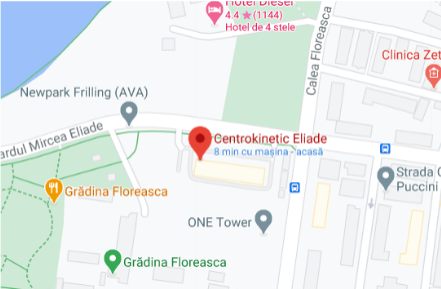
CENTROKINETIC FLOREASCA
Bucharest, 1st District,
Mircea Eliade Street, no. 18,
Eliade Tower, Entrance A, Floor 3
| Navigation | Explore 3D |
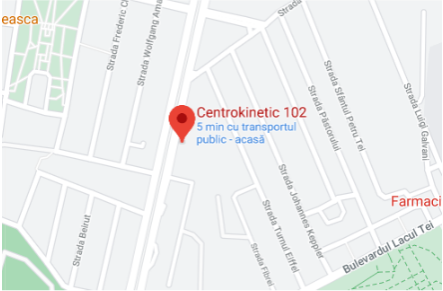
CENTROKINETIC Barbu Vacarescu
Bucharest, 2nd District,
Barbu Vacarescu Street, no. 102,
102 The Address, ground floor.
| Navigation | Explore 3D |
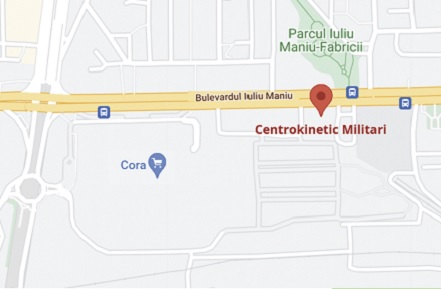
CENTROKINETIC MILITARI
Bucuresti, Sector 6,
Bld. Iuliu Maniu, nr. 15G,
Cladirea PBT, etaj 3.
| Navigation |
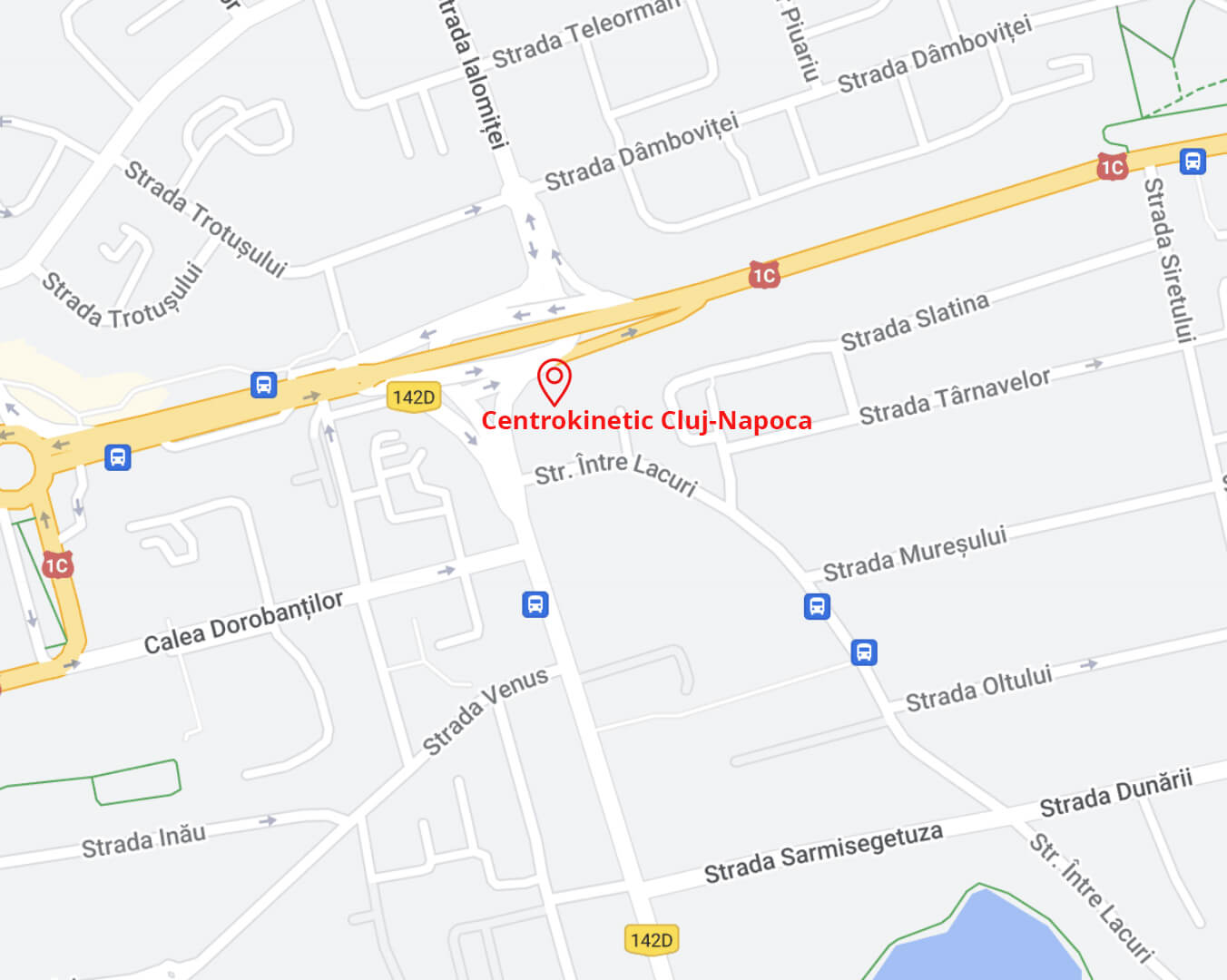
CENTROKINETIC CLUJ-NAPOCA
Cluj-Napoca,
Str. Intre Lacuri, nr.1
Intrarea este in spatele cladirii.
| Navigation |
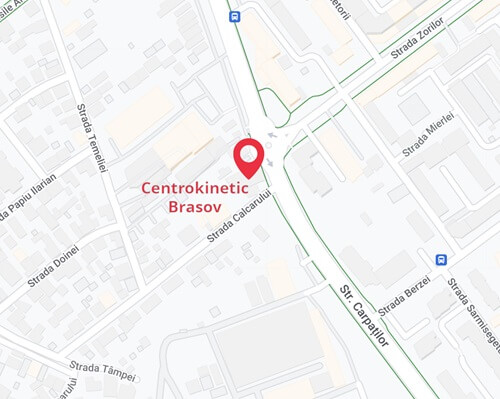
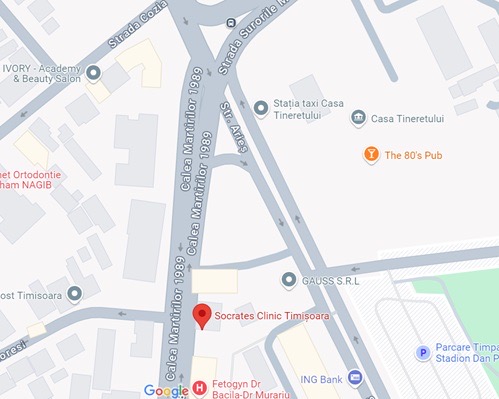
SOCRATES CLINIC TIMISOARA
Timisoara, Calea Martirilor 1989,
nr. 1.
Telefon: 0371 785 374.
| Navigation |
CONTACT
Phone: 0319693
E-mail: programari@centrokinetic.ro
Operating hours:
Monday – Friday: 07:00 – 21:00
Saturday: 09:00 – 14:00
Sunday: closed.
MAKE AN APPOINTMENT