Sports massage – types, indications, advantages, and contraindications


- What is sports massage?
- Types of sports massage
- Techniques used in sports massage
- Advantages of sports massage
- Indications and contraindications for sports massage
What is sports massage?
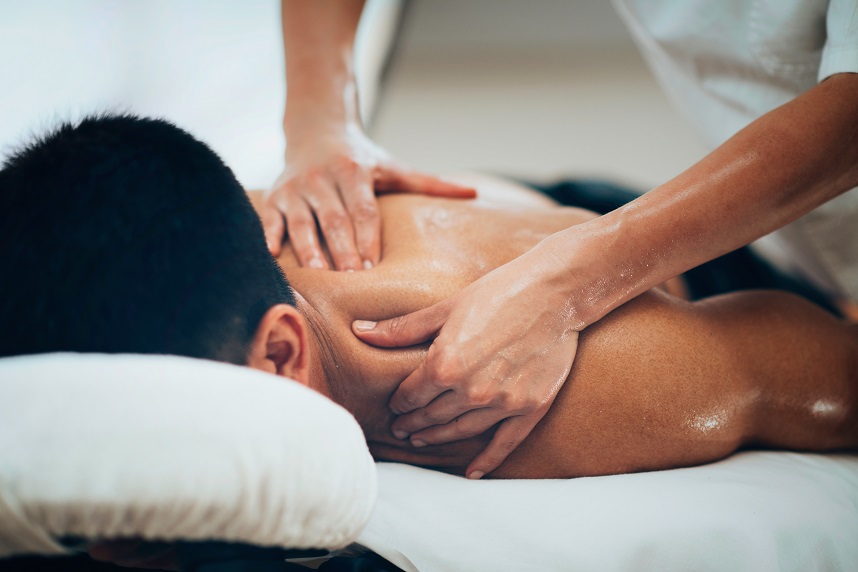
A form of therapeutic massage, sports massage involves the manipulation of soft tissues for the benefit of a person engaged in regular physical activity. The purpose of sports massage is to reduce the stress and tension that can build up in the soft tissues during exercise.
Sports massage was designed to help athletes before, during, and after training. Often quite demanding, sports massage promotes a person's health by stretching tense muscles, stimulating inactive muscles, and improving the condition of tendons and ligaments. It is also specially adapted for treating various sports injuries or conditions such as shoulder pain or back pain .
This type of massage is used to:
- increase endurance;
- improve performance;
- prevent injuries;
- reduce recovery time after an injury occurs;
- support healing after a sports injury.
Types of sports massage
The main types of sports massage are:
- rehabilitation massage – performed to relieve pain and return the body to optimal physical condition as quickly as possible. This type of massage is recommended in cases of muscle strain, joint pain, or recovery after surgery;
- injury-prevention massage – biomechanical imbalances are assessed and therapeutic treatments are performed to rebalance the body:
- tonic massage – is a massage performed during training and allows the person to train more intensely, with a lower risk of injury;
- pre-competition massage – is a short, stimulating massage, lasting 15-30 minutes, before entering competition, and is directed toward the part of the body most stressed by that particular sport;
- massage during competition – similar to the previous one, this is meant to remove the buildup of lactic acid and toxins, speed up the recovery of tired muscles, and prepare the athlete physically and mentally throughout the event.
- post-competition massage – is a one-hour recovery massage performed one to a maximum of two hours after the competition; it is done to reduce fatigue and to restore the body to its pre-competition state.
Techniques used in sports massage
A sports massage is used for the general relaxation of the bone and muscle system, but it can be directed toward any problem area. Sports massage helps relieve muscle tension, restore soft tissues, and reduce pain.
Sports massage has no single specific technique and is performed according to the nature of the injury or its condition. This type of massage borrows techniques used in other disciplines, such as physiotherapy and osteopathy.
Among the main techniques applied are:
- effleurage or stroking: this is the opening technique of any massage session and can be alternated with other methods; it constitutes the closing maneuver in most situations and has a smoothing effect on the skin. Stroking acts especially on the skin, subcutaneous connective tissues, peripheral nerves, and venous and lymphatic vessels, stimulating general circulation and lymphatic drainage. Stroking has a calming effect on the person, easing episodes of pain and muscle contractions, being a physical and psychological relaxant.
- kneading or petrissage – a massage technique with strong stimulating actions on deep tissues and especially on the musculature. Kneading involves lifting, squeezing, and moving the tissues, improving muscle excitability and contractility. Through this technique, muscle elasticity is maintained, an aspect that helps avoid muscle injuries, common among athletes. Kneading is used to mobilize tissues, increase blood circulation, and help stimulate toxin elimination and improve nutrient exchange. The technique is frequently used during the recovery period after training or competitions, as well as during the preparation period.
- tapotement or percussion – is the technique through which series of short, rhythmic strikes are applied to the skin and represents one of the most intense massage procedures. The technique is used for conditions of the locomotor system, in cases of pain or muscle contractures. Depending on the intensity and rhythm of the tapotement, effects are produced in the superficial or deeper soft tissues. Blood circulation is also activated, and local temperature and muscle tone are increased. Tapotement is used in preparing athletes between events.
- wringing – a technique frequently used in sports massage to release tension and mobilize the large muscles. Through this technique, the fleshy tissues are lifted and squeezed to promote deep circulation, the supply of oxygen and nutrients to the area, and the elimination of toxins. The technique also has the role of improving tissue elasticity.
- skin rolling and wringing – are massage techniques that can only be applied to the upper and lower limbs. They have a muscle-relaxing effect, provide local decongestion, and improve tissue suppleness.
- pressures and tensions – are applied mainly on the spine, but also in other regions of the body, in order to preserve joint stability and mobility.
- traction, shaking, and elongation – supporting techniques that complement the massage, decongesting the intra- and periarticular elements, improving blood circulation and local nutrient exchange.
Advantages of sports massage
Among the main advantages of sports massage are:
- prevents muscle soreness: one of the main benefits of sports massage is that it can prevent muscle soreness after physical exercise.
- reduces pain intensity: sports massage is beneficial for reducing pain. A sports massage can help control and manage pain.
- improves muscle flexibility: massage can help maintain flexibility by increasing blood circulation and stretching the muscles.
- speeds up the medical recovery process: a sports massage helps with the physical recovery process after an injury and can speed up the healing process by increasing blood circulation. Sports massage can improve heart rate and blood pressure, increase blood circulation and lymphatic flow in the affected area, and help treat physical injuries by supplying oxygen and nutrients.
- maximizes performance: a sports massage helps the body recover after physical exercise, prevents injuries from occurring, prepares the athlete psychologically, and increases muscle capacity for physical activity. Athletes can train more often, thus achieving higher levels of performance.
- prevents accidents: sports massage can help prevent injuries because it is effective in easing muscle tension and restoring muscle balance. It also helps physical activity take place safely and can prevent the occurrence of certain conditions related to practicing a sport.
Indications and contraindications for sports massage
Indications for sports massage include, but are not limited to:
- stiffness in the legs after activity or during recovery; leg stiffness is a common problem and is a sign that you need a sports massage.
- facing performance limitations; peak performance is only possible when your body is in the right condition, including your muscles.
- massages facilitate healthy blood flow; healthy blood flow is one of the most important benefits of massage for athletes.
- muscle and joint pain; these are a sure sign that you need an intense sports massage.
- headache and stress; stress comes in all shapes and sizes, and muscular stress can lead to problems such as headaches.
Contraindications for sports massage include, but are not limited to:
- acute soft tissue inflammation – massage could cause further tissue damage;
- open wounds – massage could cause further damage;
- fractures and dislocations – massage is not applied to people suffering from fractures and dislocations;
- myositis ossificans – massage could cause soft tissue damage in a person suffering from this condition;
- deep vein thrombosis – massage could be fatal to the person, as it could cause the blood clot, or part of it, to reach the lungs and block breathing;
- varicose veins – massage could damage the walls of the blood vessels;
- infectious skin diseases – massage could spread the infection on the skin or could contribute to spreading the infection to other parts of the body;
- melanoma and other types of cancer – massage could spread the tumor in the body and/or could stimulate its development;
- hemophilia – massage could cause bleeding in the tissues;
- diabetes – if the person has reduced sensitivity in the extremities, they may not be able to feel pain properly and may not be able to guide the procedures accordingly.
Note! This presentation is for informational purposes only.
Conclusion
Sports massage plays a complex role in maintaining a high level of sports performance, as well as in the safe practice of sustained physical activity. If you engage in sports-type physical activities, turn to the services of a specialist from our special departments to obtain the best results, to avoid sports injuries, and to treat certain conditions encountered in sports life.
Centrokinetic is the place where you will find clear answers and effective solutions for musculoskeletal conditions. Our clinic, dedicated to musculoskeletal disorders, is organized into the following specialized departments:
- Orthopedics, a department composed of a highly experienced team of orthopedic surgeons specializing in sports traumatology.
- Pediatric Orthopedics, where sports injuries in children (ligament and meniscus injuries), spinal deformities (scoliosis, kyphosis, hyperlordosis), and foot deformities (hallux valgus, hallux rigidus, equinovarus foot, flatfoot, cavus foot) are treated.
- Neurology, featuring a state-of-the-art department where consultations, electroencephalograms (EEG), and electromyography (EMG) examinations are performed.
- Medical Rehabilitation for adults and children, a department specialized in the rehabilitation of professional athletes, spinal disorders, and children with neurological and traumatic conditions. Our extensive experience includes treating more than 5,000 professional athletes.
- Medical Imaging, with the clinic equipped with ultrasound and MRI systems dedicated to musculoskeletal conditions, complemented by an experienced radiologist, Dr. Cosmin Pantu, specialized in musculoskeletal imaging.
- Rheumatology, a comprehensive department dedicated to the diagnosis, treatment, and rehabilitation of patients with non-surgical musculoskeletal disorders.
- Vascular Surgery, a highly specialized department focused on the diagnosis and treatment of vascular diseases affecting arteries, veins, and lymphatic vessels.
- Psychology and Speech Therapy. Neurological and musculoskeletal conditions can have a psychological impact on patients, which is why we believe complete recovery requires addressing both the physical condition and its psychological consequences.
- Neurofeedback. This innovative method helps improve concentration, reduce anxiety, and achieve emotional balance through a simple and interactive process.
Stay up to date by following Centrokinetic on Facebook, Instagram, and YouTube.

MAKE AN APPOINTMENT
CONTACT US
MAKE AN APPOINTMENT
FOR AN EXAMINATION
See here how you can make an appointment and the location of our clinics.
MAKE AN APPOINTMENT
BUCHAREST TEAM
















CLUJ NAPOCA TEAM







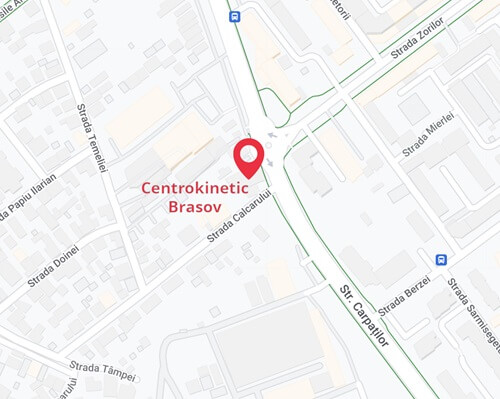
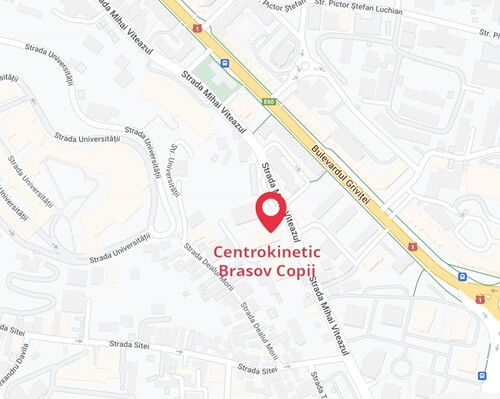
BRASOV TEAM



Asiguratori privati

Parteneriate
CENTROKINETIC FLOREASCA
Bucharest, 1st District,
Mircea Eliade Street, no. 18,
Eliade Tower, Entrance A, Floor 3
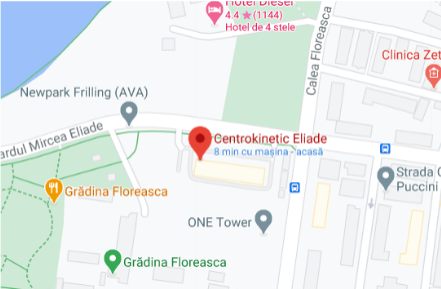
| Navigation | Explore 3D |
CENTROKINETIC Barbu Vacarescu
Bucharest, 2nd District,
Barbu Vacarescu Street, no. 102,
102 The Address, ground floor.
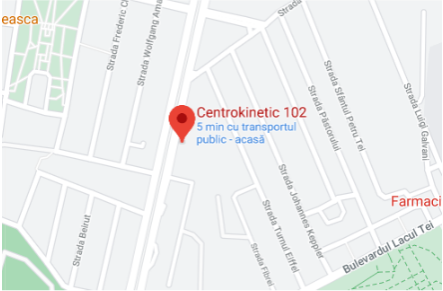
| Navigation | Explore 3D |
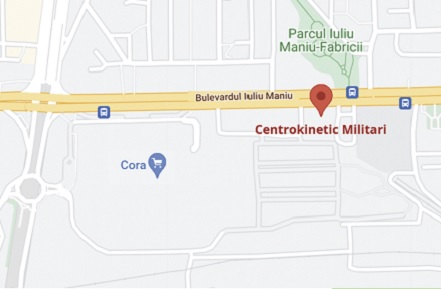
CENTROKINETIC MILITARI
Bucuresti, Sector 6,
Bld. Iuliu Maniu, nr. 15G,
Cladirea PBT, etaj 3.
| Navigation |
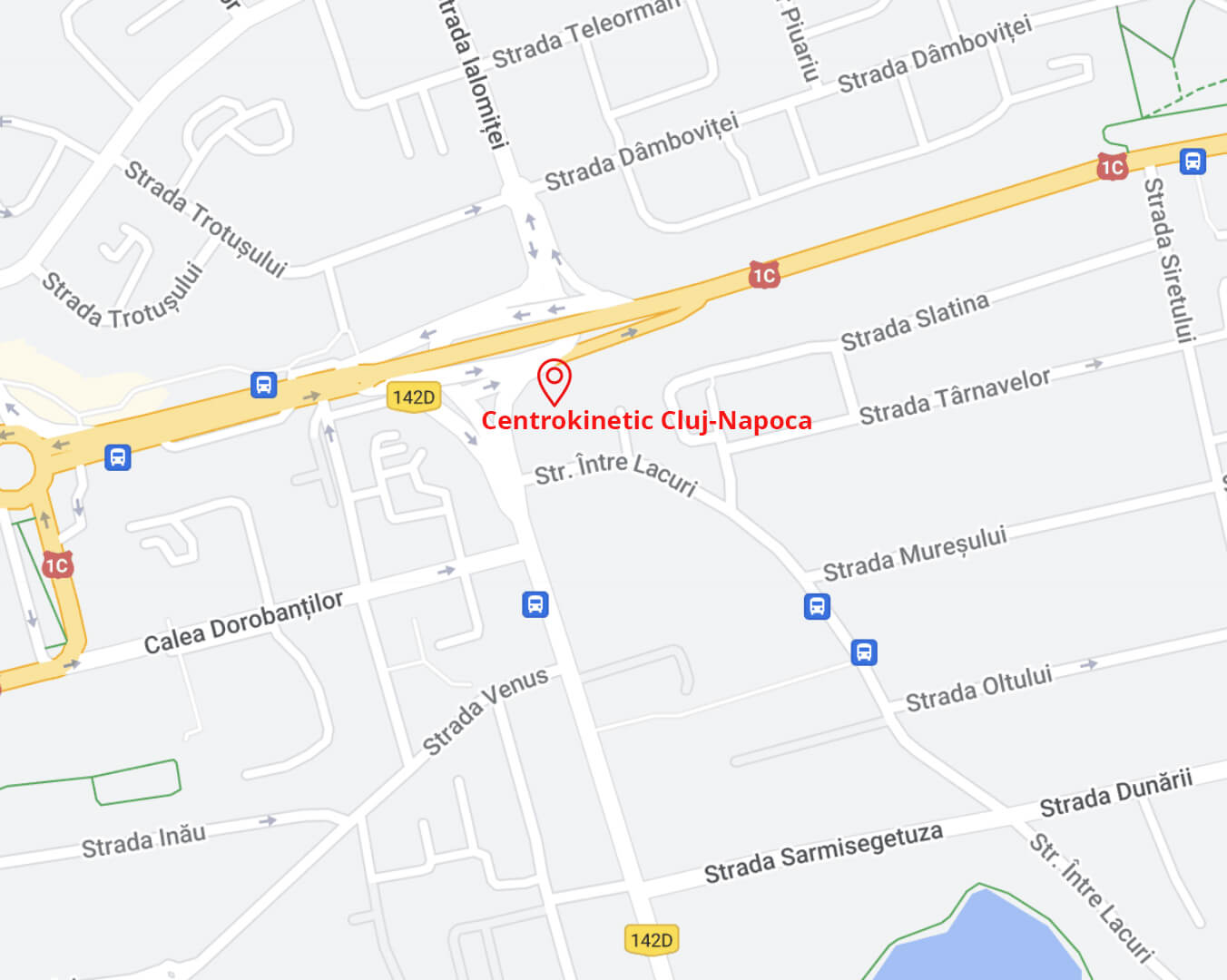
CENTROKINETIC CLUJ-NAPOCA
Cluj-Napoca,
Str. Intre Lacuri, nr.1
Intrarea este in spatele cladirii.
| Navigation |
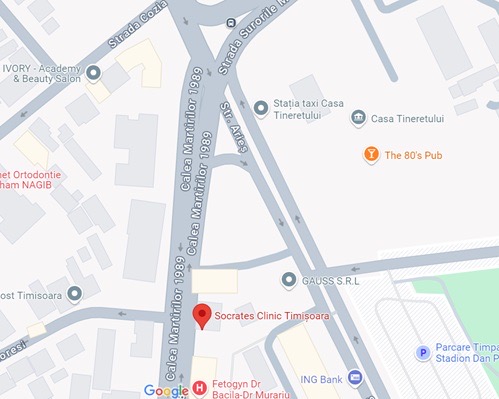
SOCRATES CLINIC TIMISOARA
Timisoara, Calea Martirilor 1989,
nr. 1.
Telefon: 0371 785 374.
| Navigation |
CONTACT
Phone: 0319693
E-mail: programari@centrokinetic.ro
Operating hours:
Monday – Friday: 07:00 – 21:00
Saturday: 09:00 – 14:00
Sunday: closed.
MAKE AN APPOINTMENT