Therapeutic Stretching: How Do You Correct Your Posture and Get Rid of Pain?


 Therapeutic Stretching: How Do You Correct Your Posture and Get Rid of Pain?
Does your back hurt after a few hours spent at the office? Do you feel constant tension in your neck or between your shoulder blades? These signs frequently appear in sedentary adults, amateur athletes, or people recovering after an orthopedic procedure.
Current data show that over 80% of adults experience episodes of musculoskeletal pain throughout their lives. In many cases, incorrect posture and muscle imbalances maintain these symptoms. Therapeutic stretching, applied correctly and in a personalized way, helps you reduce tension, improve body alignment, and prevent the recurrence of pain. Here are more details!
What is therapeutic stretching and how does it act on posture?
Therapeutic stretching is a set of stretching techniques applied in a controlled manner, based on a clinical evaluation and, if necessary, imaging tests. The specialist identifies the shortened muscles, the weakened groups, and the mobility limitations, then builds a program adapted to your age, activity level, and any associated conditions.
Regular stretching exercises support flexibility, maintain joint range of motion, and reduce the risk of muscle overuse. In practice, this means:
- relaxing tense muscles (for example, the pectorals or hip flexors);
- improving the mobility of the cervical, thoracic, and lumbar spine;
- facilitating the activation of weakened muscles, such as the rhomboids or the glutes.
Incorrect posture frequently occurs through the combination of a sedentary lifestyle and repetitive movements. For example, if you spend 8-10 hours a day at a desk, the anterior shoulder muscles shorten, while the muscles between the shoulder blades weaken. Over time, this adaptation can lead to persistent pain. Stretching programs combined with stabilization exercises can reduce the intensity of chronic low back pain, in most cases. Results become stable when the patient follows the frequency and the therapist's instructions.
The most common postural problems and the targeted muscle groups 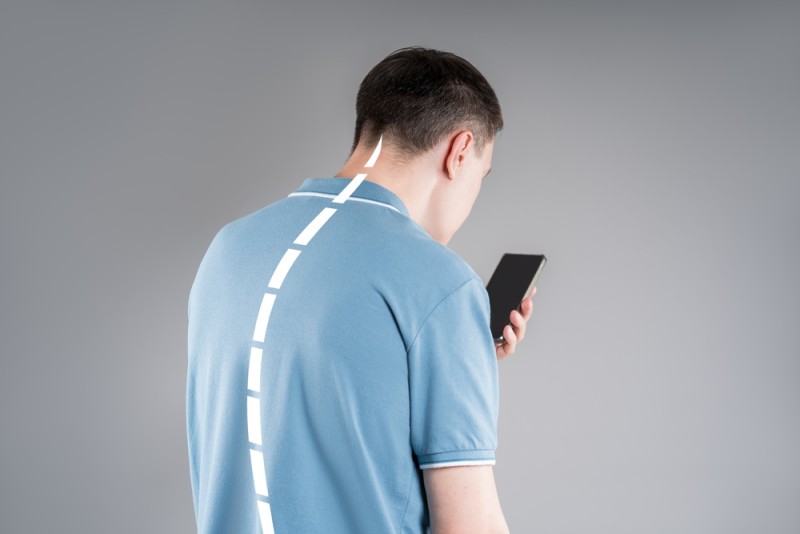
Rounded back and slouched shoulders
Thoracic hyperkyphosis frequently occurs in people who work at a computer or drive a lot. The pectoral muscles and the anterior deltoid shorten; at the same time, the rhomboids and the middle trapezius lose their strength.
Pectoral stretching, combined with activation exercises for the interscapular muscles, helps straighten the shoulders. During physical therapy sessions, the therapist corrects your position, adjusts the intensity, and tracks progress through periodic functional tests.
A correct evaluation allows the differentiation between a postural kyphosis, reversible through exercises, and a structural one, which requires careful medical monitoring.
Forward head posture and neck pain
The forward head posture increases the pressure on the cervical discs. Every centimeter of forward displacement of the head adds extra stress on the neck muscles. Patients frequently complain of headaches, cervical stiffness, or pain radiating toward the shoulders. In persistent cases, neck pain with limited mobility can occur.
Stretching the suboccipital muscles and the sternocleidomastoid reduces tension, while cervical retraction exercises re-educate the position of the head. Early intervention prevents the worsening of disc conditions and maintains long-term functionality.
Lumbar hyperlordosis and back pain
Hyperlordosis means an accentuation of the lumbar curvature. Usually, the hip flexors (iliopsoas) and the rectus femoris are shortened, while the deep abdominal muscles and the glutes are weakened.
This combination favors the appearance of low back pain, especially in active people or athletes who do not compensate correctly through stabilization training.
Targeted stretching of the hip flexors, combined with exercises for the transversus abdominis muscles, helps realign the pelvis. For optimal results, the program must be adapted to your level of effort and any associated conditions.
Types of stretching used in posture correction
The specialist chooses the appropriate technique depending on the objective and the stage of recovery.
- controlled static stretching – you hold the position for 20-60 seconds, without sudden movements. It is frequently used at the end of the session, for muscle relaxation;
- dynamic stretching – controlled movements are performed across the full joint range of motion. This variant is suitable for warming up, especially for athletes;
- PNF stretching (proprioceptive neuromuscular facilitation) – alternates muscle contraction with relaxation. This method requires specialized supervision and provides good results in post-operative recovery or after trauma.
In many cases, the program also includes physiotherapy procedures, which reduce inflammation and support tissue repair. For example, TECAR physiotherapy can stimulate local circulation and accelerate the recovery process.
A practical therapeutic stretching program for posture
Apply the following steps only if your doctor or physical therapist has confirmed that they are suitable for you.
Correct your cervical posture
Perform cervical retractions (chin tucks). Stand up straight, looking forward. Pull your chin slightly back, without tilting your head. Hold for 5 seconds and repeat 10 times.
Add stretching for the upper trapezius. Tilt your head to the side and hold for 20-30 seconds. Do not force the movement and stop if sharp pain occurs.
Open up the thoracic area
Place your forearm on a wall or on a door frame, with your elbow at 90 degrees. Rotate your trunk in the opposite direction until you feel the stretch in your chest. Hold for 30 seconds.
For thoracic mobility, use a foam roller under the upper part of your back. Support your head with your hands and perform gentle extensions. Avoid this technique if you have severe osteoporosis or intense pain.
Balance the lumbar area and the hips
From a lunge position, push your pelvis slightly forward to stretch the iliopsoas. Hold for 30 seconds on each side.
Lying on your back, bring your knees to your chest and hold the position for 20-30 seconds. The exercise relaxes the lumbar muscles and reduces the tension accumulated after long periods of sitting.
Perform the exercises daily or according to the plan established by the specialist. Avoid sudden movements and do not aim for maximum range in the first week.
Quick correction guide
| What you feel | What should you stretch? | What should you strengthen? |
|---|---|---|
| Hunched shoulders | The chest muscles | The muscles between the shoulder blades |
| Stiff/forward-leaning neck | The nape (base of the skull) | The front part of the neck |
| Overly arched back | The upper part of the thigh | The abdomen and the glutes |
When can you notice results and when should you see a doctor?
Many patients report reduced muscle tension after 1-2 weeks of regular practice. Posture correction usually requires 6-12 weeks, depending on age, the degree of imbalance, and the consistency of the program.
Request a medical evaluation if:
- the pain persists for more than 2-3 weeks;
- numbness, tingling, or muscle weakness appear;
- you have recently suffered a trauma;
- you are in post-operative recovery and have not yet received a personalized plan.
A correct evaluation includes postural analysis, mobility and strength tests, as well as imaging investigations if needed. Early intervention reduces the risk of chronicization and allows you to return more quickly to daily activities or training.
The medical team specialized in orthopedics and recovery at Centrokinetic can establish a plan adapted to your objectives, whether you want to get rid of pain, return to competition, or prevent long-term problems in your child's case.
Finally, keep in mind: therapeutic stretching works best as part of a comprehensive program, which includes postural education, strength exercises, and periodic monitoring. Book an appointment at Centrokinetic now for a specialist consultation!
Frequently asked questions
How long do I need to stretch to correct my posture?
In most cases, daily practice for 6-12 weeks brings visible improvements. The exact duration depends on the severity of the imbalance and your consistency. The initial evaluation at Centrokinetic helps establish a realistic timeframe.
Can I stretch if I have acute pain?
In the acute phase, avoid intense exercises without medical recommendation. Some movements can worsen the inflammation. Consult your doctor or physical therapist to receive guidance adapted to your situation.
Is stretching alone enough?
Usually, no. Stretching relaxes the shortened muscles, but correct posture also requires strengthening the weakened muscles and neuromuscular re-education. A complete program combines these components and is monitored by a specialist.
Sources:
BUCHAREST TEAM




































CLUJ NAPOCA TEAM





















BRASOV TEAM










MAKE AN APPOINTMENT
FOR AN EXAMINATION
See here how you can make an appointment and the location of our clinics.
MAKE AN APPOINTMENT
Asiguratori privati





Parteneriate


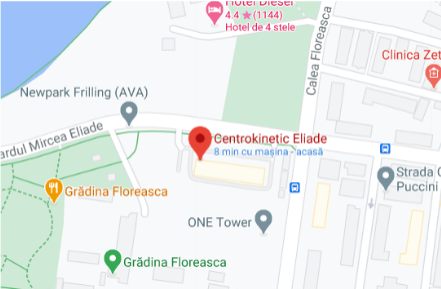
CENTROKINETIC FLOREASCA
Bucharest, 1st District,
Mircea Eliade Street, no. 18,
Eliade Tower, Entrance A, Floor 3
| Navigation | Explore 3D |
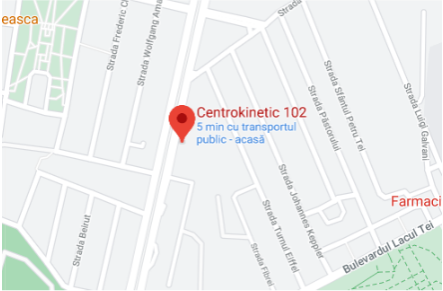
CENTROKINETIC Barbu Vacarescu
Bucharest, 2nd District,
Barbu Vacarescu Street, no. 102,
102 The Address, ground floor.
| Navigation | Explore 3D |
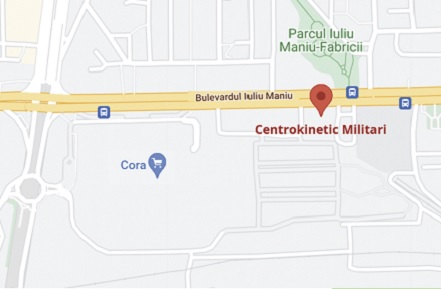
CENTROKINETIC MILITARI
Bucuresti, Sector 6,
Bld. Iuliu Maniu, nr. 15G,
Cladirea PBT, etaj 3.
| Navigation |
CENTROKINETIC CLUJ-NAPOCA
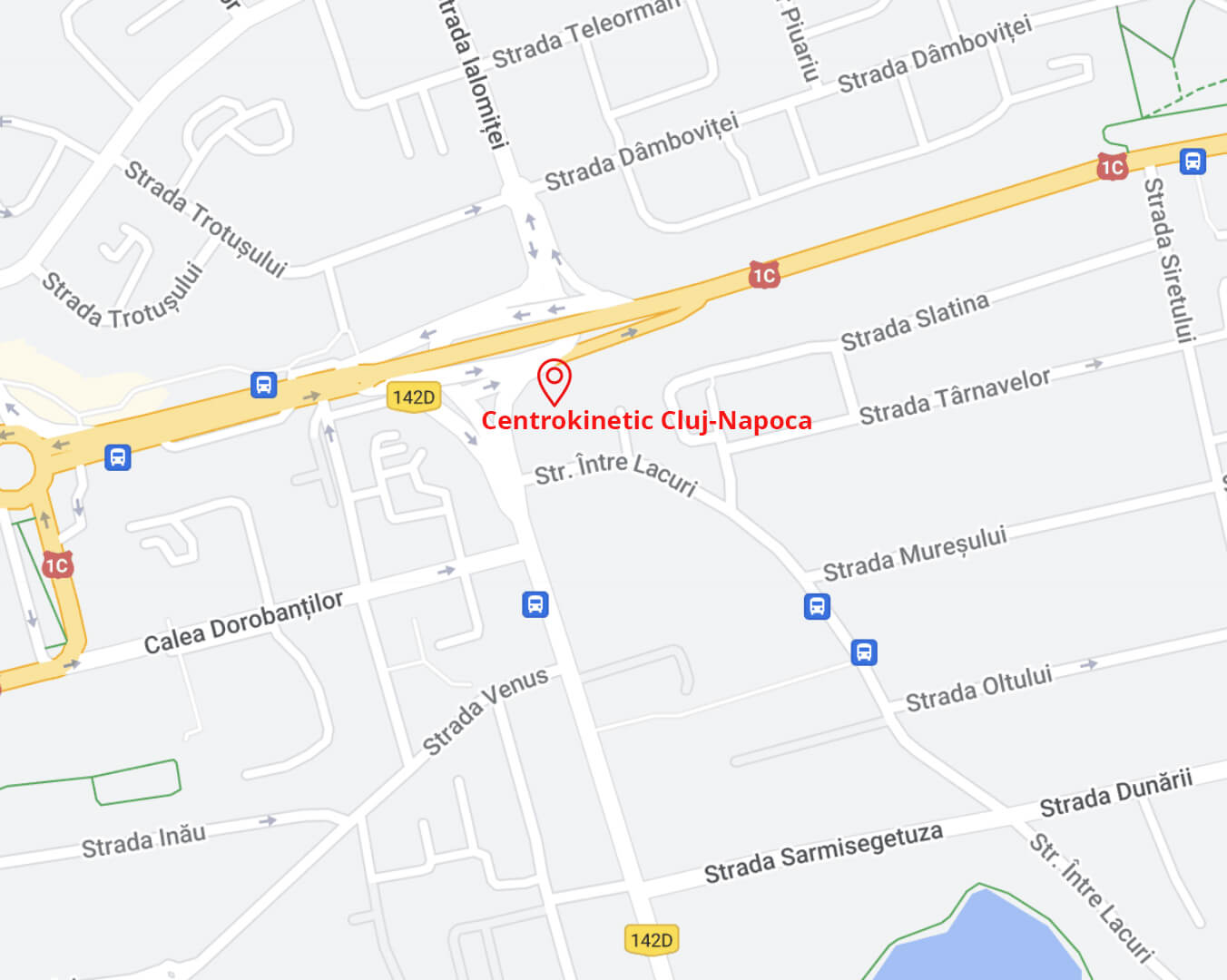
Cluj-Napoca,
Str. Intre Lacuri, nr.1
Intrarea este in spatele cladirii.
| Navigation |
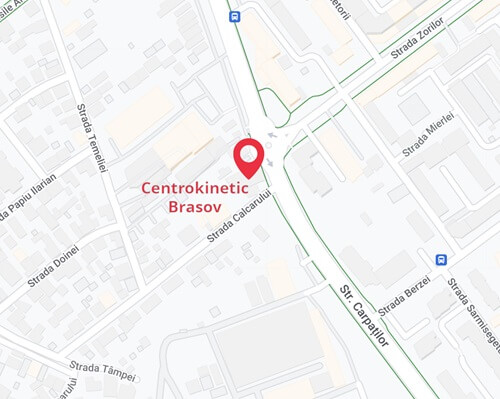
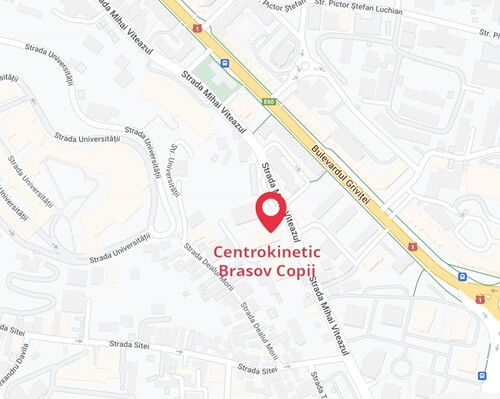
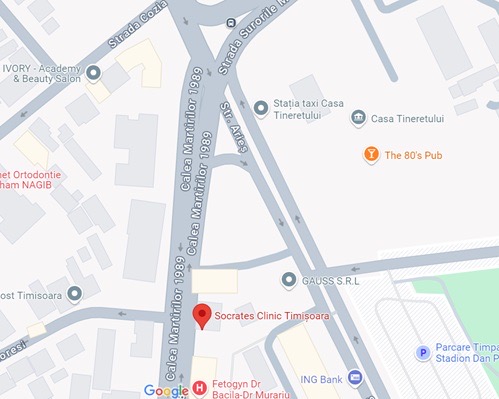
SOCRATES CLINIC TIMISOARA
Timisoara, Calea Martirilor 1989,
nr. 1.
Telefon: 0371 785 374.
| Navigation |
CONTACT
Phone: 0319693
E-mail: programari@centrokinetic.ro
Operating hours:
Monday – Friday: 07:00 – 21:00
Saturday: 09:00 – 14:00
Sunday: closed.
MAKE AN APPOINTMENT