
See details
READ MORE

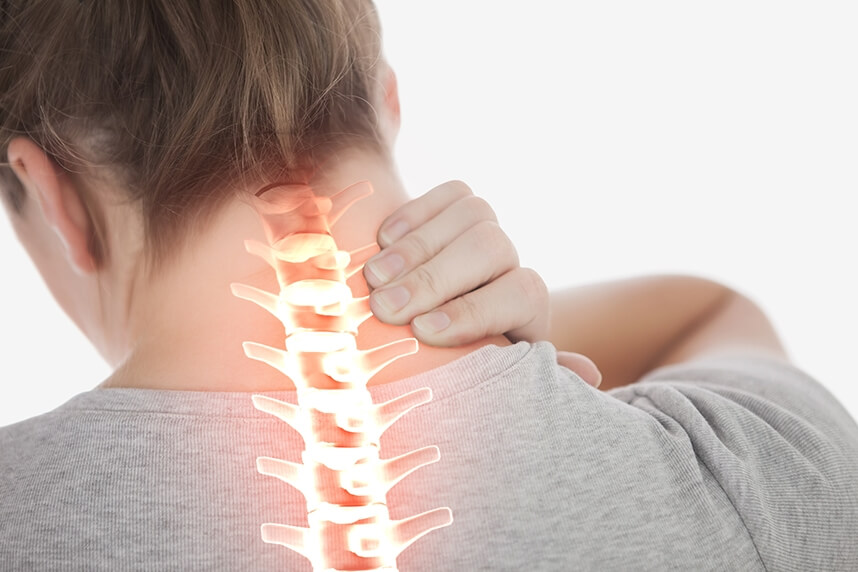
Chronic pain is pain that persists beyond the normal healing time. This usually means continuous painful periods that last longer than three months. Although it is known that pain can become more complex over time than in its early stage, the mechanisms behind this chronicity are not fully understood. Repeated pain signals produce structural and functional changes in the nervous system, resulting in sensitization at the level of the nervous system as well as of the receptors. Neck pain includes the anatomical region located between the C1 and C7 vertebrae, as well as the surrounding musculature, with the exception of the shoulders. This type of pain is currently the most widespread and costly musculoskeletal condition in the Western world. It is estimated that approximately 67% of adults will suffer from neck pain at some point in their lives. In Europe, between 15-19% of cases become chronic, and worldwide up to 20%. Evidence suggests that middle-aged white women are at increased risk of developing this condition.
Personal and environmental factors influence the development of a condition of this kind. Among these, a sedentary lifestyle, office work, and an increasingly greater dependence on technology stand out.
In favor of improving the treatment plan, various studies have been carried out to identify the most effective components of a physiotherapy intervention. Thus, a wide range of therapies are used: therapeutic massage, manual therapy, mobilizations and soft tissue relaxation techniques with various instruments, electrotherapy, spinal traction, ultrasound, diathermy, application of kinesiology tape, and stress-management psychotherapy combined with kinesiotherapy.
Kinesiotherapy is a set of medical exercises intended to treat or relieve certain conditions. In all multimodal treatment plans, regularly performed physical exercise is considered a key component of any approach in order to increase mobility and muscle tone and, implicitly, to inhibit the transmission of pain. These exercises primarily target the muscles concerned, but also the rest of the neighboring muscle groups, in order to achieve an overall effect. As pain becomes chronic, the superficial neck muscles replace the action of the deep muscles, resulting in early fatigue, contractures, and a feeling of discomfort; therefore, the exercises are also meant to stimulate the re-education of correct movement patterns. Studies show that kinesiotherapy sessions are much more effective when four elements are combined: frequency, intensity, time, and type of exercises.
In terms of frequency, a minimum of three sessions per week is recommended when starting treatment, although a program involving daily sessions may also be indicated. This frequency is maintained for at least four weeks. In both cases, improvements such as reduced pain and increased muscle tone were observed. After the first phase, the frequency began to decrease to approximately one to two sessions per week. However, based on the reports studied, it is recommended to maintain two to three sessions per week for chronic patients, since the need to maintain the musculoskeletal system is ongoing in the prevention of pain and joint stiffness.
Intensity consists of the level of difficulty with which a given exercise is performed. It is increased progressively from session to session; resistance exercises are usually used, with values between 20 and 70% of maximum voluntary contraction. Low intensity is defined as movement against gravity, while in high-intensity exercises, the movement is performed against gravity with additional resistance. The gradual increase is made as the muscles become accustomed to a rhythm, in order to avoid the plateau phase and to allow continuous muscle development. Also, increasing the level of difficulty helps the thyroid release hormones that improve cellular metabolism and stimulate hypertrophy of muscle fibers. In order to observe hypertrophy, it is necessary to follow a program lasting at least six weeks. To counteract the adverse effects caused by training, such as a possible increase in the pain response, different sessions are alternated, combining sessions with easier exercises with sessions with more complex, higher-resistance exercises. This is a measure taken to reduce excessive loading of the musculoskeletal system.
The time dedicated to exercises is also important, with the benefits of therapy being observed with a session of at least 30 minutes, performed three times a week over a period of at least six weeks for the first stage of treatment. Since episodes of chronic pain are transient, it is important to continue the sessions in order to maintain long-term results.
Throughout the sessions, different types of combined movement were used: endurance exercises, resistance exercises, coordination, aerobic exercises, and stretching. Endurance exercises are based on maintaining a small or moderate effort over an extended period of time, while resistance exercises involve maintaining a high or intense effort over a shorter period of time. In performing them, medium-to-heavy resistance elastic bands, balls, sticks, dumbbells, balance boards, and other instruments were used to stimulate coordination and toning. Although there have been several debates about which form of exercise is more suitable, it was concluded that a combination of resistance and stretching exercises brings the best and fastest results. Each exercise has its own role; performed correctly and regularly, it lays a cornerstone for effective medical recovery.
Together, they aim to stimulate the cardiovascular system in order to supply more oxygenated blood to the area being worked, stabilize the neck musculature, increase isometric endurance, relieve pain, strengthen the intervertebral joints, and correct body posture. Just as medication is prescribed at a certain dose and at a certain interval, the same principle applies to kinesiotherapy, respecting the frequency, the time allotted, and the type of exercises, with a gradual increase in the level of intensity.
All of these objectives are adapted according to the individual needs of each patient.
It has been reported that depression and anxiety affect between 20 and 50% of people with chronic pain, so there are situations in which including psycho-social or counseling components can be helpful. Therapeutic education should focus on a patient-centered approach tailored to the particularities of each individual medical case.
Centrokinetic is the place where you will find answers and clear solutions for your movement problems. The clinic dedicated to osteoarticular conditions is divided into the following specialized departments:
Find out the latest news by following the Facebook and YouTube accounts of Centrokinetic clinic.
See details
READ MORESee details
READ MORESee details
READ MORESee here how you can make an appointment and the location of our clinics.








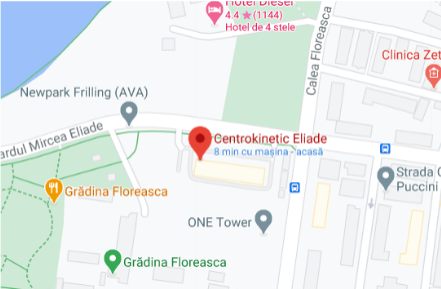
CENTROKINETIC FLOREASCA
Bucharest, 1st District,
Mircea Eliade Street, no. 18,
Eliade Tower, Entrance A, Floor 3
| Navigation | Explore 3D |
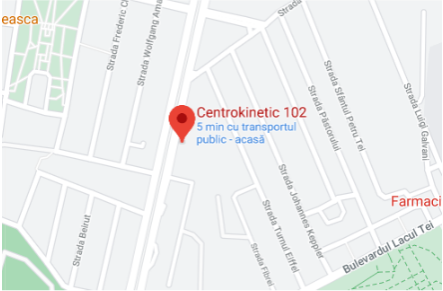
CENTROKINETIC Barbu Vacarescu
Bucharest, 2nd District,
Barbu Vacarescu Street, no. 102,
102 The Address, ground floor.
| Navigation | Explore 3D |
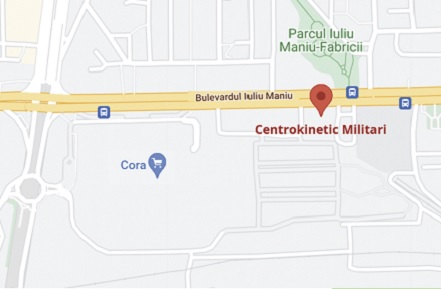
CENTROKINETIC MILITARI
Bucuresti, Sector 6,
Bld. Iuliu Maniu, nr. 15G,
Cladirea PBT, etaj 3.
| Navigation |
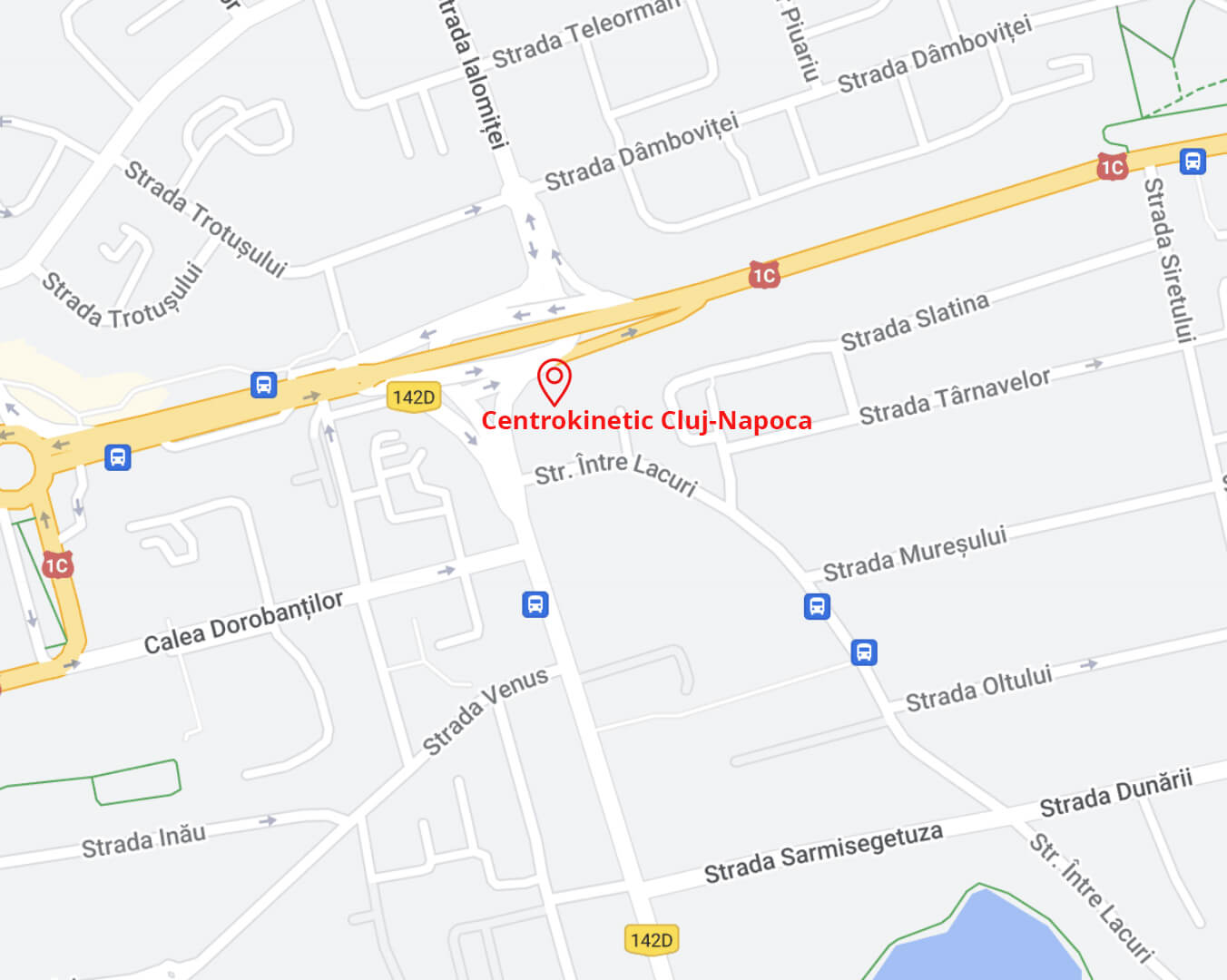
CENTROKINETIC CLUJ-NAPOCA
Cluj-Napoca,
Str. Intre Lacuri, nr.1
Intrarea este in spatele cladirii.
| Navigation |
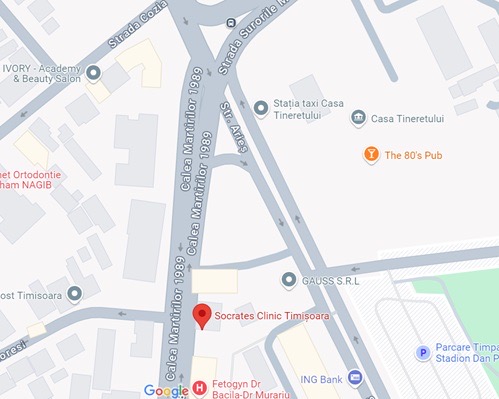
SOCRATES CLINIC TIMISOARA
Timisoara, Calea Martirilor 1989,
nr. 1.
Telefon: 0371 785 374.
| Navigation |
Phone: 0319693
E-mail: programari@centrokinetic.ro
Operating hours:
Monday – Friday: 07:00 – 21:00
Saturday: 09:00 – 14:00
Sunday: closed.
MAKE AN APPOINTMENT