Valga


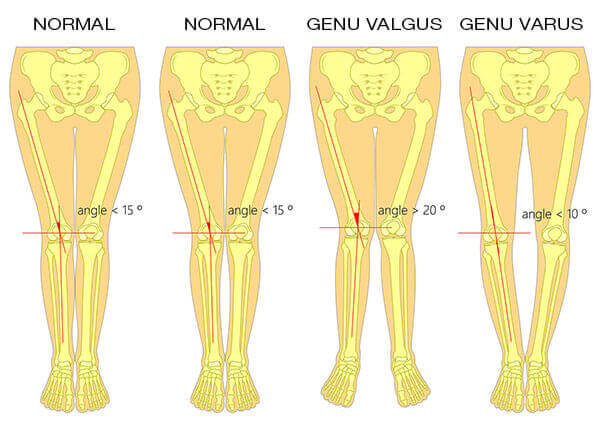
What genu valgum (knock-knees) means and how it manifests
Physiological tibiofemoral valgus becomes noticeable to parents around the age of 2 and reaches an angle of 8-10 degrees (the angle formed between the thigh and the lower leg) toward 3-4 years of age, which is when we see the most pronounced X-shape of the knees. This valgus progressively decreases over the following years, reaching the stability we present as adults of 5-7 degrees around the age of 7. However, a wide range of physiological knock-knee is considered normal, varying from 2 degrees of varus, around the age of 3-4, to 20 degrees of valgus, with an average of 12 degrees.
While knock-knee is normal in early childhood and resolves spontaneously by the age of 7, genu valgum refers to the pathology that develops at the beginning of adolescence and does NOT resolve on its own. Asymmetric genu valgum will certainly be pathological, and the evaluation of children with pathological genu valgum will lead us toward a femoral deformity.
The clinical examination is performed with the child lying on their back. The degree of femoral anteversion and tibial torsion are taken into consideration. Most of the time, femoral anteversion and external tibial rotation give us the impression of a more pronounced genu valgum, but if the kneecaps are fixed and facing upward, genu valgum may not actually be present.
In addition to the deformity that is visible to the naked eye, the child may also have knee pain, and while walking, the toes may rotate outward.
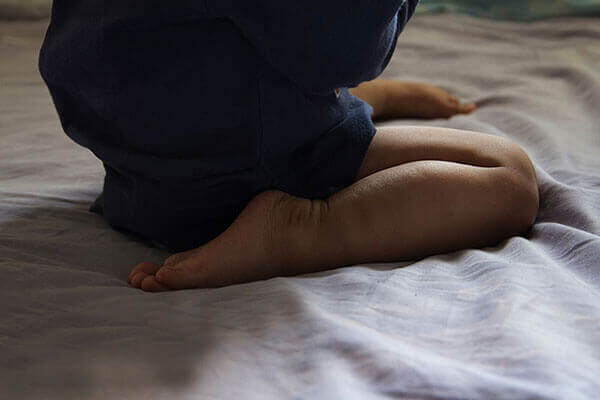
In the first years of life, knock-knees can be accentuated by the W-sitting position adopted by the child, sitting with the feet turned outward.
When should you come in for a check-up?
- When the child easily adopts the W-sitting position
- When the child complains of knee pain
- When, while walking and running, they throw their feet outward
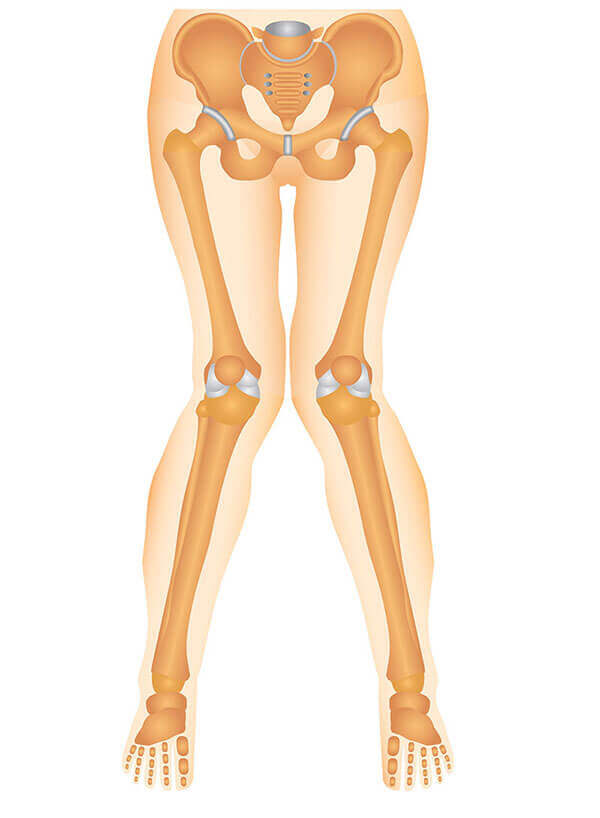
Following an evaluation, the specialist decides whether we are dealing with a physiological or pathological genu valgum and whether the child needs physiotherapy sessions.
The exercises aim to relax the contracted muscles and strengthen the lax muscles that allow the knees to deviate into an X shape. In severe cases, the only solution is surgical intervention.
After we determine what problem your child has, we establish whether they need therapy and what the most suitable treatment is, the duration of the sessions, and an approximation of how long the child will follow the therapy program. Schedule your little one for a consultation and put your worries about their motor development to rest!
IF YOU DON'T ALREADY KNOW US
Centrokinetic is the top-performing medical clinic dedicated to osteoarticular conditions, organized into several dedicated departments:
- Orthopedics: made up of a highly experienced team of orthopedic doctors, led by Dr. Andrei Ioan Bogdan, senior orthopedics-traumatology physician with surgical activity at the Floreasca Clinical Emergency Hospital and at the Medlife Orthopedics Hospital, specialized in sports traumatology and in ankle and foot surgery.
- Pediatric orthopedics, where we treat children's sports conditions (ligament and meniscus injuries), spinal deformities (scoliosis, kyphosis, hyperlordosis), and foot conditions (hallux valgus, hallux rigidus, clubfoot, flat valgus foot, cavus foot).
- Neurology, performing consultations and EMG within the department. The medical team is completed by Dr. Mardare, who specialized in spinal surgery at the University of Oxford.
- Medical recovery, for children and adults, the department being led by one of the most experienced physicians in the field, senior lecturer Dr. Tache Georgiana. The department specializes in the recovery of performance athletes, in spinal conditions, and in the recovery of children with neurological and traumatic conditions.
- Medical imaging, the clinic being equipped with ultrasound and MRI, dedicated to musculoskeletal conditions. We are proud of our medical team of radiologists, made up of Dr. Ghiea Sorin, Dr. Pantu Cosmin, and Dr. Florescu Nicoleta, specialized in musculoskeletal imaging.
Find out our latest news by following the Centrokinetic clinic's Facebook and YouTube accounts.

MAKE AN APPOINTMENT
CONTACT US
MAKE AN APPOINTMENT
FOR AN EXAMINATION
See here how you can make an appointment and the location of our clinics.
MAKE AN APPOINTMENT
BUCHAREST TEAM























CLUJ NAPOCA TEAM














BRASOV TEAM











Asiguratori privati





Parteneriate


CENTROKINETIC FLOREASCA
Bucharest, 1st District,
Mircea Eliade Street, no. 18,
Eliade Tower, Entrance A, Floor 3
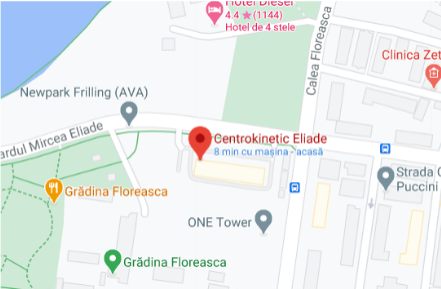
| Navigation | Explore 3D |
CENTROKINETIC Barbu Vacarescu
Bucharest, 2nd District,
Barbu Vacarescu Street, no. 102,
102 The Address, ground floor.
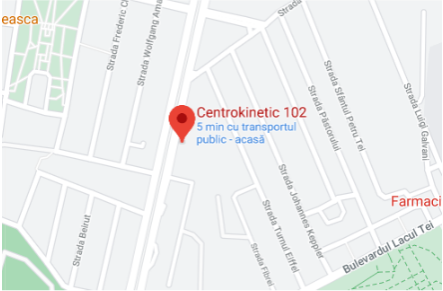
| Navigation | Explore 3D |
CENTROKINETIC MILITARI
Bucuresti, Sector 6,
Bld. Iuliu Maniu, nr. 15G,
Cladirea PBT, etaj 3.
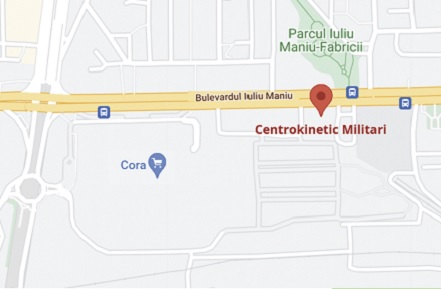
| Navigation |
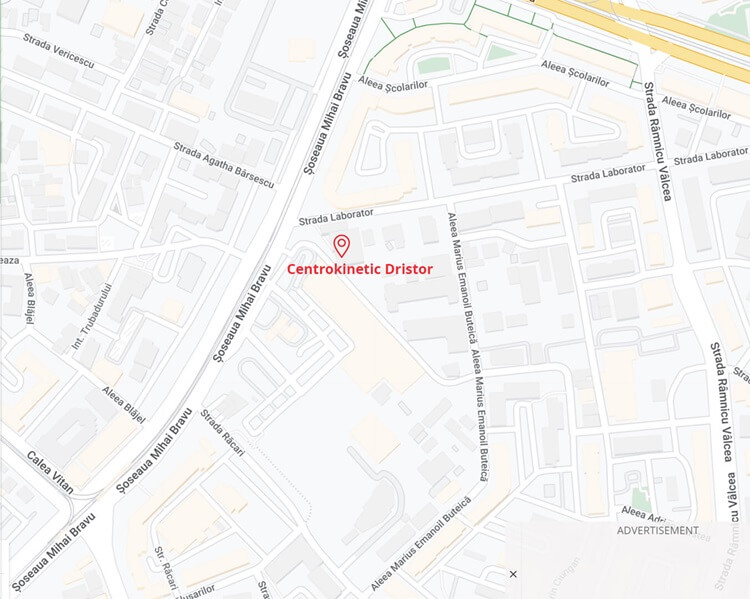
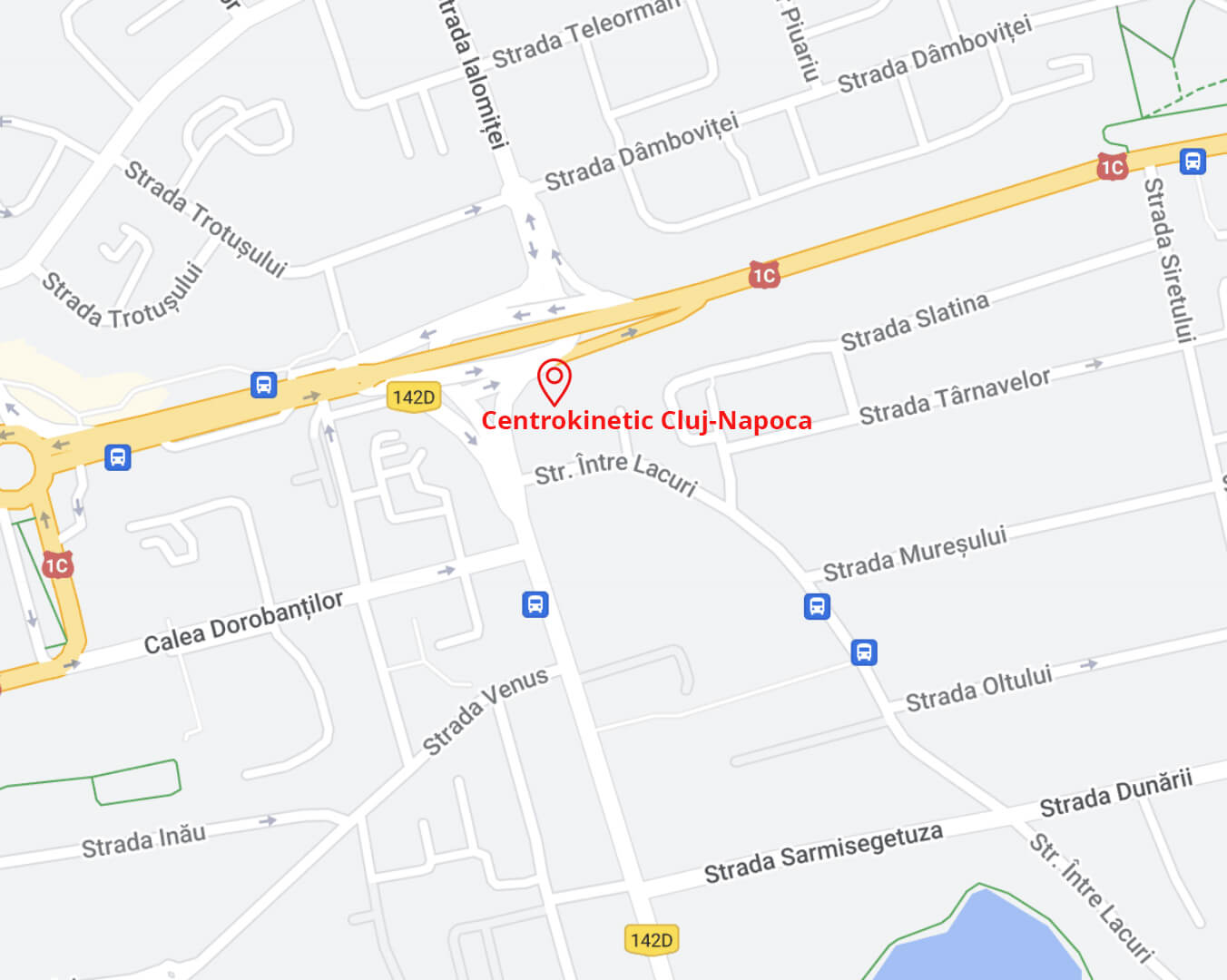
CENTROKINETIC CLUJ-NAPOCA
Cluj-Napoca,
Str. Intre Lacuri, nr.1
Intrarea este in spatele cladirii.
| Navigation |
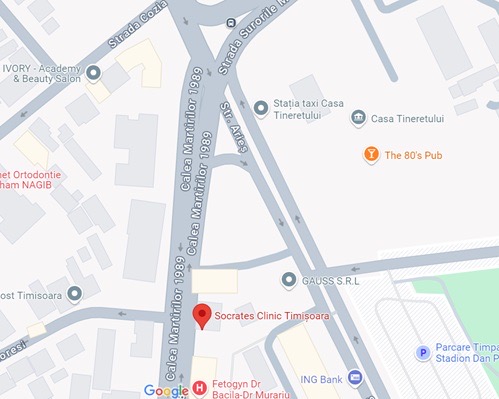
SOCRATES CLINIC TIMISOARA
Timisoara, Calea Martirilor 1989,
nr. 1.
Telefon: 0371 785 374.
| Navigation |
CONTACT
Phone: 0319693
E-mail: programari@centrokinetic.ro
Operating hours:
Monday – Friday: 07:00 – 21:00
Saturday: 09:00 – 14:00
Sunday: closed.
MAKE AN APPOINTMENT