What Are Trigger Points and How Can They Contribute to Chronic Muscle Pain?



Trigger points are small, painful spots located within a tense muscle that can cause both local pain and pain felt at a distance from the actual source of the problem. You can feel them as a sensitive "knot" upon palpation, and pressure applied to that area can trigger pain that radiates to the neck, shoulder, arm, or lower back.
Many active adults deal with this kind of persistent pain without knowing that the real source is a trigger point. If you don't intervene in time, these areas of tension can maintain or worsen a chronic pain syndrome. A correct evaluation helps you prevent complications and return to an optimal level of mobility.
What are myofascial trigger points?
A myofascial trigger point is a hyperirritable spot located within a taut band of muscle. "Myo" refers to muscle, and "fascial" to the fascia – the connective tissue that surrounds muscles. When you press on such a point, intense pain appears and, often, a sensation that is felt in another area of the body.
Specialists identify a trigger point through several clinical characteristics:
- the presence of a palpable nodule within a taut muscle band;
- pain upon direct pressure;
- reproduction of the usual pain pattern;
- sometimes, a brief local muscle contraction (twitch response);
- limited mobility in the affected area.
For example, a trigger point in the upper trapezius can cause pain that travels up toward the back of the head and temple, generating a tension headache. Many patients only treat the headache, without knowing that the source lies in the neck muscle.
Active and latent trigger points
Not all trigger points behave the same way. In medical practice, they are classified into two categories:
How do myofascial trigger points develop?
Trigger points don't appear suddenly. They usually develop gradually, against a background of overuse or maintaining incorrect posture.
Overuse and repetitive microtrauma
Any muscle subjected to repetitive strain can develop areas of tension. Common situations include:
- prolonged sitting at a desk, with raised shoulders and the head projected forward;
- intense training without adequate recovery;
- repetitive movements at work;
- frequently carrying weight on one shoulder.
Prolonged muscle contractions reduce local circulation. Over time, muscle fibers no longer receive enough oxygen and nutrients. This creates an "energy crisis" at the cellular level, and the muscle remains stuck in a state of partial contracture.
The local mechanism: what happens in the muscle?
At the microscopic level, the process involves:
- decreased blood flow;
- accumulation of irritating substances resulting from metabolism;
- increased sensitivity of pain receptors;
- maintenance of the contracture through intracellular calcium imbalances.
This combination sustains the pain and tension. The muscle no longer relaxes completely, and the area becomes increasingly sensitive.
Predisposing factors
In most cases, trigger points appear against a predisposing background:
- incorrect posture;
- sedentary lifestyle;
- prolonged psychological stress;
- lack of sleep;
- dehydration;
- surgical procedures or trauma.
Patients in post-operative recovery frequently develop trigger points around the operated area, because they change their movements to protect the affected segment.
Where do trigger points most commonly appear?
The location depends on your lifestyle, professional activity, and medical history.
The neck and shoulder area
Muscles such as the upper trapezius, sternocleidomastoid, or levator scapulae frequently develop trigger points. These can cause:
- persistent neck pain;
- tension headaches;
- mild dizziness;
- pain radiating toward the shoulder or arm.
A medical evaluation makes it possible to differentiate muscular pain from neurological or disc-related conditions.
The upper back and lower back
Trigger points in the paravertebral muscles or the quadratus lumborum can cause back pain, sometimes radiating toward the buttock. These manifestations can resemble sciatica, but have a muscular origin.
Other common locations
- the gluteal muscles – can send pain toward the thigh;
- the calf muscles – can cause discomfort while walking;
- the shoulder muscles – limit raising the arm.
Each trigger point has a predictable pattern of referred pain. Specialists use anatomical maps to correlate the painful area with the actual source.
How do trigger points contribute to chronic muscle pain?
Occasional muscle pain doesn't automatically indicate a chronic problem. However, symptoms persisting for more than a few weeks suggest an active maintaining mechanism.
The pain–contracture–pain cycle
Pain triggers a reflex contracture. The contracture reduces circulation. Reduced blood flow can sustain local sensitivity and muscle tension.
This vicious cycle favors chronicity. The affected muscle consumes energy even at rest and loses strength. Over time, functional limitations appear: it becomes difficult to turn your head, pick up your child, or run without discomfort.
Sensitization of the nervous system
If pain persists, the nervous system becomes more reactive. The perception threshold drops. Minor stimuli cause intense discomfort.
This sensitization explains why a patient ends up feeling widespread pain, even though the initial problem started from a single muscle.
Muscle imbalances and compensations
Your body looks for ways to adapt. When one muscle doesn't function correctly, others take over the load. Imbalances appear as a result.
A common example: after knee surgery, the patient protects the operated limb. They change how they walk. Within a few weeks, lower back pain appears, caused by secondary trigger points.
How is the correct diagnosis established?
Diagnosing trigger points relies primarily on the clinical examination. Standard imaging, such as X-rays or MRI, doesn't reveal these functional muscular changes.
What does the medical evaluation include?
A complete consultation involves:
- a detailed discussion about the onset and evolution of the pain;
- palpating the muscles and identifying tense bands;
- testing mobility and muscle strength;
- ruling out other causes, such as a herniated disc or neuropathies.
Treatment options for trigger points

Effective treatment combines several methods and is adapted to your type of activity, age, and any associated conditions.
Manual therapy
Therapeutic massage techniques aim to relax tense muscle bands and improve local circulation. The therapist applies controlled pressure directly on the trigger point, until the discomfort diminishes. In most cases, patients notice reduced pain after a few sessions, especially if the problem is recent.
Physiotherapy
Through physiotherapy procedures, inflammation can be reduced and muscle relaxation supported. Therapeutic currents, ultrasound, or other methods indicated by the doctor may be used. These techniques are part of a broader recovery plan.
Kinetotherapy
Kinetotherapy corrects the functional cause that led to the trigger points. The program includes:
- mobility exercises;
- strengthening the stabilizing muscles;
- postural re-education;
- exercises adapted for athletes or post-operative patients.
Minimally invasive procedures
In resistant cases, the doctor may recommend dry needling or local injections. These procedures require a clear indication and are performed under controlled conditions.
There are also contraindications. For example, certain blood disorders or anticoagulant treatments require caution. Talk openly with your doctor about your medical history.
What can you do to prevent trigger points?
Prevention plays an important role, especially if you've already had painful episodes.
Correct your posture
Adjust your position at the desk:
- place the monitor at eye level;
- support your back;
- keep your feet flat on the floor;
- take breaks every 30-45 minutes.
Exercise regularly
Choose moderate exercises, suited to your level. Brisk walking, swimming, or cycling improve circulation and reduce muscle tension.
Manage stress
Psychological tension is frequently reflected in the neck and shoulder muscles. Breathing techniques and adequate sleep support muscle relaxation.
Stay hydrated and allow time for recovery
Drink adequate amounts of water and, after intense training sessions, give yourself time to recover.
When is it time to schedule a specialist consultation?
Seek a consultation if:
- the pain persists for more than 2-3 weeks;
- mobility visibly decreases;
- radiating pain appears in the limbs;
- symptoms recur frequently.
At Centrokinetic, the medical team, experienced in orthopedics and functional recovery, offers you a complete evaluation and a tailored treatment plan. Book a specialist consultation now.
Frequently asked questions about trigger points and chronic muscle pain
How do I know if I have a trigger point or a spine problem?
Only a clinical evaluation can correctly differentiate between the two situations. Trigger points reproduce a specific pain pattern upon palpation, and imaging investigations can rule out disc or joint conditions.
Can trigger points go away without treatment?
Some recent trigger points can improve with rest and posture correction. If the pain persists or recurs, a medical consultation is recommended to prevent it from becoming chronic.
How long does recovery take?
Recovery time varies depending on how long the symptoms have been present and your involvement in the recovery program. Acute problems respond faster than chronic ones.
Are trigger points dangerous?
They are not a severe condition in themselves, but they can sustain pain and limit function. Early evaluation reduces the risk of complications.
Disclaimer: This article is for informational purposes only and does not replace specialist medical consultation. Persistent pain requires specialist evaluation.
Sources:
- Trigger Points. Physiopedia, 2018. Accessed July 7, 2026.
- Alvarez DJ, Rockwell PG. Trigger Points: Diagnosis and Management. American Family Physician, vol. 65, no. 4, 2026. Accessed July 7, 2026.
- Zhai, Tianjun, et al. Advancing Musculoskeletal Diagnosis and Therapy: A Comprehensive Review of Trigger Point Theory and Muscle Pain Patterns. Frontiers in Medicine, vol. 11, 2024, p. 1433070. Accessed July 7, 2026.
BUCHAREST TEAM


































































CLUJ NAPOCA TEAM


































BRASOV TEAM























MAKE AN APPOINTMENT
FOR AN EXAMINATION
See here how you can make an appointment and the location of our clinics.
MAKE AN APPOINTMENT
Asiguratori privati





Parteneriate



CENTROKINETIC FLOREASCA
Bucharest, 1st District,
Mircea Eliade Street, no. 18,
Eliade Tower, Entrance A, Floor 3

| Navigation | Explore 3D |
CENTROKINETIC Barbu Vacarescu
Bucharest, 2nd District,
Barbu Vacarescu Street, no. 102,
102 The Address, ground floor.
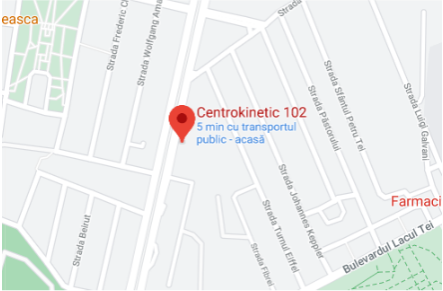
| Navigation | Explore 3D |
CENTROKINETIC MILITARI
Bucuresti, Sector 6,
Bld. Iuliu Maniu, nr. 15G,
Cladirea PBT, etaj 3.
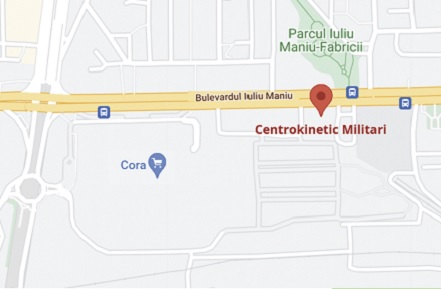
| Navigation |
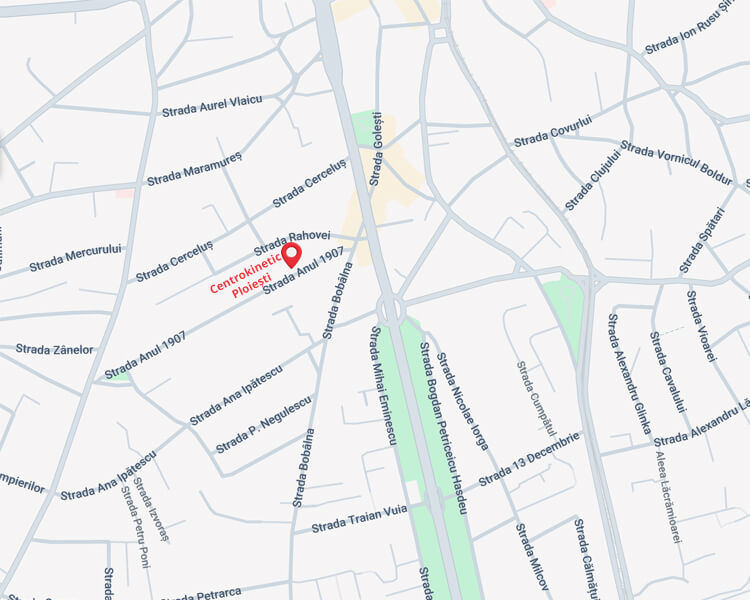
CENTROKINETIC CLUJ-NAPOCA
Cluj-Napoca,
Str. Intre Lacuri, nr.1
Intrarea este in spatele cladirii.
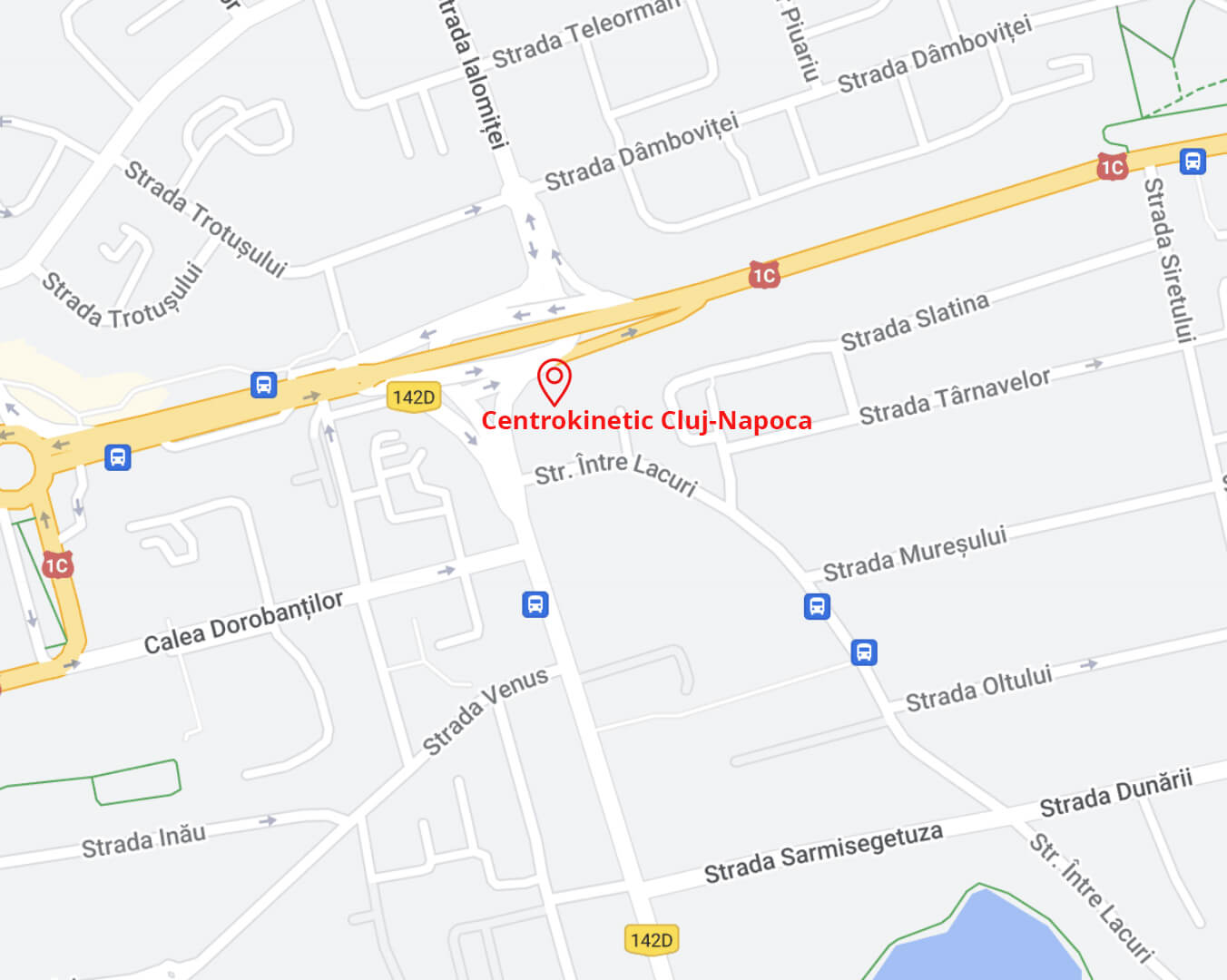
| Navigation |
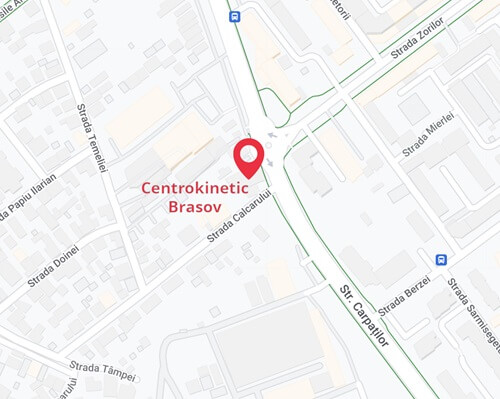
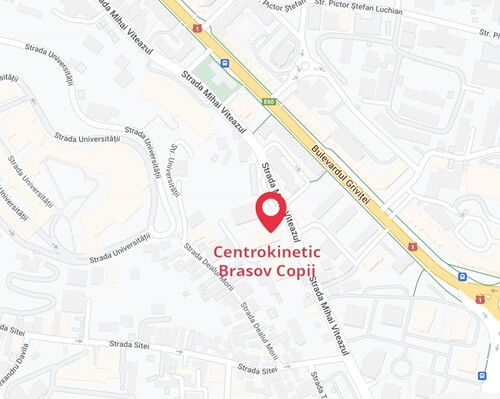
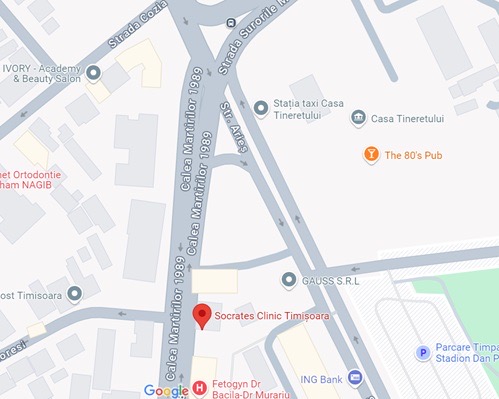
SOCRATES CLINIC TIMISOARA
Timisoara, Calea Martirilor 1989,
nr. 1.
Telefon: 0371 785 374.
| Navigation |
CONTACT
Phone: 0319693
E-mail: programari@centrokinetic.ro
Operating hours:
Monday – Friday: 07:00 – 21:00
Saturday: 09:00 – 14:00
Sunday: closed.
MAKE AN APPOINTMENT