After surgery, a sports injury, or a few weeks of immobilization, muscle strength decreases rapidly. In some cases, muscle mass loss appears within the first 10–14 days of inactivity. If you want to return to daily activities or training without prolonging recovery, you need a clear strategy established after a proper evaluation.
Muscle electrostimulation can be part of this strategy. This therapy does not replace exercise, but it supports it and accelerates its effects. We invite you to find out when it is indicated, how it works, and what results you can expect, based on current medical recommendations and clinical practice.
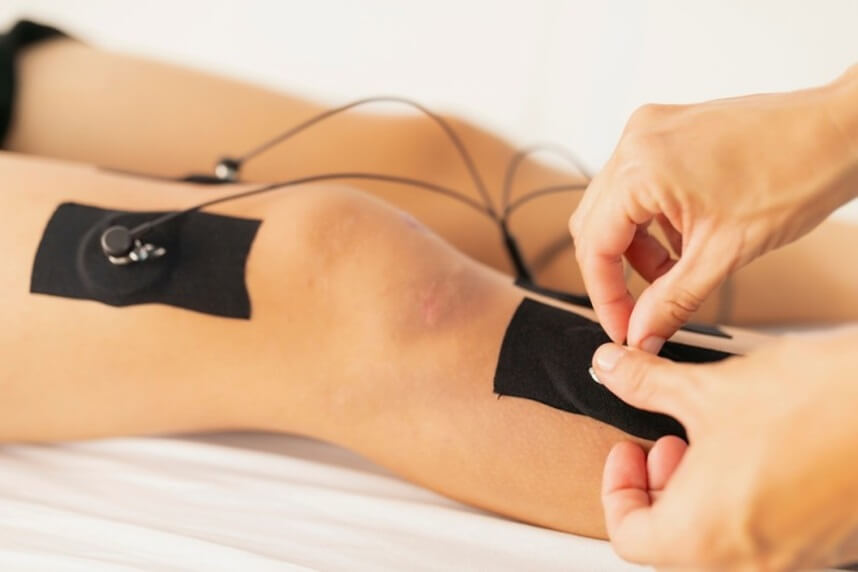
Muscle electrostimulation (EMS or NMES) uses controlled electrical impulses to produce muscle contractions. Electrodes are applied to the skin, above the targeted muscle, and the device transmits signals similar to those the brain naturally sends through the nerves.
According to research, neuromuscular stimulation helps activate muscle fibers even when voluntary control is reduced, as frequently happens after orthopedic surgeries. This repeated activation limits atrophy and supports the regaining of strength. It is important to differentiate muscle electrostimulation from other forms of electrotherapy. Within electrotherapy services, you may encounter:
At Centrokinetic, the electrostimulation procedure is integrated into a personalized plan, established after medical and functional evaluation.
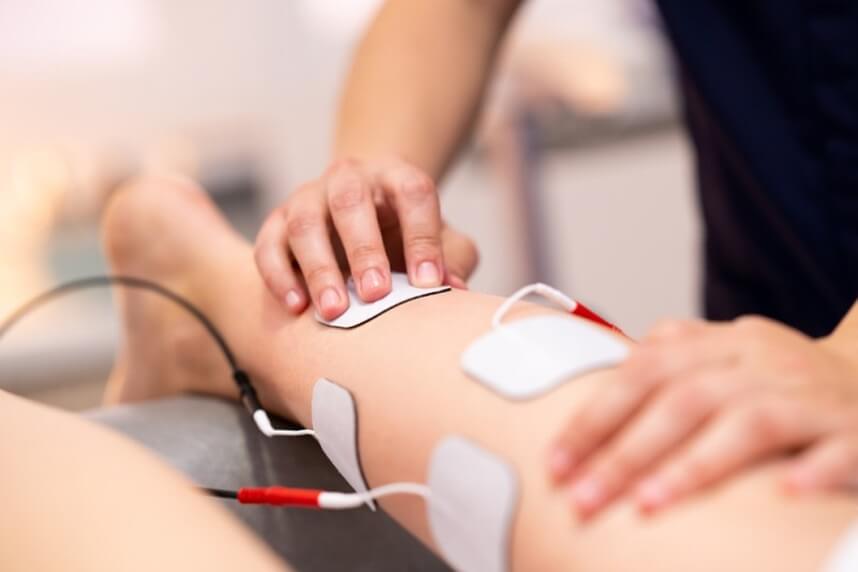
After anterior cruciate ligament reconstruction, meniscus surgery, or knee replacement, the quadriceps rapidly loses strength. Many patients notice that they cannot fully contract the muscle, even though the pain has decreased.
Numerous studies show that the early introduction of electrostimulation after ACL reconstruction improves quadriceps activation and supports functional recovery. In practice, this procedure is combined with guided exercises to achieve optimal results.
If you have undergone shoulder or hip surgery, the doctor may recommend stimulation of the affected muscle groups to prevent marked weakening in the first weeks.
After a fracture or a muscle injury treated conservatively, prolonged immobilization reduces muscle tone and mass. In these situations, electrostimulation maintains muscle activity until you can resume active exercises.
For patients with muscle injuries, the procedure may complement physiotherapy programs for tears, especially in phases when movement is limited.
Persistent pain can block the normal activation of the muscle. A common example is quadriceps weakness in patients with knee pain. Even if the joint is no longer inflamed, the muscle remains “inhibited.” Electrostimulation helps reactivate neuromuscular control. In most cases, we observe a more effective contraction after a few sessions combined with specific exercises.
In tendinitis, pain and inflammation reduce the exercise capacity of the involved muscle. Maintaining controlled muscle activity supports the tendon recovery process. In practice, we use electrostimulation as an adjunct in tendinitis programs, alongside progressive exercises and anti-inflammatory techniques.
If you are an amateur or professional athlete and cannot fully load a segment, electrostimulation helps you maintain muscle strength. This method is frequently used in the period between the acute phase and the resumption of intense training.
In short:
| Clinical situation | Purpose of electrostimulation | What does the medical team aim for? |
| After orthopedic surgeries (knee, shoulder, hip) | Reactivating weakened muscles | Improving contraction and preventing atrophy |
| Periods of immobilization (fractures, braces, casts) | Maintaining muscle activity | Limiting muscle mass loss |
| Muscle inhibition after pain | Re-educating neuromuscular control | Restoring the connection between nerve and muscle |
| Tendinitis or overuse | Supporting controlled activity | Support for gradual return to exercise |
| Forced rest in athletes | Maintaining strength in the absence of full loading | Reducing performance loss |
In most cases, 2–3 sessions per week are recommended. The first changes appear after 6–10 sessions, depending on the condition and consistency. Regularity directly influences the results. If you frequently interrupt the program, progress may slow down.
The plan is adapted to the stages of recovery:
Documented benefits include:
Electrostimulation does not replace active movement and is not an effective method for weight loss. Calorie burning is low compared to physical exercise.
Electrostimulation is not recommended in the following situations:
Direct application over the cardiac area, carotid sinus, or abdomen during pregnancy requires caution or is contraindicated. Adverse effects are rare and include skin irritation or mild muscle soreness.
Early intervention, after medical approval, reduces the risk of complications and shortens the recovery period. Do not delay evaluation if you notice persistent weakness after an intervention or injury.
Usually, you feel tingling and rhythmic muscle contractions. The procedure should not cause pain. The therapist adjusts the intensity so that it is effective and comfortable.
There are devices for home use, but effectiveness depends on the correct placement of the electrodes and the choice of suitable parameters. We recommend that you start under medical supervision, to avoid use in contraindicated situations.
The timing of returning to sports activity depends on the diagnosis, the intervention performed, and the response to recovery. Electrostimulation can speed up the regaining of strength, but returning to sports is done progressively, only with the doctor’s approval.
At Centrokinetic, the multidisciplinary team collaborates to offer you a personalized plan, adapted to your age, activity level, and goals. The integrated approach, based on correct investigations and constant monitoring, increases the chances of full recovery. Schedule a specialist consultation now!
This material is for informational purposes only and does not replace medical consultation. Avoid self-diagnosis and discuss with a specialist before starting any procedure!
Sources of information:
See here how you can make an appointment and the location of our clinics.







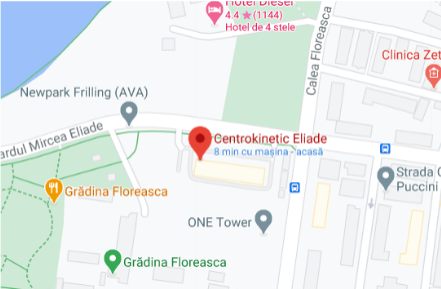
CENTROKINETIC FLOREASCA
Bucharest, 1st District,
Mircea Eliade Street, no. 18,
Eliade Tower, Entrance A, Floor 3
| Navigation | Explore 3D |
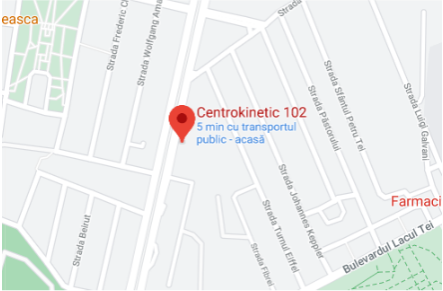
CENTROKINETIC Barbu Vacarescu
Bucharest, 2nd District,
Barbu Vacarescu Street, no. 102,
102 The Address, ground floor.
| Navigation | Explore 3D |
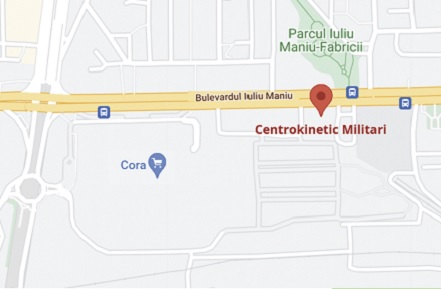
CENTROKINETIC MILITARI
Bucuresti, Sector 6,
Bld. Iuliu Maniu, nr. 15G,
Cladirea PBT, etaj 3.
| Navigation |
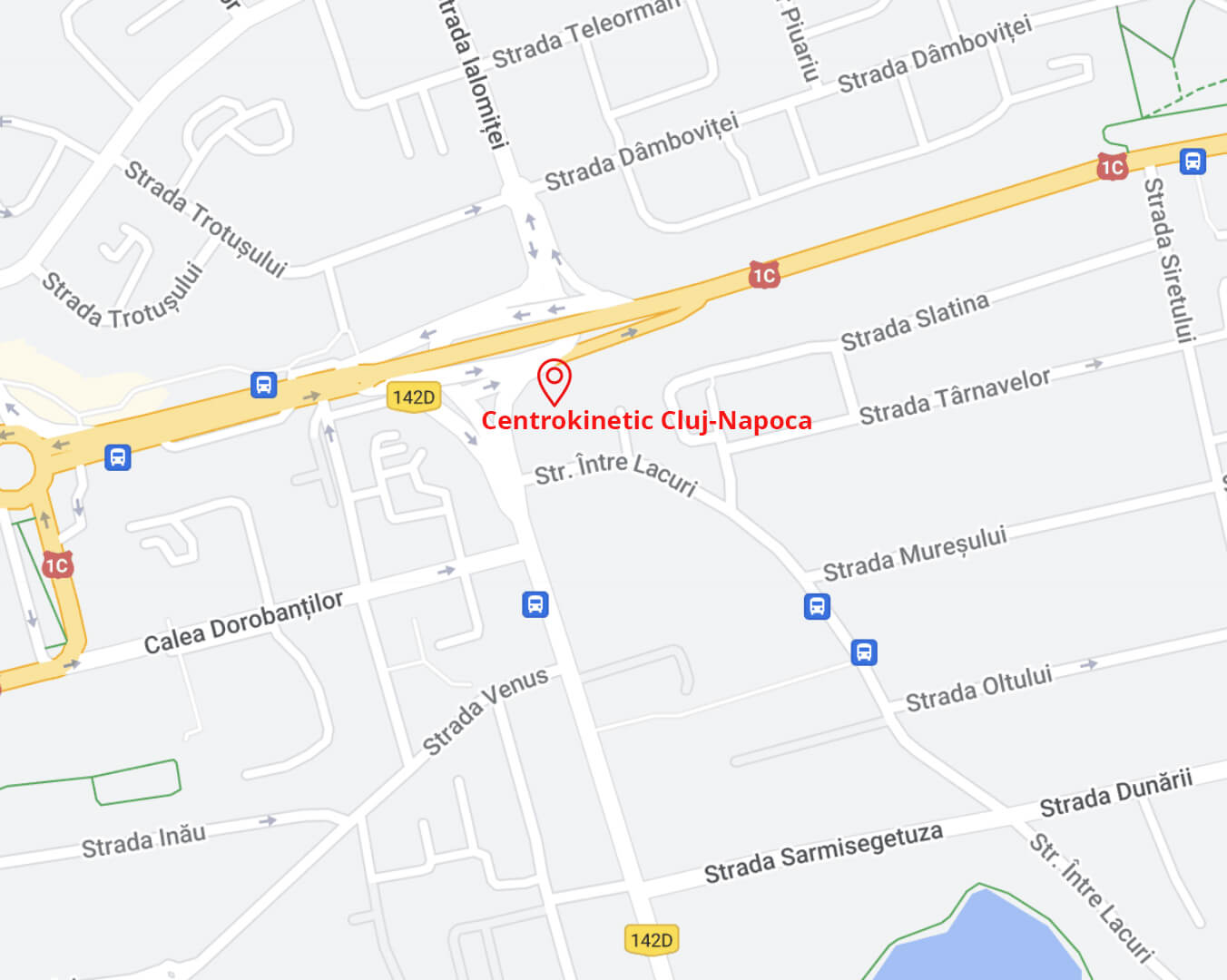
CENTROKINETIC CLUJ-NAPOCA
Cluj-Napoca,
Str. Intre Lacuri, nr.1
Intrarea este in spatele cladirii.
| Navigation |
SOCRATES CLINIC TIMISOARA
Timisoara, Calea Martirilor 1989,
nr. 1.
Telefon: 0371 785 374.
| Navigation |
Phone: 0319693
E-mail: programari@centrokinetic.ro
Operating hours:
Monday – Friday: 07:00 – 21:00
Saturday: 09:00 – 14:00
Sunday: closed.
MAKE AN APPOINTMENT