RETURN TO SPORT ASSESSMENT


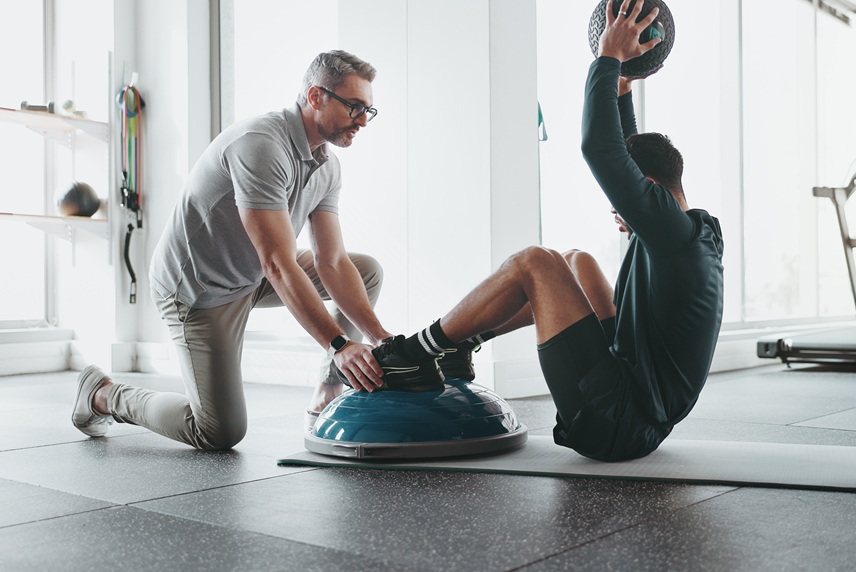
Return to sport safely — based on objective criteria, not “how you feel.” After an injury, the riskiest moment is when the pain decreases but the body is still not ready for the real demands of sport: acceleration, deceleration, jumping, changes of direction, contact. That is why returning to sport should not be decided only “based on time” or “instinct,” but on clear criteria: tolerance (no swelling), mobility, stability, strength, neuromuscular control, biomechanics, and psychological readiness.
Who is the return-to-sport assessment for?
It is for you if:
- you have had an injury (knee, ankle, hip, shoulder, back, etc.) and want to return to sport without “guesswork”
- you have completed treatment/rehabilitation but do not yet have objective confirmation that you are ready
- you feel able to perform some movements, but at higher intensity you experience hesitation, instability, fear of movement, or you unconsciously protect the area
- you are returning to pivoting / change-of-direction sports (football, basketball, tennis, handball, skiing) and want to reduce the risk of re-injury
Why is return to sport based on criteria, not just on time?
In modern sports medicine, the return-to-sport (RTS) decision is considered multifactorial: strength and functional testing (hop/jump/agility), together with psychological readiness and movement quality assessment. There is considerable variability between protocols, but many use symmetry (LSI) for strength and hop/jump tests and include a psychological component.
A useful message for patients:
“The fact that I am no longer in pain does not automatically mean I am ready for sport.”
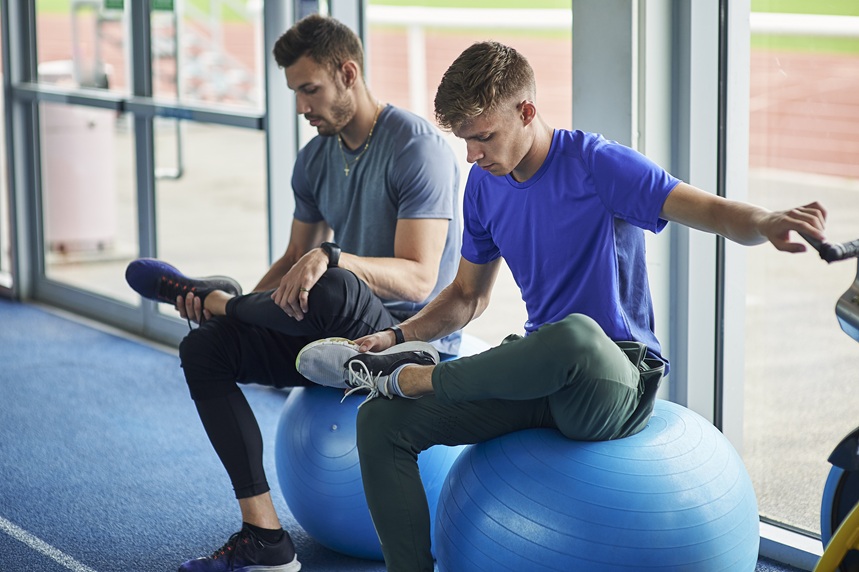
What do we assess during the return-to-sport evaluation?
Below are the minimum requirements for returning to recreational or performance-level sport:
1) Knee / “quiet” joint area: no pain, no swelling
The first filter is simple and essential: no pain and no swelling. Swelling after effort is a sign that the tissue does not yet tolerate the required load.
2) Full mobility
For the knee (and, by analogy, for other joints), return to sport requires full mobility. Limited mobility alters mechanics and forces compensations (hip/ankle/lumbar spine).
3) Structural stability (specific tests)
There are specific stability tests for the knee (e.g., Lachman test, pivot shift) that must be negative. The key idea for the patient: “we do not return to sport if there are clinical signs that the joint is unstable.”
4) Psychological readiness
Subjective perception and psychological readiness are assessed using validated questionnaires such as IKDC (subjective), ACL-RSI, and the Tampa Scale of Kinesiophobia.
Studies show that returning to sport frequently includes a psychological component, because fear of movement or reduced confidence can alter mechanics, reduce performance, and increase the risk of compensations.
5) Objectively measured muscle strength
Quadriceps and hamstring strength are measured, with a required symmetry >90% between the affected limb and the healthy limb, together with recovery to at least preoperative values or sport-specific absolute values.
In many RTS protocols, symmetry (LSI) is a common criterion (often thresholds ≥90%), but there are also discussions about the limitations of the “LSI rule” and the need to interpret it in context (movement quality, sport demands, athlete profile).
How to explain LSI clearly to the patient:
LSI = (performance of the affected limb ÷ performance of the healthy limb) × 100.
6) Jumping and hop tests: power + control + symmetry
Jump biomechanics are assessed (forces/angles in the sagittal and frontal planes), and return-to-sport criteria include symmetry in tests such as:
- single-leg vertical jump
- single-leg hop test
- triple hop test
- drop knee test
At Centrokinetic clinics, we do not measure only “distance,” but also how the patient lands (control, alignment, shock absorption).
7) Running and change-of-direction tasks
The return-to-sport evaluation includes the criterion of >90% symmetry in vertical ground reaction forces and knee biomechanics during high-speed stance phase and directional changes.
In short: “fast running is not just cardio; it is repeated mechanical loading measurable through ground reaction forces.”
8) Time + sport-specific training
The evaluation also includes the criterion of at least 9 months post-operation (where applicable) and completion of sport-specific training.
In practice, time alone is not sufficient, but it may represent a minimum threshold in certain situations — the literature shows that return-to-sport protocols after ACL reconstruction, for example, vary and often use 6–9 months as a minimum (depending on criteria).
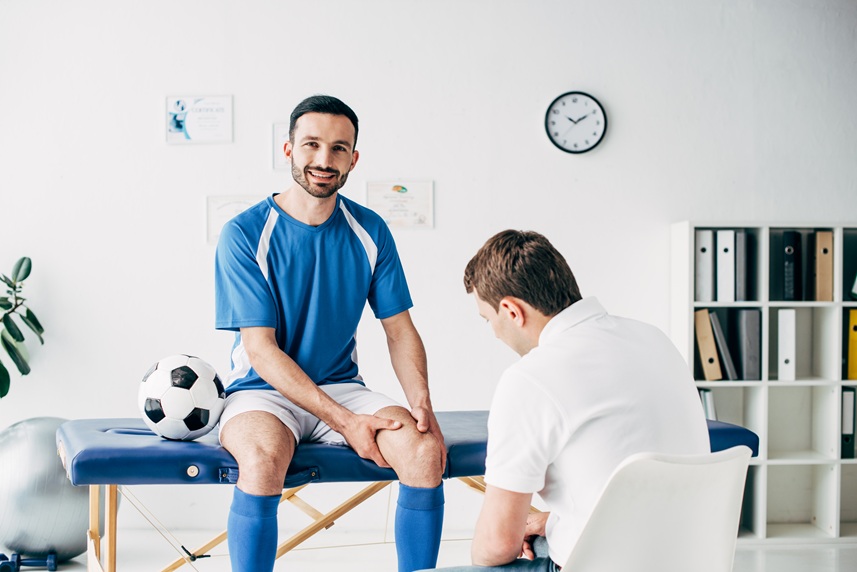
How does return to sport assessment take place at Centrokinetic?
Step 1: Short interview + objectives
Which sport you practice, your position/role, which movements concern you, and what level of intensity you want (recreational training vs competition).
Step 2: Clinical screening
Pain/swelling, mobility, specific tests (depending on the segment: knee, ankle, hip, shoulder), tolerance indicators.
Step 3: Strength testing
Isometric / isotonic / (where applicable) isokinetic testing, comparing left–right symmetry and sport-specific requirements.
Step 4: Functional and biomechanical testing
Hop/jump tests, landing, deceleration, change-of-direction tasks; we assess symmetry and movement quality.
Step 5: Psychological readiness
Validated questionnaires (such as IKDC/ACL-RSI/Tampa when relevant), followed by a practical strategy: progressions and gradual exposure.
Step 6: Gradual return-to-sport plan
You receive a clear framework:
- what you are allowed to do now
- what increases over the next 2–4 weeks
- which indicators we monitor (pain/swelling/fatigue/confidence)
- when retesting takes place
What does the patient receive at the end?
- “Yes / not yet / yes, with restrictions” — justified based on testing results
- strengths and “weak links” (strength, control, symmetry, mechanics)
- clear progression steps and retesting recommendations
- (optional) scores/notes from the testing sheet (including the Abalakov jump test, where used)
Frequently asked questions
If I am no longer in pain, is that enough?
Not always. Pain may decrease before strength and control reach the level required for sport. That is why objective testing and symmetry/function criteria are used.
Why do you compare with the healthy limb?
Because it provides a personalized benchmark (LSI). The formula is simple and tracks progress as a percentage.
What does “gradual return” mean?
It means first returning to controlled training, then intensity, then sport-specific situations, and only afterward competition — depending on objective criteria.
Do you want to return to sport with confidence, not uncertainty?
Schedule a Return-to-Sport Assessment and find out exactly what you still need to safely return to your level.
MAKE AN APPOINTMENT
FOR AN EXAMINATION
See here how you can make an appointment and the location of our clinics.
MAKE AN APPOINTMENT
BUCHAREST TEAM





















































CLUJ NAPOCA TEAM



























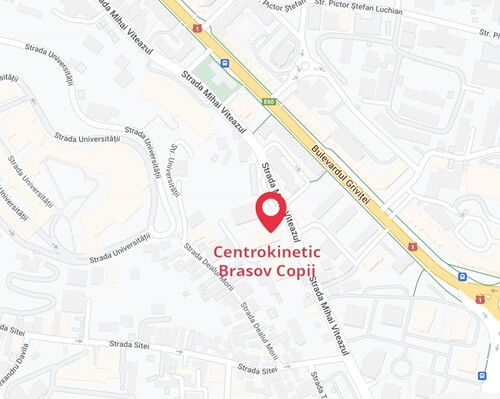
BRASOV TEAM













Asiguratori privati





Parteneriate



CENTROKINETIC FLOREASCA
Bucharest, 1st District,
Mircea Eliade Street, no. 18,
Eliade Tower, Entrance A, Floor 3
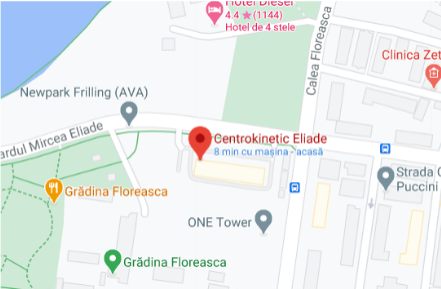
| Navigation | Explore 3D |
CENTROKINETIC Barbu Vacarescu
Bucharest, 2nd District,
Barbu Vacarescu Street, no. 102,
102 The Address, ground floor.
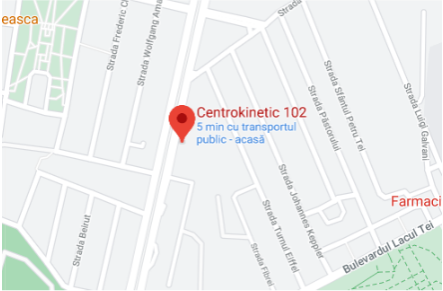
| Navigation | Explore 3D |
CENTROKINETIC MILITARI
Bucuresti, Sector 6,
Bld. Iuliu Maniu, nr. 15G,
Cladirea PBT, etaj 3.
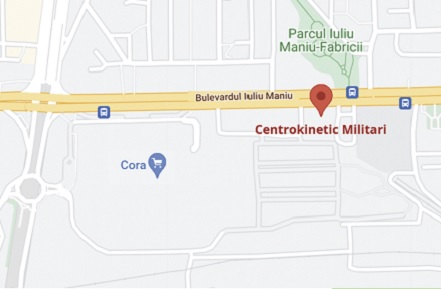
| Navigation |
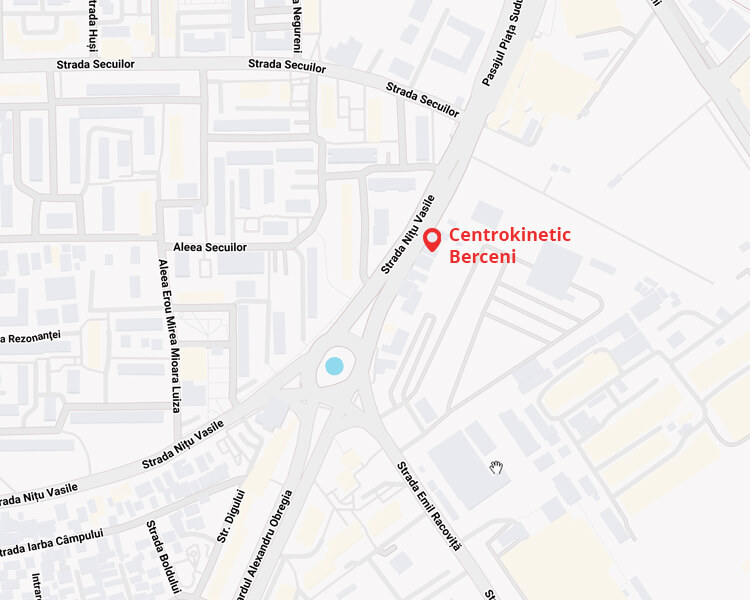
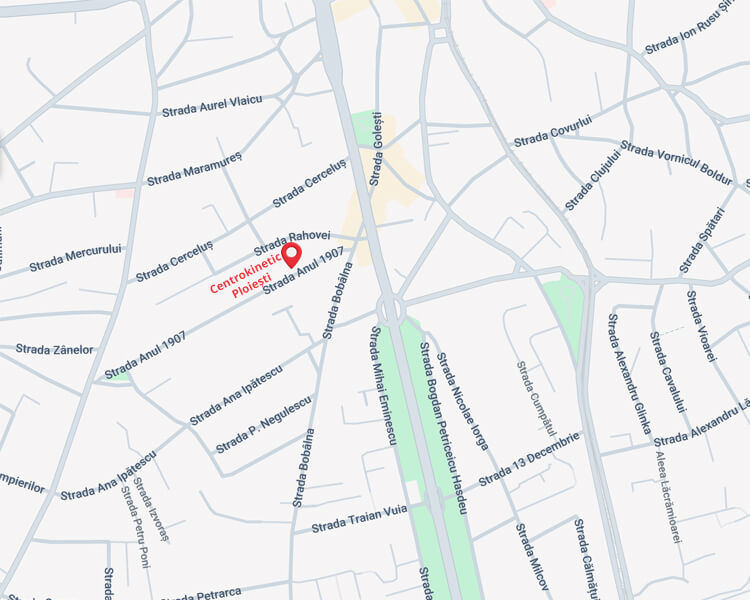
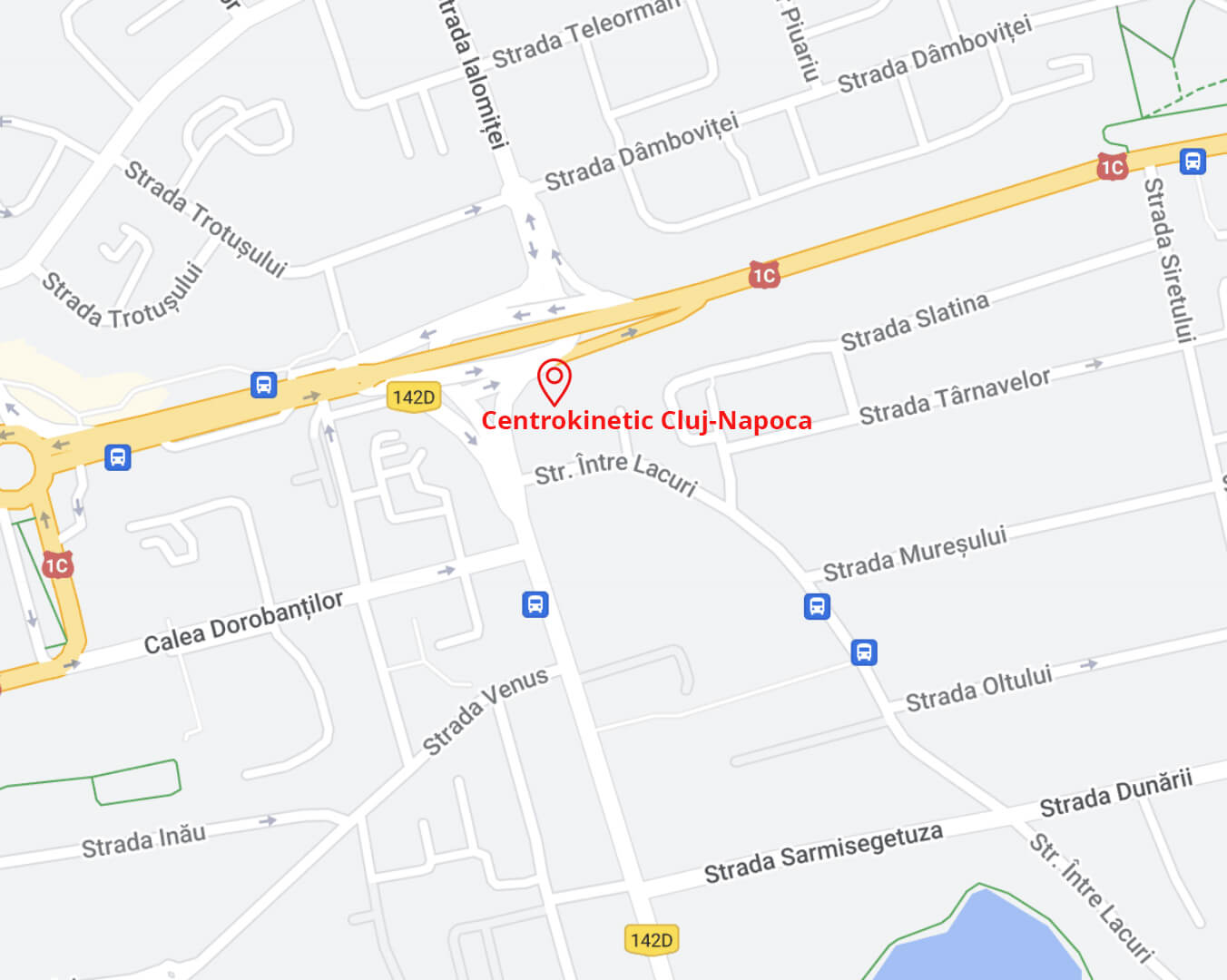
CENTROKINETIC CLUJ-NAPOCA
Cluj-Napoca,
Str. Intre Lacuri, nr.1
Intrarea este in spatele cladirii.
| Navigation |
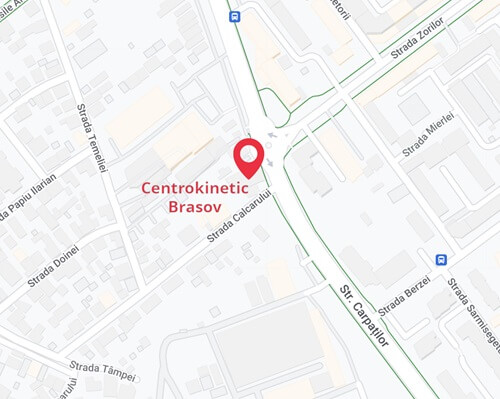
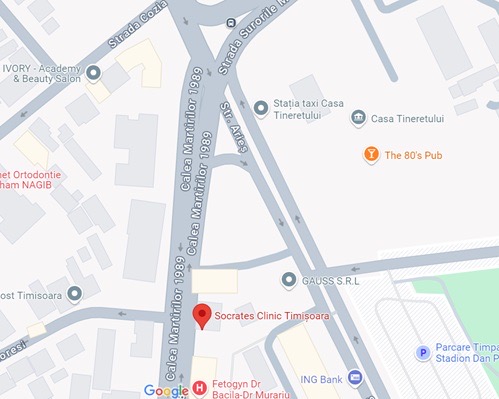
SOCRATES CLINIC TIMISOARA
Timisoara, Calea Martirilor 1989,
nr. 1.
Telefon: 0371 785 374.
| Navigation |
CONTACT
Phone: 0319693
E-mail: programari@centrokinetic.ro
Operating hours:
Monday – Friday: 07:00 – 21:00
Saturday: 09:00 – 14:00
Sunday: closed.
MAKE AN APPOINTMENT