Mounts (hallux valgus)


This article was written by Dr. Crintea Alexandru, orthopedic specialist, with over 10 years of experience, highly trained through numerous national and international courses.
General information about mounts
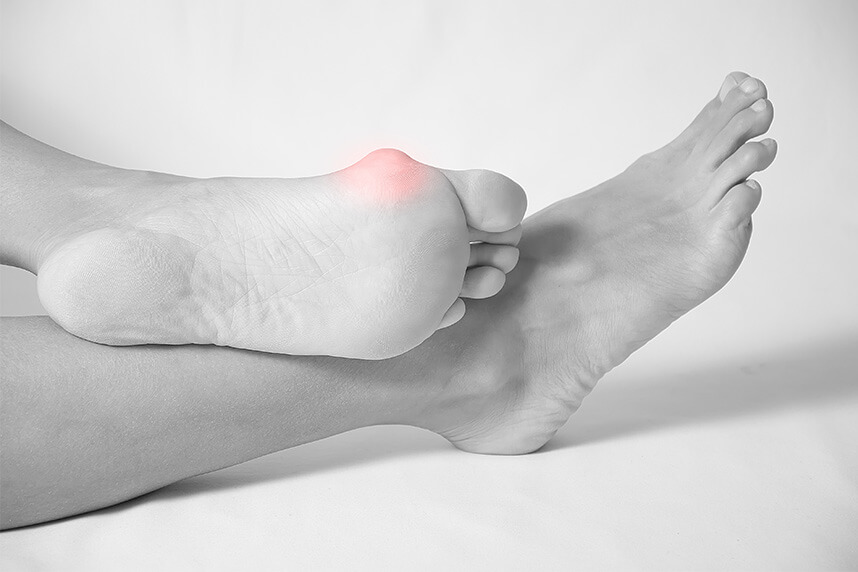
Hallux valgus is the medical term for mount. A mount is a deformity of the big toe, called the hallux. A mount forms when the tip of the big toe pushes against the next toe, forcing the big toe joint to grow and stick out. The skin over the mount may be red and inflamed. Small mounts can also develop on the little toe.Mounts are a progressive disorder. They begin with a tilt of the big toe, gradually changing the angle of the bones over the years and slowly producing a prominent feature, which becomes increasingly unsightly. Symptoms usually appear in later stages, although some people never have symptoms.
Types of mounts
In addition to common mounts, there are also other types of mounts. Some mounts are more severe and cause more symptoms than others. The prominence on the side of the foot joint can be red and painful. Inflammation of the big toe joint and surrounding area can also contribute to pain. Sometimes bursitis can occur above the prominence.Mounts with hallux limitus - The smaller type of mount is often seen with a condition called hallux limitus, characterized by a limited range of motion at the big toe joint. The limited range of motion leads to blocking of the toe joint, which, over time, can cause a mount to develop on the upper part of the big toe joint.
Tailor's mount - A tailor's mount is a prominence that forms on the side of the little toe. Like a mount on the big toe, it is caused by an abnormal structure or function of the foot. The little toe turns toward the fourth toe because of the mount. Legend has it that this type of mount became known as the tailor's mount because tailors used to sit cross-legged on the floor while working, and as the outside of the little toe rubbed against the floor, a bump would appear at its base. But apart from this story, tailor's mounts are often hereditary.
Juvenile
Juvenile (congenital) mounts appear in adolescence. This type of mount progresses slowly and causes the first pain around the age of 40. Juvenile mounts cause a bump on the inside of the foot at the base of the big toe. Some adolescents have severe inflammation at the site of this bump. For people with mounts, narrow shoes are quite irritating. Juvenile mounts sometimes cause pain when walking.Static
Static mounts appear with menopause and progress very quickly. The wide fluctuation and severe decrease in estrogen and progesterone during perimenopause and menopause have effects throughout the body, including the feet. Swelling is common, likely related to the transient increase in estrogen concentrations, which causes fluid retention. Mounts and other problems are accentuated. Left untreated, these can lead to complex foot deformities.Symptoms of mounts
Many people have no symptoms in the early stages of mount formation. Symptoms are often most noticeable as the mount worsens and when wearing certain shoes. Footwear that worsens symptoms includes narrow shoes that squeeze the toes and/or high-heeled shoes. This may explain why women have more symptoms than men. In addition, spending long periods of time standing can worsen mount symptoms. When symptoms occur, they may include:- Physical discomfort or pain.
- A burning sensation.
- Redness and swelling.
- Possible numbness.
- Difficulty walking.
Progression of mounts
Like most diseases of the musculoskeletal system, hallux valgus causes pain and can occasionally affect the patient's mobility, worsening their quality of life. The cause, location and intensity of a mount's pain change throughout the course of the disease.Although, in principle, the patient can specifically locate the pain in the mount, the location of this pain is usually temporary. After a while, this pain tends to ease and shift toward the region of the central metatarsals, which may or may not be associated with irritating symptoms of the inter-digital nerves (the space between the third and fourth toes) such as a sensation of electric shock. This pain is known as metatarsalgia.
Mounts can progress in size and severity. A mount may start as a minor problem and, over time, develop into a severe foot deformity. It is important to know that not all mounts get worse. Some mounts never change in size. Others may progress to a major deformity of the feet. Genetics plays an important role.
Left untreated, a mount can also cause:
- Bursitis, a condition in which the bursa (a fluid-filled sac that cushions the bones, tendons and muscles around the joints) in the big toe becomes inflamed and painful
- Hammer toe, an abnormal bending at the toe joint
- Metatarsalgia, an inflammation of the ball of the foot
Diagnosis
In general, observation is enough to diagnose a mount, since the swelling is evident on the side of the foot or at the base of the big toe. However, your doctor may recommend X-rays that will show the extent of the toe deformity. A blood test may also be needed to rule out arthritis as a cause.During a physical exam, the doctor may ask you to move your toe back and forth to check for limited motion. Your doctor will recommend an X-ray if a lesion or deformity is suspected.
Any treatment at our clinic is based on a diagnosis and is carried out under medical supervision. Book a consultation!
Mounts are most often caused by a faulty mechanical structure of the foot, which is inherited. It is not the mount itself that is inherited, but certain types of feet that make a person prone to developing a mount.
Although wearing shoes that squeeze the toes does not actually cause mounts, certain types of shoes worsen the deformity.
Here are some things that make a person prone to mounts:
- Wearing high heels puts pressure on the foot joints, but also forces the foot into a tilted position - a primary contributing factor to the development of mounts. Sometimes small prominences also form on the outside of the foot, on the little toe joint.
- Arthritis causes cartilage wear, leaving the joint inflexible and unprotected against impact. In this state, a mount may form to protect the joint, causing pain and pressure as the person walks or stands.
- Foot type can influence whether a person develops a mount or not. While mounts are not hereditary, the shape of the foot is influenced by genetics; if your foot is deformed or if you have flat feet, you are more likely to develop a mount than people with high arches.
Treatment methods
Initial treatment of mounts is normally conservative and focuses on relieving symptoms. To reduce the chance of affecting the joint, periodic evaluation and X-rays are recommended. In many other cases, however, some type of treatment is needed. Early treatments aim to ease the pain, but will not reverse the deformity itself. There are several types of treatment that can ease the pain caused by mounts, including: orthopedic treatment, surgical treatment and non-surgical treatment.Orthopedic
The most important treatment for mounts is wearing shoes that conform to the shape of the foot and do not create pressure points. This often eases the pain. High-heeled, pointed-toe shoes should be avoided, as they press on the front of the foot and create an unnatural position for the foot and toes.Other non-surgical treatments include prescribed orthotic devices, and inserts to change the pressure points of footwear. The best way to relieve pain caused by mounts is adequate rest at night. A useful orthotic device, usually worn at night, is the mount splint. With the help of the splint, the big toe is physically pushed back into normal alignment.
There are numerous orthopedic devices on the market:
Spacers or protectors. They reduce pressure on prominent or deformed areas. The orthosis is generally made from materials that can reduce pressure (silicone). These materials can be purchased prefabricated with predefined shapes, or can be custom made.
Correctors. Their purpose is to delay the progression of mounts and ease symptoms. These orthopedic devices can be useful in the developing stages, but not when the deformity is already significant.
Insoles. These ease pain while walking and correct the imbalance that arises from lack of support. They are not able to improve the position of the big toe.
Surgical
Most people with mounts manage to relieve pain with simple treatments that reduce pressure on the big toe, such as wearing wider shoes or using shoe inserts. However, if these measures do not relieve symptoms, your doctor may recommend mount surgery. There are different types of operations to correct a mount. Bringing the big toe back into the correct position may involve realigning the bone, ligaments, tendons and nerves. In general, if the mount is not painful, you do not need surgery. Although mounts often grow over time, doctors do not recommend surgery in such cases. Many people can slow the progression of a mount with proper footwear and other preventive care.Before surgery, you may need several preoperative tests, including blood tests, an ECG and a chest X-ray. You may also need to provide a urine sample.
To help plan the procedure, your doctor may recommend special X-rays of the feet. These X-rays should be taken in a standing position, so the doctor can clearly see the deformity of the toe.
- Significant pain in the big toe that limits daily activities, including walking and wearing regular shoes.
- Chronic swelling and inflammation of the big toe, which does not improve with medication or rest.
- Toe deformity - a tilt of the big toe toward the other toes, forcing the toes to overlap
- Stiffness of the big toe - inability to bend and straighten the toe.
- Failure to achieve pain relief with changes in footwear.
- Failure to achieve pain relief following treatment with nonsteroidal anti-inflammatory drugs (NSAIDs), such as ibuprofen and naproxen. The effectiveness of nonsteroidal anti-inflammatory drugs (NSAIDs) in controlling foot pain varies greatly from person to person.
- Realigning the metatarsophalangeal (MTP) joint at the base of the big toe
- Pain relief
- Correcting the deformity of the bones forming the toe and foot
Your doctor will talk to you about the type of surgery that will best correct the mount.
Repairing the tendons and ligaments around the big toe
In some cases, the soft tissues around the big toe may be too tight on one side and too loose on the other. This creates an imbalance that causes the big toe to move toward the other toes.
Surgery can shorten the loose tissues and widen the tight ones. This is rarely done without a certain type of bone alignment, called an osteotomy. In most cases, correcting the soft tissue is only a portion of the entire corrective procedure for mounts.
Osteotomy
In an osteotomy, the doctor makes small cuts in the bones to realign the joint. After cutting the bone, your doctor fixes this new break with screws or plates. The bones are now straighter, and the joint is balanced.
Osteotomies can be performed at different points along the bone to correct the deformity. In some cases, in addition to cutting the bone, a small piece of bone is removed to provide sufficient correction to straighten the toe.
Osteotomies are normally performed in combination with soft tissue procedures, since both are often needed to maintain the alignment of the big toe.
Arthrodesis
In this procedure, your doctor removes the arthritic surfaces, then inserts screws, wires or plates to hold the surfaces together until the bones heal. Arthrodesis is frequently used for patients who have severe mounts or severe polyarthritis and for patients who have undergone previous surgeries.
Resection arthroplasty
In this procedure, the doctor removes the affected part of the joint. This increases the space between the bones and creates a flexible joint scar. Resection arthroplasty is mainly used for elderly patients, who have had a previous unsuccessful surgery, or have severe arthritis that cannot be treated by arthrodesis. Because this procedure can change the pushing power of the big toe, it is not often recommended.
Procedure
Depending on your mount and the procedures you need, the doctor will make an incision along the inside of the big toe joint or above the joint. In some cases, multiple incisions are needed to correct the mount deformity. Surgical time varies depending on how large the poorly aligned portion of the foot is. Surgery will take longer if the deformity is greater or if an osteotomy is also needed. Each mount correction is a little different and there is no reason for concern if the surgery takes longer.
Non-surgical
Non-surgical treatments for mounts may include:- Wearing shoes that fit properly and have adequate room for the big toe
- Having shoes professionally stretched to make them larger.
- Wearing protective pads over mounts to relieve pain.
- Avoiding activities that cause pain, such as standing for long periods of time.
- Taking pain medications, such as acetaminophen or nonsteroidal anti-inflammatory drugs, such as ibuprofen.
- Using ice to get rid of inflammation and pain.
- Using custom orthotic devices.
Some patients are interested in treating their mounts by stretching their toes to realign them, or by using devices such as spacers or splints. It should be noted that the device is like a pair of glasses - once you remove it, the benefit is gone.
Prevention
Since mounts develop slowly, foot care during childhood can pay off later in life.- Watch the shape of your feet as they develop over time, especially if you have family members who have developed mounts.
- Exercises can help strengthen your toes. Learn to pick up small objects, such as a pencil or a small pebble, with your toes.
- Wear shoes that fit properly, and that do not crowd your toes.
- Women should avoid high-heeled shoes or pointed toes. High heels force the toes to push forward into the front of the shoe, causing pressure and deformation of the toes.
- Inserts that provide cushioning and allow freedom of the toes, provide arch support to reduce stress on the feet, and prevent excessive pronation, can help prevent the formation of mounts.
- Orthotics can help control abnormal foot motion and reduce the likelihood of mount formation.
IF YOU DON'T ALREADY KNOW US
Centrokinetic is the leading medical clinic dedicated to bone and joint conditions, organized into several dedicated departments:
- Orthopedics: made up of a highly experienced team of orthopedic surgeons, led by Dr. Andrei Ioan Bogdan, senior orthopedics-traumatology physician with surgical activity at the Floreasca Clinical Emergency Hospital and at the Medlife Orthopedic Hospital, specialized in sports traumatology and in ankle and foot surgery.
- Pediatric orthopedics, where we treat children's sports injuries (ligament and meniscus injuries), spinal deformities (scoliosis, kyphosis, hyperlordosis), and foot conditions (hallux valgus, hallux rigidus, clubfoot, flat valgus foot, cavus foot).
- Neurology, providing consultations and EMG within the department. The medical team is completed by Dr. Mardare, highly specialized at the University of Oxford in spinal surgery.
- Medical rehabilitation, for children and adults, the department being led by one of the most experienced physicians in the field, senior lecturer Dr. Tache Georgiana. The department specializes in the recovery of performance athletes, in spinal conditions, and in the recovery of children with neurological and traumatic conditions.
- Medical imaging, the clinic being equipped with ultrasound and MRI, dedicated to musculoskeletal conditions. We are proud of our medical team of radiologists, made up of Dr. Ghiea Sorin, Dr. Pantu Cosmin, Dr. Florescu Nicoleta, specialized in musculoskeletal imaging.
Find out the latest news about us by following the Facebook and YouTube accounts of the Centrokinetic clinic.

MAKE AN APPOINTMENT
CONTACT US
MAKE AN APPOINTMENT
FOR AN EXAMINATION
See here how you can make an appointment and the location of our clinics.
MAKE AN APPOINTMENT
BUCHAREST TEAM






























































CLUJ NAPOCA TEAM

































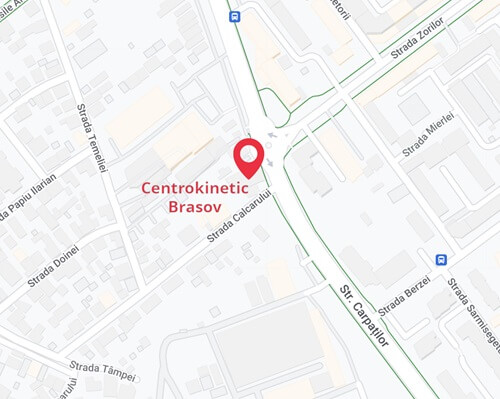
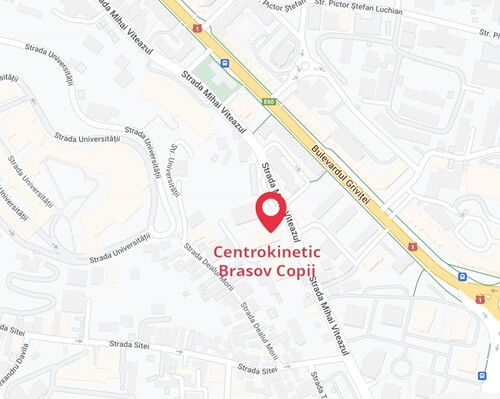
BRASOV TEAM






















Asiguratori privati





Parteneriate



CENTROKINETIC FLOREASCA
Bucharest, 1st District,
Mircea Eliade Street, no. 18,
Eliade Tower, Entrance A, Floor 3

| Navigation | Explore 3D |
CENTROKINETIC Barbu Vacarescu
Bucharest, 2nd District,
Barbu Vacarescu Street, no. 102,
102 The Address, ground floor.
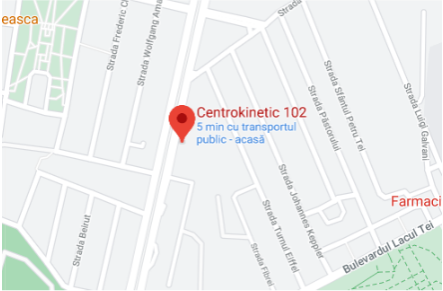
| Navigation | Explore 3D |
CENTROKINETIC MILITARI
Bucuresti, Sector 6,
Bld. Iuliu Maniu, nr. 15G,
Cladirea PBT, etaj 3.
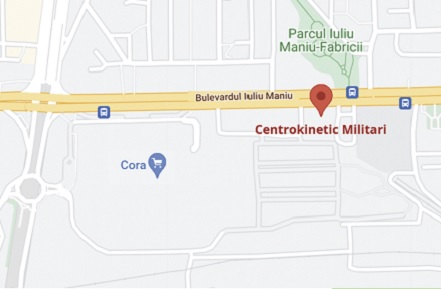
| Navigation |
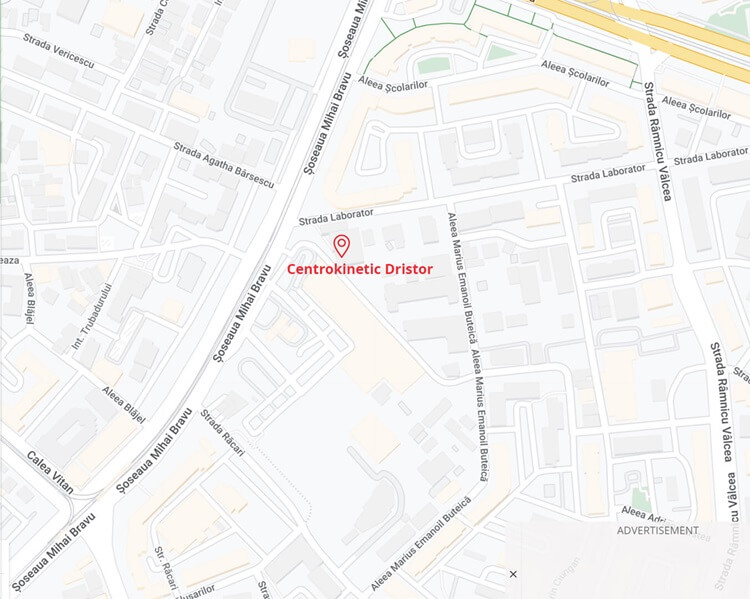
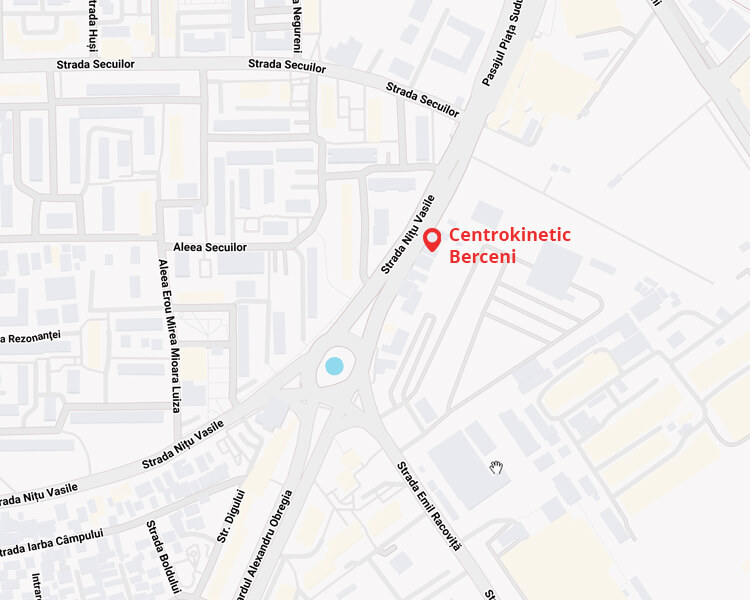
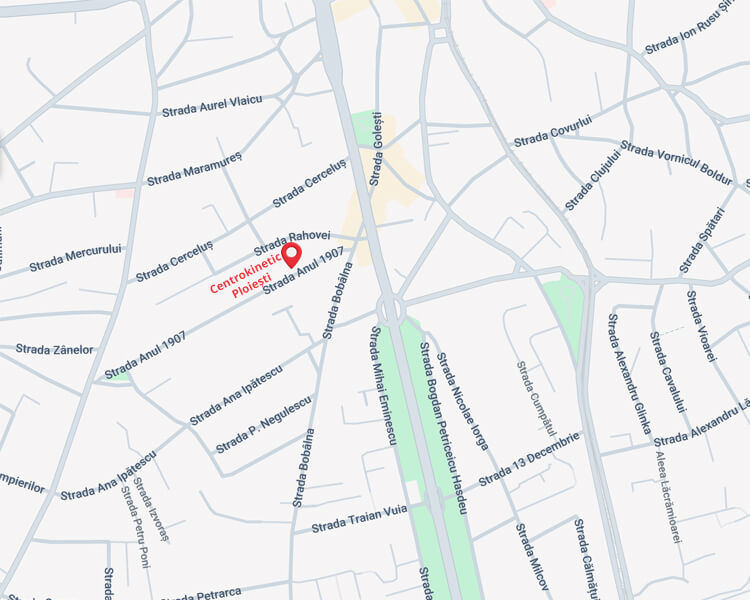
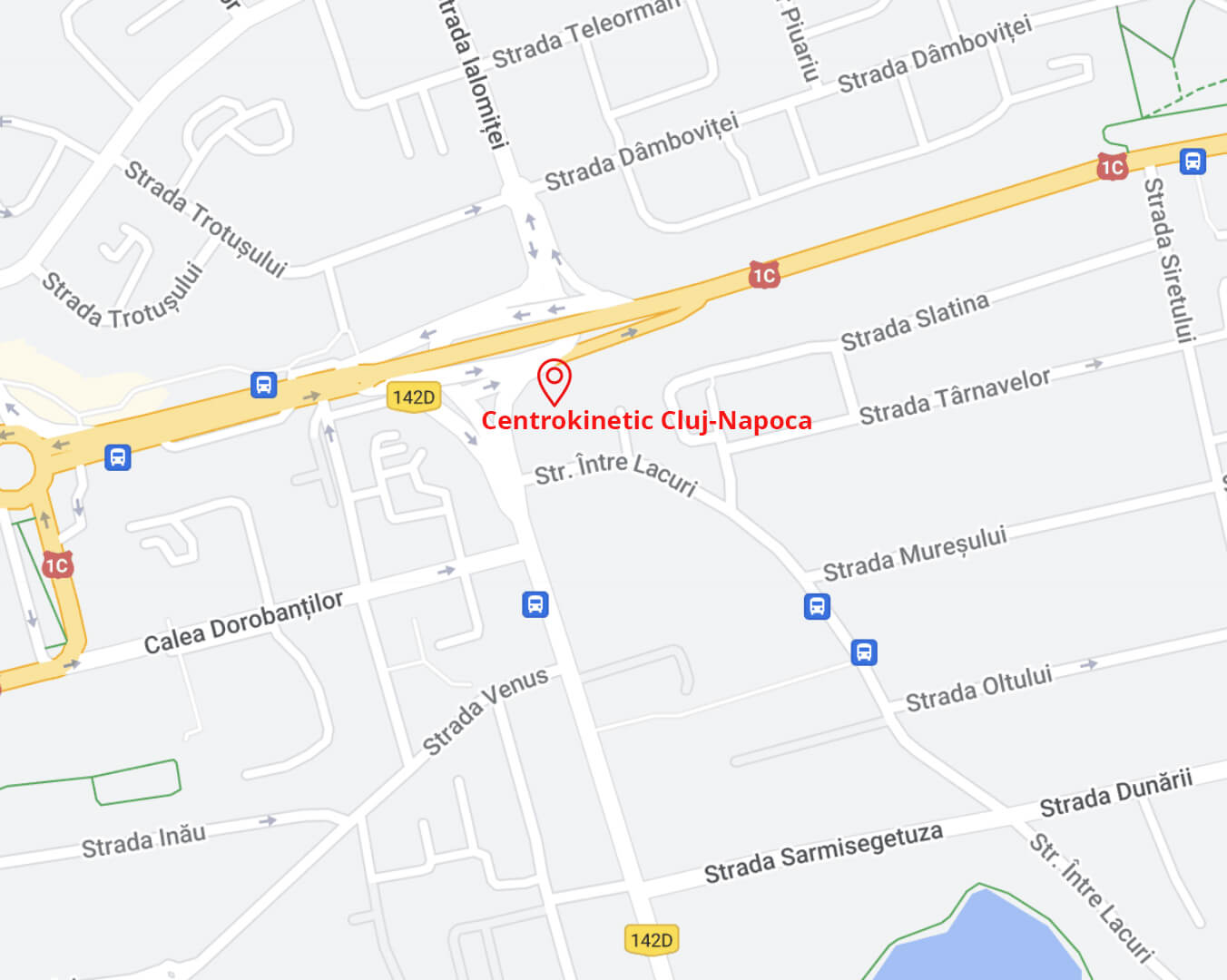
CENTROKINETIC CLUJ-NAPOCA
Cluj-Napoca,
Str. Intre Lacuri, nr.1
Intrarea este in spatele cladirii.
| Navigation |
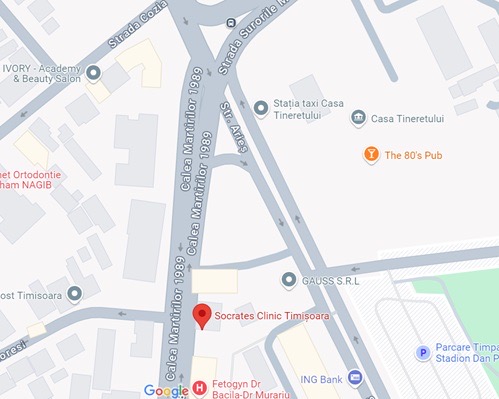
SOCRATES CLINIC TIMISOARA
Timisoara, Calea Martirilor 1989,
nr. 1.
Telefon: 0371 785 374.
| Navigation |
CONTACT
Phone: 0319693
E-mail: programari@centrokinetic.ro
Operating hours:
Monday – Friday: 07:00 – 21:00
Saturday: 09:00 – 14:00
Sunday: closed.
MAKE AN APPOINTMENT